Another wine experience in China

November 7, 2010

One of the privileges of a frequent traveller, even if exclusively travelling on economy class, is the use of the lounge. As a “wino” this is great territory to sense and experience some of the global trends in the wine industry and/or the airline service providers.

One such trend seems to be the use of paper cups instead of proper glasses. That’s at least what my recent experience in the business class lounge (star alliance) at Shanghai Pudong International Airport suggests.

I found the “wine ensemble” below. Isn’t it cute?

Wine at your service

I could not resist a tasting of the two wines on offer, a white from China and a red wine from France. Unfortunately I could not find any trace of the French wine in the internet. I had noted down “Tour Gouvercin” as the name of the wine (a Cabernet Sauvignon) which was quite pleasant to drink, fruity with body and structure.

The second wine, a ‘Clos des Chenes, dry white wine’ by Imperial Court, a brand re-designed and re-established by Shenma Winery. The wine was a bit “thin” but since the cooler (as seen in the picture above) guaranteed a pleasant temperature, I found it not so bad, light but technically well made.

My wine tasting at Shanghai Airport

China is not only an emerging world power but also a booming market for oversees wines. Chinese grape wine consumption increased from 554 million bottles in 2004 to 899 million bottles in 2008. However, per capita consumption is still very low, about 0.4 litres per person per year.

That’s all good news for wine producers and distributors. Also that imported wines account doe only about 11.8 % (2008) of total domestic consumption is “music in the ears” of the non-Chinese wine industry.

Wine educators have their tasks outlined for them as well. Chinese consumers do not like tannins and acids, often perceive grape wines as “sour” only. This is why the mixing of red Bordeaux wines with coke and spite is quite common consumption habit. This needs to be changes, I guess. Since Chinese people have very complex taste buds, it should not be too difficult to make them appreciate the wonders of fine wines.


Mosel Riesling: Weingut Heymann-Löwenstein

October 30, 2010

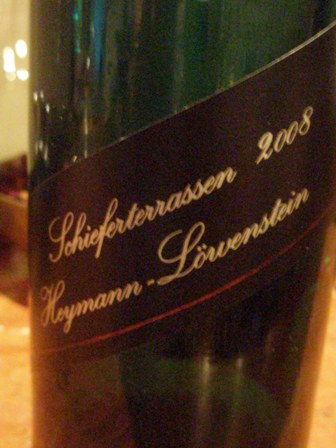
2008 Slate Terraces Riesling Heymann-Löwenstein

The website of Weingut Heymann-Löwenstein starts with a poem of Ingeborg Bachmann, a famous Austrian poet and writer (1926-1973). The first line reads as follows:

»One should be able to pick up the stone
and hold it in wild hope
until it begins to bloom«

That’s in fact what Heymann-Löwenstein does. The earth or better the rocks (slate in this case) in which the vines grow is at the centre of his attention.

I know the sound of slate from my youth growing up in Trier, Mosel. Slate was all around us. The roofs of the houses were in slate, covers of walls, and walls themselves, all in grey slate. We liked to break individual thin pieces into smaller ones and the grey slate dust trickled through our fingers.

Reinhard Löwenstein, who founded the winery in 1980, was carefully searching for the best locations (terroir) before starting his venture in Winningen, a small hamlet along the lower Mosel (south of Koblenz). He is an innovator whose wine styles differ from the Mosel tradition, an inspiration to many young wine-makers at the Mosel river.

Yields are kept low, harvest is late and the steep slopes of the slate stone reflect the days heat during the night. Moreover, the juice is allowed to stay with the skin for up to two days. Some Botrytis infected fruit is sometimes also added giving complexity to the wine. Rheinhard Löwenstein’s wine making philosophy is non interventionist. He intends to bring out the terroir.

The ‘2008 Slate Terraces Riesling’ by Heymann-Löwenstein has an intense golden colour in the glass. It’s alcohol is 12.5%. The wine is full and round, with a balanced acidity. It is dry, displaying a fine minerality and beautiful aromas of citrus fruit. The wine has a good structure and a stunning finish.

Timo Mayer had brought the above bottle with him when he came on a stop-over to Bangkok. We enjoyed it together with some food during a night which saw many exquisite bottles of the fine wines being opened and consumed with great delight.

The winery Heymann-Löwenstein is ranked by Riesling.de as one of the top ten Riesling producers in Germany. The area under cultivation is about 16 ha with an annual production of 100,000 bottles.

And the good news for residence in the Healesville area in Victoria is that Barrique, the wine store in this lovely little town, has some bottles of Heymann-Löwenstein Riesling on offer. Two years ago I have bought a few there. Delicious.

Address:
Winery (Weingut) Heymann-Löwenstein
Bahnhofstrasse 10
56333 Winningen
Tel.: +49-2606-1919
Fax: +49-2606-1909
www.heymann-loewenstein.com


I Due Fratellini – Best Tuscan sandwiches and wine

October 27, 2010

The roofs of Florence

Another “must see” on our map of Florence was “I Due Fratellini” where the best Tuscan sandwiches and wines are on offer. Indeed the sandwiches were awesome, fresh and tasty with ample choice for meat and cheese lovers as well as for vegetarians.

We had a couple of glasses of very decent Pinot Griggio with the food.

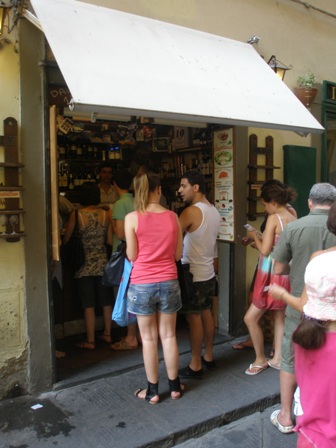
I Due Fratellini – long queues

The crowds are manageable at lunchtime but be prepared to queue for a while. It is advisable to get there early, let’s say 11:30 h or so. We sat on the pavement on the other side of the small lane in which I Due Fratellini is located.

I Due Fratellini

The prices are very reasonable. The service is great, fast and friendly. What I liked that we could drink the wine from real wine glasses and not some kind of plastic etc. cup. You just return the wine glasses when you have finished you drink. Very nice indeed.

The place is easy to find. Check it our when in Florence next time.

Address:
I Due Fratellini
Via dei Cimatori 38/r
50122 Firenze, Italy
+39-552396096
Opening hours:Mon.-Sat. 09-20h
www.iduefratellini.com


Enoteca Baldovino, Florence, Italy

October 24, 2010

Basilica di S. Croce, Firenze

Welcome to Firenze. The photo above shows the Basilica di S. Croce in the side street to the left of which you will bump into a wine bar and restaurant called “Baldovino”.

The counter of Enoteca Baldovino

The inside of Enoteca Baldovino

Food and wine sideboard

The No. 5 “must see place” on Giuseppe’s Firenze map was Baldovino, a ristorante/pizzeria with a wine bar (an enoteca) next to it. We patronized the “enoteca” to have a glass of wine. It was a late afternoon with a blue sky and beautiful sunshine.

The waiter was very friendly and made us feel at home immediately. We ordered a bottle of white. It was hot and white wine seemed the right stuff to get ready for another splendid evening in Florence.

Enoteca Baldovino is a very lovely place to hang out on a warm evening. If you are hungry you can just walk over to the restaurant Baldovino next door. One can also sit outside in the piazza and watch the passers by on their evening “passagiata”.

An interesting wine cooler

‘2009 La Segreta Bianco’ by Planeta, Sicilia

We ordered a bottle of ‘2009 La Segreta Bianco’ by Planeta, Sicilia. This is an easy drinking blend of various grape varieties but with the bulk coming from the Grecianico grape.

The back label

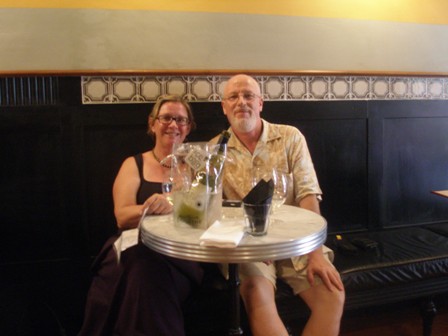
Happy customers

Address:
Enoteca Baldovino
Via S. Giuseppe 22 e
Florence, Italy


German Riesling: Weingut Robert Weil

October 21, 2010

2008 Robert Weil Estate Riesling dry

A friend of mine made me taste this wine some time ago in Berlin. I brought a bottle of the 2008 vintage back to Bangkok. During the visit of a wine-maker friend from Australia, I opened my treasure trove, and the Robert Weil Riesling, from Rheingau, Germany was one of the many bottles of fine wine which we sampled.

The winery Robert Weil is a well known household name among Riesling producers and wine connoisseurs in Germany. As many of the German wineries, Robert Weil goes back a fair bit. The winery was founded in 1875. Although vineyards were among the family properties in the village of Kiedrich, Rheingau for some time.

The founder of the winery, Dr. Robert Weil, was a professor of German language at the Sorbonne University in Paris. The change in career turned out to be very beneficial for the professor and his descendants as well as the wine fraternity.

With about 3,100 ha under vines, the Rheingau is one of the smaller German wine regions. Robert Weil bought some of the best locations (terroir) and vineyards in the vicinity of Kiedrich and thereby consolidated his winery. Today, the total area under vines is about 75 ha. This is more than just a small family vintner.

Many of the vines are 50 and more years old. Plant density is between 5,000 and 6,000 vines per hectare (quite dense in comparison with the 2,700 vines on my own vineyard). The operation is characterized by the use of organic fertilizers and the minimization of the use of industrial pesticides.

The wines of Robert Weil are regular award winners. The winery is among the top 10 of the German Riesling Forum.

Beautiful colour of the Robert Weil Estate Riesling

The colour of the wine is pale straw (12% alcohol). The 2008 vintage is still a young wine; it is fresh and spritzy with lemon and lime aromas and some mineral notes. The residual sugar is about 8 grams. The wine is fruity with a well balanced acidity; it has a good structure and a long finish.

The pity was: I had only one bottle. Wine is just not suitable for air travel.

The Rheingau is a beautiful place and just a stone throw away from Frankfurt airport. if you have the chance just go and check it out yourself. Cheers mate

Address:
Weingut Robert Weil
Mühlberg 5
D-65399 Kiedrich / Rheingau

Tel.: +49-6123 2308 begin_of_the_skype_highlighting              +49-6123 2308      end_of_the_skype_highlighting begin_of_the_skype_highlighting              +49-6123 2308      end_of_the_skype_highlighting begin_of_the_skype_highlighting              +49-6123 2308      end_of_the_skype_highlighting begin_of_the_skype_highlighting              +49-6123 2308      end_of_the_skype_highlighting
Fax: +49-6123 1546

info@weingut-robert-weil.com
www.weingut-robert-weil.de

Opening hours:
Monday to Friday 8.00 – 17.30 h
Saturday 10.00 – 17.00 h
Sunday 11.00 – 17.00 h


Viña Tondonia White Reserva 1987, Rioja, Spain

October 18, 2010

A couple of weeks ago, we drank a very special type of wine, a white Rioja, vintage 1987, called Viña Tondonia White Reserva! Our wine-making friend, Timo Mayer from the Yarra Valley had brought the bottle all the way from Europe to Bangkok.

The winery is owned and managed by the third generation of the López de Heredia family. For a hundred and thirty one years this enterprise is producing exceptional and unique wines. The founder of the company, Rafael López de Heredia y Landeta, defined in the late nineteenth century what a “Supreme Rioja” wine could be. Viña Tondonia White Reserva 1987 bears witness to this philosophy.

Timo Mayer opening the bottle in our kitchen

The wine is made from Viura (about 70%, also called Macabeu in France) and Malvasia grapes. It was kept for 10 years on the yeast in old, large oak barrels and for 13 years in the bottle before the wine is finally released.

1987 is the current vintage! Who can afford to leave wine for 23 years in the cellar?

The wine is a unique experience. It is completely dry, has a fine bouquet with a hint of dried fruit. First, we did not know what to make of it but with each sip it dawned on us that we held something very special in our glasses. Awesome stuff, indeed. One can taste the passion which went into this wine.

Cheers mate

The wine can be bought in Germany from “Weinhalle“. It is not cheap but worth to be explored if you long for a unique and amazing wine experience.


Wine from Franconia: Weingut Juliusspital, Würzburg

October 12, 2010

During a recent visit to Berlin, I bought also some bottles of fine wine. I treated myself to a ‘grand cru’ or ‘Grosses Gewaechs’ as the Germans call it. The ‘2006 Juliusspital GG dry Silvaner’ was just the stuff which makes my wine lovers heart jump. The winery is one of the best in Franconia and ever since my late grand father took me there as a 16 year old boy I am in love with its wines. Franconian Silvaner is one of my favorites. The wine comes in the ‘Bocksbeutel’ bottle typical for Franconia.

2006 GG Silvaner Juliusspital dry

Nothing is better suited to wine enjoyment than the presence of a wine expert. When Timo Mayer, owner and wine maker of The Mayer Vineyard from the Yarra Valley, Victoria visited us recently in Bangkok, I could not resist to open this treasure of a wine from Franconia.

It has a golden colour, and is quite oily with a beautiful bouquet. The structure is good and it finishes with a tender bitter note due to the fine tannins. In short: a wonderful wine.

The wine is ready for tasting

Address:
Weingut Juliusspital
Klinikstr. 1
97070 Würzburg

Tel.: +49-931393-1400 begin_of_the_skype_highlighting              +49-931393-1400      end_of_the_skype_highlighting begin_of_the_skype_highlighting              +49-931393-1400      end_of_the_skype_highlighting 
Fax: +49-931393-1414
E-Mail: weingut@juliusspital.de
www.weingut-juliusspital.de


Some treat me nicely

October 11, 2010

Beijing Kempinski Hotel

At a recent stop-over in Beijing, the Kempisnki Hotel at the Lufthansa Center surprised me with a beautiful bottle of wine, a 2009 Dragon Seal Cabernet Sauvignon. Thanks folks, that was a wonderful gesture,


A day in the country – Italy at its best

October 8, 2010

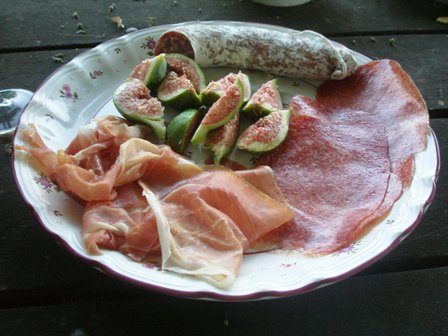
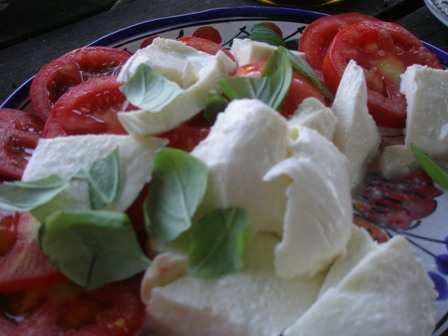
There is nothing more beautiful than a leisurely day in the Italian countryside. These beautiful long summer evenings with olives, figs and prosciutto, and , of course, an insalata caprese with mozzarella di buffalo.

What should the wine be? Well, there are many choices. If it is still hot and warm, I would have an Italian white, an aromatic wine from Alto Adige, or a Frascati or a Pinot Grigio.

But that particular evening, we had a red wine, a bottle of Cannonau di Sardegna by Sella and Mosca. It is claimed that the grape variety came from Spain to Italy in the 14th century. This is very likely because Cannonau is the local term for Grenache. And Grenache is of Spanish origin. It is one of the most widely planted grape varieties and makes delicious wines.

The modern style of this variety is lower in alcohol than the traditional one. It is a very enjoyable wine, full of forest fruit with fine tannins and a good balance. You should try a Riserva, though. We had only the simple “country wine” version. Anyway, it was just ‘a day in the country’


Rinaldi 2008 Barbera d’Alba – the real stuff

October 5, 2010

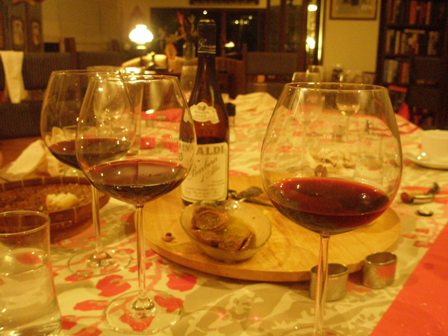
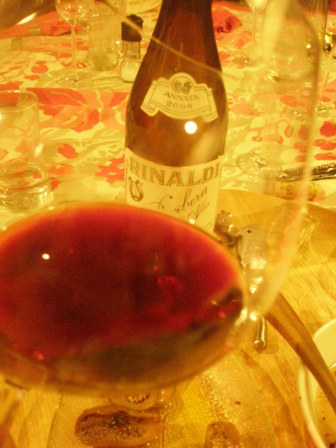
2008 Barbera d’Asti by Rinaldi

To have an experienced wine-maker staying over at ones home is a blessing. I always learn so much about different wine styles and different wines. When Timo Mayer, owner and wine maker of The Mayer Vineyard in the Yarra Valley, visited us in Bangkok recently, we had the chance to catch up with the world of wine-making.

He brought a bottle of ‘2008 Barbera d’Asti’ of Giuseppe Rinaldi from Piemont, Italy. He had visited the winery on a study tour to Italy and wanted to share this treasure with us. Rinaldi makes his wines “the good old way”, using no barriques, no destemming, no filtration etc. He is one of only about a handful of wine-makers left who are not producing heavy (oaked) wines for the American market.

One bottle is just the beginning

The results of this traditional style wine-making are wonderful. The wine is fruity with a good structure, the acids are remarkable, the tannins are fine and delicate. You taste the earth the grapes were grown on and not the oak they were exposed to. This is Barbera d’Asti of the best. If you have a chance to indulge in it, my suggestions: do it.

Address:
Rinaldi Giuseppe Az. Agr.
Via Monforte, 3
12060 Barolo (Cn)
Tel.: +39-173-56156
Fax: +39-173-56156
Year founded: 1890
Owner: Rinaldi Giuseppe