Korea: Seafood is just excellent

November 12, 2010

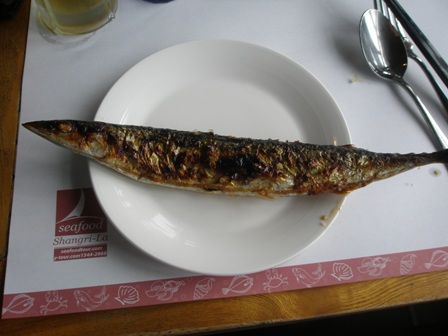
I hope some of the G-20 delegates in Seoul have the chance to stay on for a couple of days and go to Jeju island. This is a great place for nature lovers, famous for it’s mandarins, it’s abalone divers, it’s volcano mountain and good seafood.

You have the choice: some Korean fish or Japanese sushi? Your wish is my command. I just loved the food on the island and will show you some exceptional photos in some of my next blog entries. Stay tuned.

Delicious fish

Sushi collection


Where to eat in Seoul – Restaurant Review: Min’s Club

November 11, 2010

Tradition and…

Today Seoul, the capital of South Korea, is the host of the G-20 summit. Thousands of government officials from 20 major countries and journalists have converged on the city. The place is crowded, and very busy.

This summit is maybe one of the most contentious so far. South Korea, an OECD country, is the 13th largest economy of the world but was embedded in poverty only 50 years ago. Then per-capita income in South Korea was lower than in Nigeria, the Philippines and even North Korea. All together a different story today.

When I visited Seoul about two weeks ago, I had the chance to look around and get a feeling for this East Asian capital city. Of cause I also explored it’s culinary sides (as far as I could and my schedule allowed).

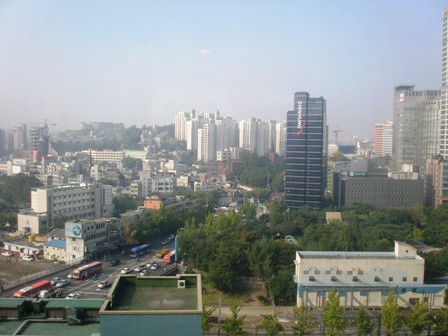
..the modern city

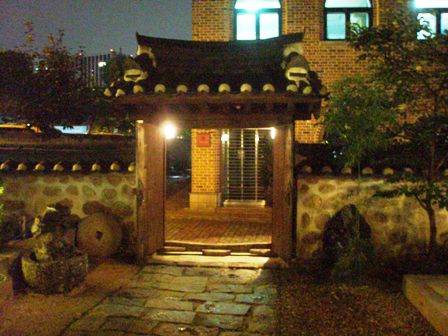
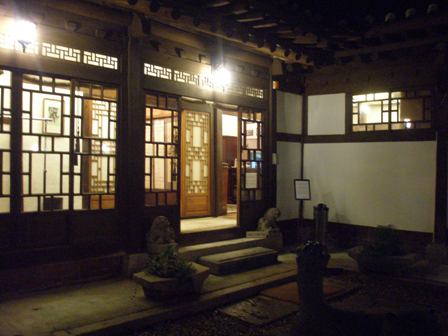
Seoul is a fabulous place, a modern city with many restaurants and eateries. Korean food is amazing; and distinct from other Asian cuisines. We were invited by our South Korean hosts to have dinner at Min’s Club, a Western style fusion restaurant housed in a traditional style Korean compound (the residence of Queen Min), the most beautiful surrounding one can imagine under such circumstances.

The gate

The main hall of the restaurant

The menu of the Min’s Club

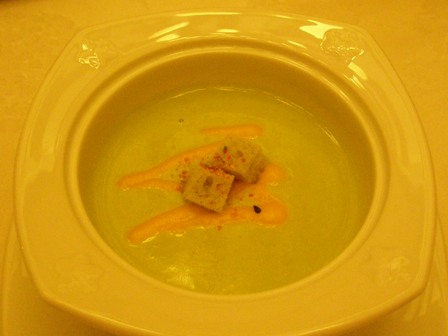
Our hosts had ordered a set-menu. It started with a fabulous tuna fish – incredible, the texture and the flavours -, followed by a pea soup (also with a very intense taste), reminding me of winter days in my native Trier, Mosel.

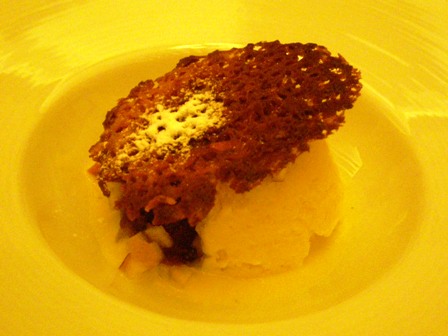
The next dish was a mussel decorated “fine cuisine style”, followed by a white fish with lemon on a bed of vegetables. I even did not say no to the dessert, vanilla ice cream with a crusty waffle cover.

The tuna carpaccio

The pea soup

An artisan’s mussel

White fish with lemon on vegetables

Dessert: ice cream with a hat

The rice water to conclude the meal

I might have missed to photograph a couple of dishes.

Interesting was that at the end of meal, a kind of sweet rice-water was served. It balanced the stomach acids which were heavily tilted towards acidity by the many fermented vegetables consumed as side dishes.

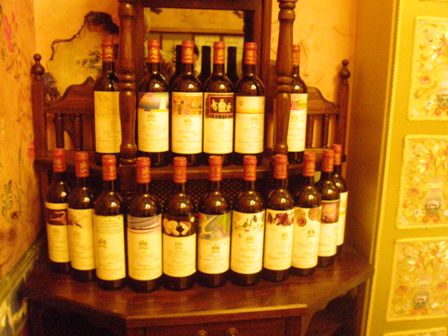
We drank French red wine with the meal, wine from one of the many Mouton Cadet Bordeaux lines. I could not find out which one. It would have been impolite towards out hosts to ask, I guess. My picture-taking was already embarrassing enough.

Red wine cabinet

The décor

The décor of our dining room was just beautiful with lots of Chinese calligraphy, wall paper made out of fabric with flowery motives, and antique European furniture.

A very happy camper

Our dinner was very lovely with lots of interesting and stimulating discussions and conversations. What a wonderful evening. If you are in Seoul look out of Min’s Club; it’s worth it.

Address:
Min’s Club – Fusion restaurant
66-7 Kyungun-Dong Jongno-Gu (Insadong),
Seoul, South Korea
Tel.: +82-2-733-2967 begin_of_the_skype_highlighting              +82-2-733-2967      end_of_the_skype_highlighting
http://www.minsclub.co.kr (Korean only)


Korean food – a discovery

November 10, 2010

My recent trip to Korea was a kind of revelation as regards the discovery of Korean food. I was ignorant for too long about the intricacies of this type of Asian cuisine.

This is the first of a series of blog entries dealing with my recent experience in Seoul and on Jeju island.

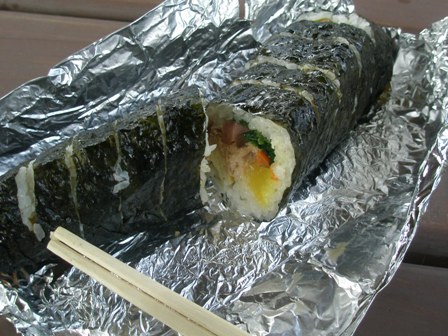
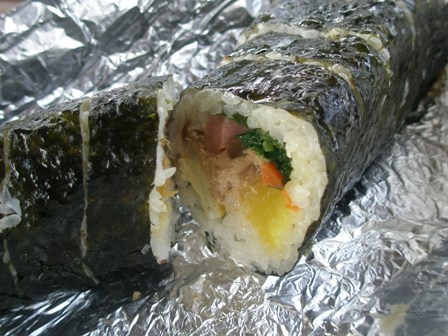
Even Korean fast food, such as “tuna kimbap” (김밥) as shown on the photos below, can be extremely tasty.

It consists of a filling (here tuna with some salted or preserved vegetables) surrounded by rice and wrapped in seaweed. Delicious.

Tuna kimbap

Tasty Korean fast food

What to drink with it, you might ask? Well, I would suggest a beer. But one could also drink some of the many varieties of rice wine, for instance “makgeoli” (막걸리), a fermented Korean milky drink on a rice-wheat basis with about 6-7% alcohol. More about this later.


Another wine experience in China

November 7, 2010

One of the privileges of a frequent traveller, even if exclusively travelling on economy class, is the use of the lounge. As a “wino” this is great territory to sense and experience some of the global trends in the wine industry and/or the airline service providers.

One such trend seems to be the use of paper cups instead of proper glasses. That’s at least what my recent experience in the business class lounge (star alliance) at Shanghai Pudong International Airport suggests.

I found the “wine ensemble” below. Isn’t it cute?

Wine at your service

I could not resist a tasting of the two wines on offer, a white from China and a red wine from France. Unfortunately I could not find any trace of the French wine in the internet. I had noted down “Tour Gouvercin” as the name of the wine (a Cabernet Sauvignon) which was quite pleasant to drink, fruity with body and structure.

The second wine, a ‘Clos des Chenes, dry white wine’ by Imperial Court, a brand re-designed and re-established by Shenma Winery. The wine was a bit “thin” but since the cooler (as seen in the picture above) guaranteed a pleasant temperature, I found it not so bad, light but technically well made.

My wine tasting at Shanghai Airport

China is not only an emerging world power but also a booming market for oversees wines. Chinese grape wine consumption increased from 554 million bottles in 2004 to 899 million bottles in 2008. However, per capita consumption is still very low, about 0.4 litres per person per year.

That’s all good news for wine producers and distributors. Also that imported wines account doe only about 11.8 % (2008) of total domestic consumption is “music in the ears” of the non-Chinese wine industry.

Wine educators have their tasks outlined for them as well. Chinese consumers do not like tannins and acids, often perceive grape wines as “sour” only. This is why the mixing of red Bordeaux wines with coke and spite is quite common consumption habit. This needs to be changes, I guess. Since Chinese people have very complex taste buds, it should not be too difficult to make them appreciate the wonders of fine wines.


Shanghai: on the run

November 6, 2010

I had not much time for food and drink while on a business trip to Shanghai this week. But it is always interesting to visit the “Paris of the East”. Now that the World Expo is over, it was a bit more quiet than the last six months but the controversy of the award of the Nobel peace prize to Liu Xioabo kept the blood of CCP officials boiling.

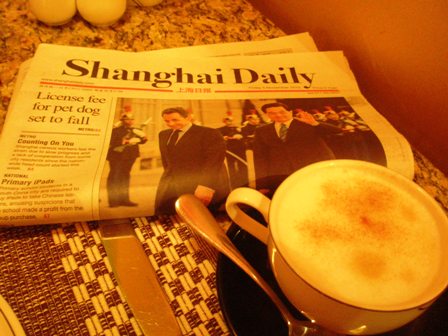
What did the Shanghai Daily say? Hu’s visit to France which has become a good old friend again and the order of 100 airbus planes made the front page. This contrasted well with issues the Shanghai people are concerned with: the high tax/licence fees for their pet dogs. Nice mix of local and global.

My breakfast: coffee and the Shanghai Daily

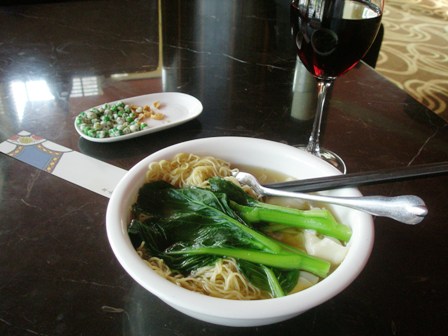
After my talk which I gave to German students I had some time for a quick lunch snack: dumplings in a broth with noodles, and a glass of the house red, of cause a Chinese wine. Delicious. Nice mix of East and West.

Lunch snack with red wine


Restaurant review: Osteria Simon Boccanegra, Firenze, Italy

October 31, 2010

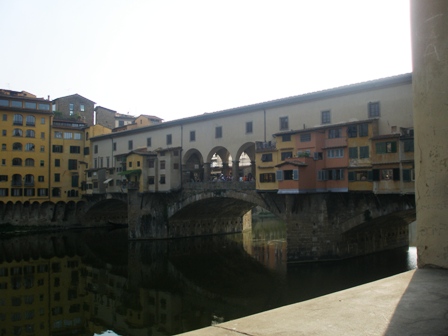
Ponte vecchio, Florence

For our first family visit to Florence my good friend Giuseppe Sepe had put together a selection of six “must do or must see if in Florence”.

These six locations were carefully marked on a little map Giuseppe had drawn for us. His suggestions did not disappoint. In fact we felt utterly privileged to have this little treasure map in our hands.

One of the suggestions was Osteria Simon Boccanegra. We went there for dinner. As instructed, we asked for Tommaso, a good friend of Giuseppe, who as Giuseppe said “would treat us like royalty” (which in fact he did – thank you Tommaso for this memorable evening).

There are actually (at least) three Boccanegras: the ristorante, the osteria and the pizzeria (there is an enoteca as well), all of which offer quite distinct and different menus to their customers. We were drawn by the allure of the food of rural Florence, manifesting itself in the Osteria Boccanegra menu.

Furthermore, Tommaso spoilt us from the outset with a couple of glasses of spumante (bubbly) first, and some selected delicacies later. Then we moved on to a selection of traditional Florentine “primi piatti”, dishes to get started with. They reflected the charm of a truly rustic Florence.

We had raw vegetables, some white bread with liver pate, and a selection of local cheeses with kumquat and other jams all of which were super delicious.

Raw vegetables

Liver on bread

Various cheeses with marmalades

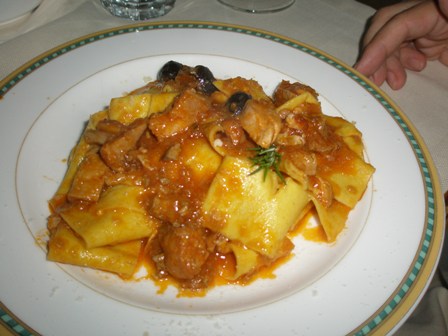
After that we moves on to pasta. I ordered gnocchi al ragu, one of my favourites. Margit had papardelle with rabbit, and the girls chose spinach ravioli with ricotta cheese.

Spinich ravioli with ricotta

Papardelle with rabbit
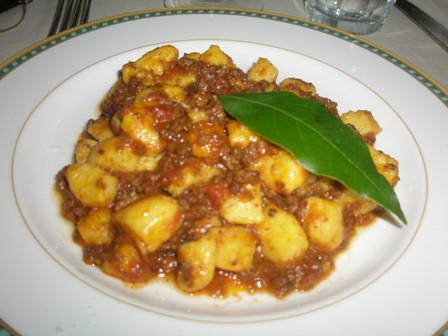
Gnocchi al ragu

Then came the absolute highlight of the evening, the “bistecca Fiorentina”. Goodness me, we had almost no space left for more food but this beef was heavenly. Look at the picture of the steak below with its mouth watering faculties.
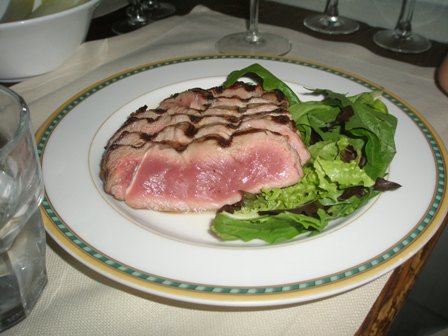
Bistecca Fiorentina

As regards the choice of wine, we were constrained or shall I say conditioned by a wine tasting with Giuseppe in Bangkok. He served us a bottle of Tignanello some time ago which we had not forgotten (how can you forget a Super Tuscan like this?). Of course Boccanegra listed Tignanello on their (extensive and very interesting) wine list.

So the choice was made quickly and a bottle of ‘2006 Tignanello’ by Villa Antinori was ordered.

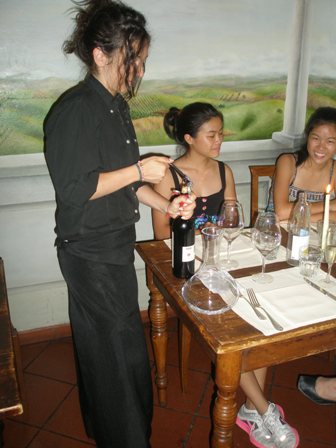
The waitress opening the bottle
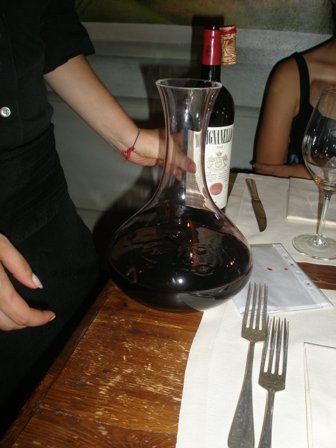
Wine decantered

2006 Tignanello by Antinori

Tignanello, bottle with the cork

I was amazed how skilful one could open such a bottle of wine. The cork would remain “encapsulated” so to say. The waitress decantered our Super Tuscan, and then we were ready. Great job. I have never seen such art elsewhere.

The wine is just beautiful, consisting of 85% Sangiovese, 10 % Cabernet Sauvignon and 5% Cabernet Franc grapes. Tignanello was the first Super Tuscan which was made that way. Traditionally all grapes are Sangiovese. No white grapes are used for the blend.

All the fruit is estate grown and comes from a vineyard also named Tignanello covering 47 ha. The vines grow on 350-400 meter altitude on limestone and red tuffaceous soil.

2006 was a great vintage, quality and quantity wise. After the normal fermentation, the wine is put in barriques where the malolactic fermentation takes place. After the blending the wine can age in oak barrels for about 12 months.

The wine is dark red with aromas of red fruit and berries. It has fine tannins and is elegant with a good structure and length. I just love the finish with is smooth and round like good chocolate. This was only my second bottle of Tignanello but the lust for more is lying in wait.
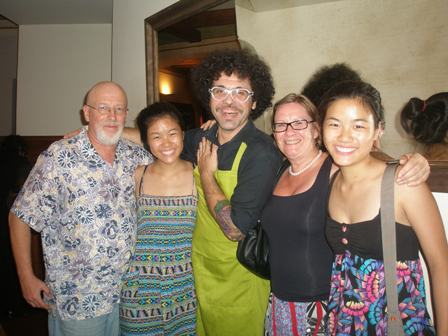
Tommaso with the Adam family

Occasionally we review our family holiday experience by rating the places we have visited. Boccanegra (the Osteria to be precise) came out on top of our Italy visit which did not come as a surprise. There was only one other restaurant which came close to it. But more about this another time.

If you visit Florence please feel free to use Giuseppe’s map. It is worth it to explore “his” Florence in 48 hours. And if you happen to bump into Tommaso, say hello to him. By the way, he loves Thailand, Bangkok and Thai cuisine.

Address:
Simon Boccanegra
Ristorante, Osteria, Pizzeria
Via Verdi 27/r and Via Ghibellina 124/r
50122 Firenze/Florence, Italy
Tel.: +39-55-2001090
Fax: +39-55-2263038
E-mail: boccanegra@boccanegra.com
www.boccanegra.com
Closed on Sundays!!!!

Mosel Riesling: Weingut Heymann-Löwenstein

October 30, 2010

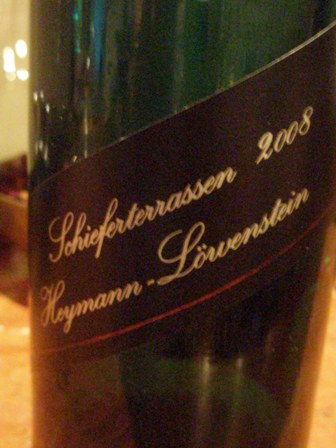
2008 Slate Terraces Riesling Heymann-Löwenstein

The website of Weingut Heymann-Löwenstein starts with a poem of Ingeborg Bachmann, a famous Austrian poet and writer (1926-1973). The first line reads as follows:

»One should be able to pick up the stone
and hold it in wild hope
until it begins to bloom«

That’s in fact what Heymann-Löwenstein does. The earth or better the rocks (slate in this case) in which the vines grow is at the centre of his attention.

I know the sound of slate from my youth growing up in Trier, Mosel. Slate was all around us. The roofs of the houses were in slate, covers of walls, and walls themselves, all in grey slate. We liked to break individual thin pieces into smaller ones and the grey slate dust trickled through our fingers.

Reinhard Löwenstein, who founded the winery in 1980, was carefully searching for the best locations (terroir) before starting his venture in Winningen, a small hamlet along the lower Mosel (south of Koblenz). He is an innovator whose wine styles differ from the Mosel tradition, an inspiration to many young wine-makers at the Mosel river.

Yields are kept low, harvest is late and the steep slopes of the slate stone reflect the days heat during the night. Moreover, the juice is allowed to stay with the skin for up to two days. Some Botrytis infected fruit is sometimes also added giving complexity to the wine. Rheinhard Löwenstein’s wine making philosophy is non interventionist. He intends to bring out the terroir.

The ‘2008 Slate Terraces Riesling’ by Heymann-Löwenstein has an intense golden colour in the glass. It’s alcohol is 12.5%. The wine is full and round, with a balanced acidity. It is dry, displaying a fine minerality and beautiful aromas of citrus fruit. The wine has a good structure and a stunning finish.

Timo Mayer had brought the above bottle with him when he came on a stop-over to Bangkok. We enjoyed it together with some food during a night which saw many exquisite bottles of the fine wines being opened and consumed with great delight.
The winery Heymann-Löwenstein is ranked by Riesling.de as one of the top ten Riesling producers in Germany. The area under cultivation is about 16 ha with an annual production of 100,000 bottles.

And the good news for residence in the Healesville area in Victoria is that Barrique, the wine store in this lovely little town, has some bottles of Heymann-Löwenstein Riesling on offer. Two years ago I have bought a few there. Delicious.

Address:
Winery (Weingut) Heymann-Löwenstein
Bahnhofstrasse 10
56333 Winningen
Tel.: +49-2606-1919
Fax: +49-2606-1909
www.heymann-loewenstein.com


Food blogs: The culinary world acknowledges bloggers!

October 28, 2010

A rather Spartan breakfast

I was very pleased today when I read in the Wall Street Journal that food blogs have come of age and that the culinary world acknowledges food bloggers. Great news indeed. Finally, one could say.

Bruce Palling is writing that food bloggers knowledge of haute cuisine is quite remarkable and that the impact of food blogs is significant. For the first time the New York based James Beard Foundation includes in its food writing awards (Bruce calls it: the “Oscars of the Food World”) not only mainstream print media but also blogs.

Bruce cites a couple of outstanding food blogs. For instance Ms. Aiste Miseviciute, a 28 year old fashion model from Lithuania. She writes about what models eat (Who said models don’t eat?). Moreover, Bruce brings example of bloggers eating regularly at Michelin star restaurants such as Felix Hirsch (from Luxembourg, a neighbour so to say for us people from Trier) and Andy Hayler. Their blogs receive 400 respective 2,000 unique visitors a day! Amazing.

Nowadays, food bloggers are even invited by restaurants to eat free of charge and then write about the food and the eating experience as a marketing strategy. This reflects the fact that bloggers are trusted sources of information and as such a valuable avenue for advertisements.

Bruce Palling ends his essay with the following words:
“We should all be grateful that there has never been such a profusion of fascinating accounts of fine dining so available – and provided free of charge”.

Although I cannot claim to have as many visitors as the two gentlemen above, it somehow fill me with pride to be one of the club. I guess motivation to continue blogging should not be a problem for a while.

PS: I have learned to appreciate the Wall Street Journal as a newspaper, although I never played in my life at any stock exchange. I am somehow averse to gambling.


I Due Fratellini – Best Tuscan sandwiches and wine

October 27, 2010

The roofs of Florence

Another “must see” on our map of Florence was “I Due Fratellini” where the best Tuscan sandwiches and wines are on offer. Indeed the sandwiches were awesome, fresh and tasty with ample choice for meat and cheese lovers as well as for vegetarians.

We had a couple of glasses of very decent Pinot Griggio with the food.

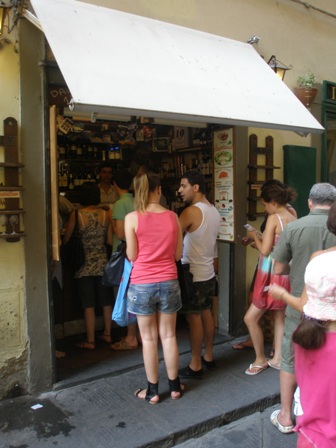
I Due Fratellini – long queues

The crowds are manageable at lunchtime but be prepared to queue for a while. It is advisable to get there early, let’s say 11:30 h or so. We sat on the pavement on the other side of the small lane in which I Due Fratellini is located.

I Due Fratellini

The prices are very reasonable. The service is great, fast and friendly. What I liked that we could drink the wine from real wine glasses and not some kind of plastic etc. cup. You just return the wine glasses when you have finished you drink. Very nice indeed.

The place is easy to find. Check it our when in Florence next time.

Address:
I Due Fratellini
Via dei Cimatori 38/r
50122 Firenze, Italy
+39-552396096
Opening hours:Mon.-Sat. 09-20h
www.iduefratellini.com


Enoteca Baldovino, Florence, Italy

October 24, 2010

Basilica di S. Croce, Firenze

Welcome to Firenze. The photo above shows the Basilica di S. Croce in the side street to the left of which you will bump into a wine bar and restaurant called “Baldovino”.

The counter of Enoteca Baldovino

The inside of Enoteca Baldovino

Food and wine sideboard

The No. 5 “must see place” on Giuseppe’s Firenze map was Baldovino, a ristorante/pizzeria with a wine bar (an enoteca) next to it. We patronized the “enoteca” to have a glass of wine. It was a late afternoon with a blue sky and beautiful sunshine.

The waiter was very friendly and made us feel at home immediately. We ordered a bottle of white. It was hot and white wine seemed the right stuff to get ready for another splendid evening in Florence.

Enoteca Baldovino is a very lovely place to hang out on a warm evening. If you are hungry you can just walk over to the restaurant Baldovino next door. One can also sit outside in the piazza and watch the passers by on their evening “passagiata”.

An interesting wine cooler

‘2009 La Segreta Bianco’ by Planeta, Sicilia

We ordered a bottle of ‘2009 La Segreta Bianco’ by Planeta, Sicilia. This is an easy drinking blend of various grape varieties but with the bulk coming from the Grecianico grape.

The back label

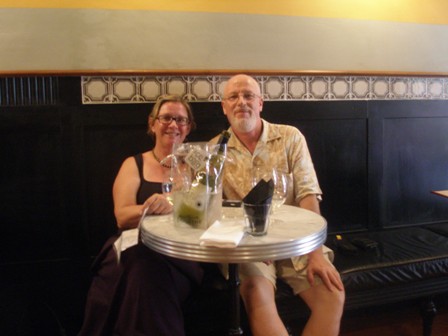
Happy customers

Address:
Enoteca Baldovino
Via S. Giuseppe 22 e
Florence, Italy