Jewels of the Upper Goulburn Wine Region Part I

October 25, 2008

Today, I want to start a new series and introduce to you some wine and grape producers from our wine growers association, the Upper Goulburn Winegrowers Association. I plan to feature three to four wineries and vineyards at the time. The selection is random. I will start with the wineries with open cellar doors. Of the 30 odd members of our association, about 9 belong to this category. Another 12 are vineyards which also produce some wine under their labels but conduct wine tastings only by appointment. All the others are fruit producers only and do not sell wines commercially.

The first cohort of wineries to be presented consists of Kinloch Wines, Rees Miller Estate and, a small boutique winery, called Rocky Passes Estate. I want to be honest with you. I have tasted wines made by Malcolm Kinloch (Kinloch Wines) and David Miller (Rees Miller Estate) but not the ones made by Victor Oles (Rocky Passes Estate). I have visited the two former wineries (and I know Malcolm and David) but not the latter.

But this is no impediment to write about all three of them. Anyway, we are going to visit Australia for Christmas and we might take this opportunity to get to know the Rocky Passes people.

I am starting with Kinloch Wines. Malcolm and Susan Kinloch have established a wonderful wine business. The vineyard is located in the Booroolite Valley, about 15 minutes by car from Mansfield (almost next to another famous winery of our region: Delatite Winery).

This year at the Federation Sq Showcase Series the Kinlochs were rewarded two gold medals, one for their “2004 Mary Friend Cabernets-Merlot Blend” and another for their “2006 Don Kinloch Sparkling white”. Moreover, the “Mary Friend” red was judged the Overall Best Red Blend in its class at the Award presentation for the Victorian Wine Awards.

2008 was a most unusual year in the Upper Goulburn. Kinloch Wines harvested a record 34 tons of fruit of outstanding quality. From the 2008 vintage three wines have been released so far (cellar door prices in brackets):
-Unwooded Chardonnay (A$ 18)
-Sauvignon Blanc, and (A$ 22)
-a first rosè (A$ 18) made from Pinot Meunier grapes.

I have tasted earlier vintages of the two white wines and they are delicious. When we visited Kinloch Wines in winter, one could see Mount Buller in a not so distant distance, all in white with a beautiful snow cap.

How to find them:
Kinloch Wines
In the Booroolite Valley, the cellar door is warm and friendly and offers gourmet luncheon platters on weekends and public holidays.
Address: 221 Wairere Rd, Boorolite – 15 minutes from Mansfield
Open: 10.00 am to 4.00 pm daily
Tel: 5777 3447
Email: info@kinlochwines.com.au
Web: www.kinlochwines.com.au
Contact: Susan and Malcolm Kinloch
Rees Miller Estate is the next winery in my cohort. Located near Yea – about 15 minutes drive on the highway to Alexandra/Mansfield – Sylke Rees and David Miller own and operate a fully certified biodynamic vineyard and winery. Today about 7 ha are under vines, the farm has a total of about 64 ha. Sylke and David are both very much committed to the protection of the environment, and the organic production of food. They intend to produce pure products for consumption in a way that supports the land and its people.

We got to know Sylke and David when our wine stall was just adjacent to theirs at the 2007 Alexandra Food and Wine Expo. David conducted a very interesting wine tasting, actually my first wine tasting at such an event, and Sylke sold the wines. When we visited their cellar door some time later, they were both on Christmas holidays. To my great surprise Rees Miller wines were available at our duty free wine store in Jakarta, and we did not have to suffer any shortages of their beautiful reds.

How to find them:
Rees Miller Estate
Fully certified biodynamic vineyard situated on the Goulburn Valley Highway, just east of Yea.
Address: 5355 Goulburn Valley Highway, Yea
Open: 10.00 am to 4.00 pm daily
Tel: 5797 2101
Email: info@reesmiller.com
Web: www.reesmiller.com
Contact: David Miller or Sylke Rees

The last vineyard in this first cohort of Upper Goulburn wineries with cellar doors is Rocky Passes Estate, a small boutique vineyard of about 6 acres (5 acres Shiraz and 1 acre Viognier) located in Whiteheads Creek, near Seymour. I only know their one-page website and their listing in our membership directory. Rocky Passes Estate is another vineyard dedicated to organic grape growing and wine making (there are quite a few in our region). Cropping levels are kept low (about 2 tonnes per acre). The cellar door was opened in 2006. The wines can be ordered by mail, phone or e-mail.

How to find them:
Rocky Passes Estate
Situated at the southern end of the Strathbogie Ranges, the wines are made using organic practices and biodynamic preparations.
Address: 1590 Highlands Rd,
Whiteheads Creek, Seymour
Open: Sundays 11.00 am to 4.00pm or by appointment
Tel: 5796 9366
Email: rockypasses@activ8.net.au
Web: www.rockypassesestate.com.au
Contact: Victor Oles or Candy Westney

I hope I could stimulate your curiosity. The Upper Goulburn Wine Region is a rural place with real people who love what they are doing, have passion for their wines and commitment to the environment.


Sunday Breakfast in Jakarta

April 27, 2008

My daughters have become true gourmets. They complained today that we did not have a proper breakfast and that they wanted something thrilling.

How about melon prosciutto (Parma ham)? Well, thats what we had at 10 in the morning. One could say it was a kind of brunch, ok.

Melon prosciutto and Sauvignon Blanc from Shaw and Smith

The Shaw and Smith ‘2007 Sauvignon Blanc’ from the Adelaide Hills (www.shawandsmith.com), we drank with it (retailing in Jakarta for US $ 20.10/bottle), was just how I like SB: crisp and clean, fresh and spicy, apricot, melon, grassy notes. The wine is unwooded and has 13% alcohol.

2007 was a rather warm and dry year in the Adelaide Hills. Late frosts affected quantities but overall the quality of the fruit was very good. Because of the higher than normal temperatures, the flavours of the Sauvignon Blancs were more in the tropical fruit and less in the herbaceous spectrum.

I wonder what else is to come today after such a brilliant start.


9. Wine Rally – Wines for every day

March 8, 2008

weinrallye.jpg

Sorry folks, but this time it does not work. I cannot avoid to write pro domo. The wine I drink every day, is our own. I have to add that this only applies if we are in Glenburn, Victoria. In the past we had once the opportunity to import our own wine for private consumption in Jakarta. But ever since, due to the vagaries of importing into Indonesia, we were not in the position to establish Two Hills as a ‘house wine’ for everyday consumption.

At Two Hills Vineyard we have so far made two varietal (single vineyard) wines from our grapes:

– a single vineyard Sauvignon Blanc (2000, 2001 and 2002 vintage) and
– a single vineyard Merlot (2001, 2004 and 2006 vintage)

Thomas Weber (www.wein-als-geschenk.de) wrote the following tasting notes for the ‘2002 Sauvignon Blanc’:

“Dezent hellgruener Farbton, Holunder- und vor allem Stachelbeerenaromen vor einm rauchig minieralischen Hintergrund. Kraftvolle lebendige Saeure und ein langer fruchtiger Abgang.”

In English this might read as follows:

“Subtly light green hue, elderberry and especially gooseberry aromas before a smoky mineral background. Powerful lively acids and a long fruity finish.”

And the ‘2004 Merlot’ was described by Thomas as follows:

“Der blutrote Wein duftet aus einem eleganten ausdrucksvollen Koerper vielschichtig nach reifen Waldbeeren. Eine angenehme Saeure vor fein ausbalancierten kraeftigen Tanninen fuehrt zu einem langanhaltenden Finish.”

which translates into:

“From an elegant complex expressive body the dark red wine shows aromas of mature berries. Pleasant acidity before finely balanced tannins, leads to a long-lasting finish.”

Well, thats what Thomas wrote for a blind wine tasting in Trier last year. Since I drink it every day (unfortunately, when I’m in Australia only), usually with a meal (lunch or dinner), I lost the ability to describe the wine anyway.

picture-077w.jpg

This is were we drink most of our wine. On the space at the entrance, I hesitate to call it terrace, of our little house cum vineyard shed. Apart from drinking Two Hills wines, we drink our friends wines. Usually, we swap cases of 12 bottles. We swap with Gayle Jewson and Steve Sadlier.

Gayle has a small vineyard in front of her house in the Yarra Valley, in fact just a couple of acres of Pinot Noir and Chardonnay. The Pinot is a “cleanskin” (Gayle has no label as yet) and it is called ‘Pip’s Paddock Pinot Noir’, a wine which can only be bought directly from Gayle.

The other house wine, we consume, is from Steve. His vineyard is called Nenagh Park. He is mainly a contract grower (about 9 ha under vines) for Yering Station and other well known wineries in the Yarra Valley. Steve’s Chardonnay is to die for, so is his Pinot Noir. He sells his wines (cleanskins) without label to friends and through a private network. Watch out for Nenagh Park in the future.

Visit us, and I will serve you all these wines. Promise.


News from Two Hills Vineyard

January 23, 2008

twohillsinjanuary.jpg

In the back, you can see the two hills which gave the vineyard it’s name.

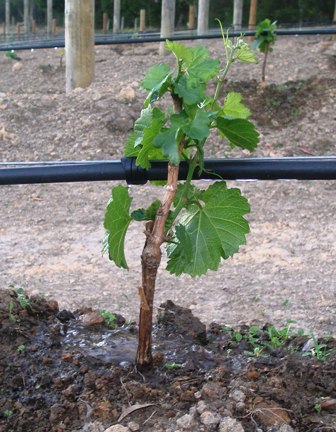
2008 promises to become our best year ever in the almost 13 years history of Two Hills Vineyard. A new block of Chardonnay has been successfully planted in early December 2007 and with this we will be able to produce on site one more ‘single vineyard wine’ in a couple of years from now, to be precise in about 2013. I will hopefully have retired by then from my work overseas.

chardy-1.jpg

Young Chardonnay plant

chardy-2.jpg

Morning in the Chardonnay

chardy-3.jpg

Chardonnay block

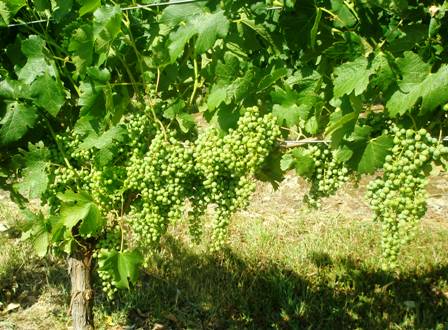
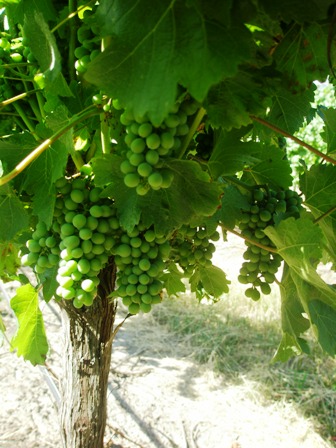
The fruit on the vines of the other three varieties looks really good (as the pictures below show). Despite the already mentioned freak hail storm on December 22nd, the fruit is healthy and in abundance. We expect to harvest about 25 tonnes of fruit from 3.5 ha under vines this year.

Because of the extreme heat we had in early January, vintage time might be earlier than in previous years, maybe in late February; usually it is in the middle or end of March. We in the Upper Goulburn Wine Region (www.uppergoulburnwine.org.au) are usually starting to harvest our grapes later than the colleagues in the Yarra Valley further south.

young-merlot-grapes.jpg

Young Merlot grapes

young-pinot-grapes.jpg

Young Pinot Noir grapes

young-sb-grapes.jpg

Young Sauvignon Blanc grapes

Our old Fiat tractor will be retired in 2008. Because of a generous donation from my mother it can be replaced with a newer model with some more horse power. We will also retire our old Mazda 626 car which is not exactly a useful farm vehicle but which served us well as a means of transport during the short months we spend on the vineyard during the last 12 years.

We will hopefully also get around in sowing one of the front paddocks with a horse loving grass mixture. Then we will have the plot fenced in by Peter Thwaites and turned into a horse paradise where our horse enthusiastic daughters, Lucy and Charlotte, can keep their ponies and other horses when we visit Glenburn.

We have started to irrigate our vines. I hope their will be no large bushfires as in 2007 when extensive smoke tainted many grapes. If the high temperatures persist, the likelihood of fires will rise too.

Finally, we have decided to extend our dwelling on the vineyard. We plan to link the old shed with a new wing to become our house, a proper residence so to speak.

Let us see what 2008 has up its sleeves.


Sauvignon Blanc

July 10, 2007

My morning newspaper, the International Herald Tribune, carried the other day an article summarising the tasting of 25 Sauvignon Blanc wines from New Zealand. Sauvignon Blanc is one of my most favourite white wines. The results were interesting. Only about 10 of the 25 wines found the approval of the tasting panel (it was a New York Times event of the dining section). For the judges, the tasting was a disappointment. They were looking for the bold, pungent refreshing SB but found that too many wines were dull, too sweet or simply wishy-washy or as Eric Asimov put it “commercially inoffensive”. My favourite SB from New Zealand, Cloudy Bay came up third (behind “Villa Maria” in number one position), described as “quieter than the top wines” but still “bold, zesty and delicious”. In my bottle shop in Jakarta it retailed for 40 US$ the bottle last week. Gone are the days when I had to pay only 18 US$ for this most delicious white.

Mr. Asimov is of the opinion that many producers have decided to push quantity at the expense of quality and that they are over cropping (too high yields per acre). I learned something else from the article: that in New Zealand wine producers are allowed to add sugar or acid to make up for “green” (not fully ripened) grapes, as we say. In Australia, we are not allowed to engage in this technique or should I say “manipulation”. Next time in the bottle shop it will be much easier for me to walk away from the dear SB from Marlborough and turn to some cool climate Sauvignon Blanc of Australian provenance. I might be enticed to make some Two Hills Sauvignon Blanc again in 2008. Kinloch Wines (www.kinlochwines.com.au) Sauvignon Blanc of 2006 is sold out, as I learn from their website. Guess who provided some of the fruit for this most delicious wine from the Upper Goulburn River (www.uppergoulburnwine.org.au)?


A philosopher’s lunch

March 30, 2007

What a beautiful lunch we had the other day. I have to give away the secret of the most delicious dishes we enjoyed last Sunday. In fact it is not a secret at all because the recipe is from a very well known and very beautiful cookbook, the Philosopher’s Kitchen by Francine Segan.

This cookbook’s subtitle reads, “Recipes from Ancient Greece and Rome for the Modern Cook”. Nothing sounds better to the ear of a Celtic Treverer who had enjoyed Roman cuisine for a couple of centuries. We had a fish dish and afterwards a salad, that’s all, but what most delectable food this was. I would have loved to have Sucellus, Epicurus and Lucretius over for lunch that day. Only on the wine side I would have made concessions to modernity. A Sauvignon Blanc from the new world vineyards I find much more appealing than a wine of Roman times which would have needed mixing with water and honey to be drinkable at all.

Wine god

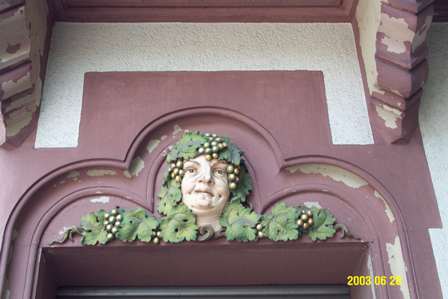
On a portal in Trier: Bacchus and vine leafs

And here is the recipe: red snapper in parchment. The ingredients are as follows:

– juice of freshly pressed lemons
– 2 garlic gloves, minced
– ¼ cup of extra virgin olive oil
– 4 bay leaves crushed
– 1 ½ teaspoons whole pink peppercorns
– 2 table spoons of capers, rinsed
– 15 oil-cured black olives, pitted and halved
– 2 red snapper fillets, without skin
– Salt and freshly milled pepper
– Lemon wedges

Mix and combine the lemon juice, garlic, bay leaves, peppercorns, capers and olives in a large bowl and soak the red snapper(in Bahasa Indonesia: Kakap Merah) in this marinade for about two hours in a cool spot. Then put the fish into the oven (up to about 200°). We put it into aluminium foil and topped it with the marinade; then closed the foil and baked it for about 10 to 13 minutes. We served the fish on a plate. We had just plain baguette with it but you can add all kinds of things, eat it with rice, potatoes, and with various vegetables. It was such a wonderful dish, mouth watering. The capers in the marinade give it a spicy edge, and this complements the white flesh of the fish. The olives and the capers take you to the Mediterranean. I could see the ocean, the sand, the beach…and taste the salt, the smells of the water….

After the main course we had a warm spinach salad. The recipe is also in the above cookbook and is called, “Baby Greens with Caper Vinaigrette”. The caper vinaigrette is similar to the marinade, just that no olives and no garlic is added. It goes as follows:

– 2 tablespoons of freshly squeezed lemon juice
– 2 tablespoons wine vinegar
– ¾ cup of extra virgin olive oil
– 3 tablespoons of capers
– Salt and freshly milled pepper
– 3 cups of assorted green vegetables

As I said, we used spinach (Bahasa Indonesia: Bayam Hijau) which we blanched before adding the vinaigrette and the warm salad did in fact complement the first dish and harmoniously end this philosopher’s meal. I highly recommend the cookbook. It makes a wonderful gift. If you love the classics and you want to delve in the past of these two great Mediterranean cultures, you should get it (www.atrandom.com).

You will have noticed that I did not yet mention any wine so far. Well, the wine I chose was a disappointment. I though a Sauvignon Blanc would go well with it, and this is certainly so. I chose a 2006 Sauvignon Blanc from Giessen of Marlborough, New Zealand, of which I had fond memories. But what a surprise. It was stale, oily and did not display any of the varietals’ characteristics of a cool climate Sauvignon Blanc. With sadness and melancholy I thought of times gone by and our own 2002 Two Hills Vineyard Sauvignon Blanc and it’s brilliant taste. Unfortunately, we were down on white wine and we just ended the meal with a port and an Italian coffee. I might have to consider buying a special wine fridge so that this cannot happen again.


What we were drinking: South Australia

March 23, 2007

David, the son of our mutual friend John, from Sydney brought two wonderful bottles of wine over the other day. We had them with a beautiful meal for Saturday lunch. With the spicy clam pasta we enjoyed a bottle of 2006 Sauvignon Blanc from Shaw and Smith from the Adelaide Hills (www.shawandsmith.com), a cool climate region in South Australia where my wife comes from. Grapes where planted there as early as 1839 and today there are about 60 wine labels with over 3,000 ha of vineyards planted. This young Sauvignon Blanc is a wine to my taste: fruity (with passionfruit and guava flavours), grassy-herbaceous, flinty and well rounded with a long finish. The wine is unwooded and James Halliday gave it 94 points. Very enjoyable in a tropical climate such as Jakarta.

McLaren vale1

McLaren Vale with vineyards, sea view in the distance

The second bottle we drank with the main dish, a vegetable stew, came from Mitolo Wines (www.mitolowines.com.au), a family owned winery situated in the most southern tip of the McLaren Vale region. I will write more about McLaren Vale in one of the next entries, because we visited the region in 2005 and had a wonderful time visiting some of its vineyards. We drank a 2004 Jester Shriaz. The wine had a deep purple colour. The nose showed intense blackberry, plum and chocolate aromas of rich black fruit. The wine has a good structure, is well rounded and has a long finish. Of course it should have been cellared for 4-5 more years but we could not wait. Both wines made our day which we spent sitting on the terrace and discussing the pleasures of life in general and life in Indonesia in particular. Come and visit us one day.

McLaren Vale 2

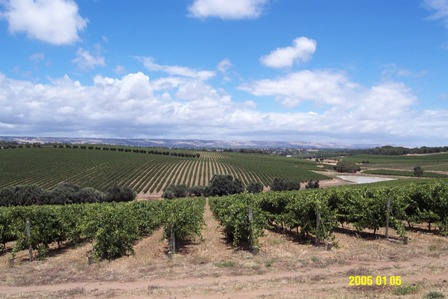
Vineyard view in McLaren Vale


A most marvelous fish dish

March 4, 2007

I have been away for a while. Let me tell you about a very memorable dinner I had with my friends Joyce and Rainer and a couple of other friends in Bangkok the other day. It started as a kind of late Chinese New Year celebration. We jointly tossed a special Singapore salad with the most astonishing ingredients of which I cannot give you a run down. Eating this dish together brings you luck of course. We had it as a kind of entree.

The main dish, however, is what I would like to introduce to you today:

Baked Sea bass with Basil-Feta Crust

This is a most amazing creation. I always thought that fish and cheese do not go well together. Wrong. They can build a terrific partnership and create an explosion of your senses in your mouth. The recipe goes as follows (4 serves):

Crust ingredients
– 3 garlic gloves
– feta cheese (one block)
– bread crumbs
– basil leaves
– black pepper, salt
– 4 table spoons of best extra virgin olive oil

Fish
– 4 pieces of Sea bass fillet, but any other “white” fish will do

How to do it
– Grind peeled garlic cloves and basil leaves together into a coarse consistency, mix the olive
oil into it
– put ground basil mixture into mixing bowl together with bread crumbs and Feta cheese. Mix
well together. Add pepper and two more tablespoons of olive oil.
– was sea bass fillet and sprinkle with pepper and salt. Place on oven-proof dish.
– put basil-feta mixture on fish covering the surface.
– bake for 30 minutes in 180 c oven
– serve with vegetables as desired.

We drank a Sicilian white wine with the fish. I would have loved to have a Two Hills Sauvignon Blanc instead; the wine we had at Rainer and Joyce’s wedding some years ago for instance. Of course also a Sauvignon Blanc from another cool climate wine region would do. But Sauvignon Blanc definately be my preferred choice with this dish.


2004 Two Hills Merlot and its DIAM cork

February 20, 2007

Many of our customers might have wondered why we changed from a natural cork as used for the 2001 vintage to one which looks like a compound, glued together closure. Well, let me share with you some of the information which brought us to this change.

Wine industry experts estimated that each year about 200 million bottles of wine worldwide are having a moldy smell coming from defective cork contaminated with Trichloroanisole (TCA). The financial losses to the industry are enormous. If one assumes than on average about 9% of the bottles are contaminated, then any method able to reduce these losses is highly welcome especially by small producers or boutique vineyards such as Two Hills. A French closure company, Sabaté of Oeneo, has developed a new closure, the DIAM cork, which guarantees a 100% cork taint free closure of wine bottles. These corks also offer near perfect seals and no random cork oxidation or leaks.

How is the DIAM cork made?
The procedure is similar to the technique used to produce decaffeinated coffee. The cork is reduced to cork flour, and then washed with carbon dioxide where the TCA is removed. After that the flour is reconstituted and held together by the same polymer that contact lenses are made from. Independent research, for instance by the Australian Wine Research Institute (AWRI; www.awri.com.au), has confirmed that DIAM corks are exceptional in preserving freshness by avoiding oxidation. In 2004 Oeneo Closures has won an international award, the Gold Medal Trophy of Vinitech in Bordeaux, for technical innovation.

We at Two Hills Vineyard had basically three options: (1). buy more expensive conventional cork, (2) put the wine under screw caps and (3) experiment with DIAM cork. I could not bring myself to put red wine under a screw cap. I might be called a romantic by I enjoy opening a bottle with a traditional opener. For white wines, I hold a different view. I am willing to sacrifice the same romantic notion for a guaranteed cork free taste of the wine. I am not so sure about Riesling though, especially those Riesling wines which benefit from aging. In such a case I would be willing to invest in more expensive conventional corks, I guess. This is of course not logical but rather arbitrary, I know. Alas we do not have Riesling grapes at Two Hills so that I do not have to make this decision. But for aromatic wines such as Sauvignon Blanc of which I am especially fond off, I readily accept the screw cap.

In the end we decided to give DIAM a chance. I hope that our customers will be satisfied with this explanation and continue to enjoy the exceptional quality of our wines. For those of you who want to know more about closures, please visit www.winestate.com.au or put DIAM in your search engine.

2004 Two Hills Merlot

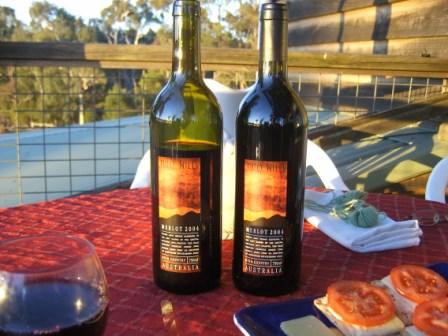
2004 Two Hills Merlot bottles shortly before consumption on our terrace in Glenburn