The last sip – a Delatite Riesling

April 18, 2010

Leaving Two Hills Vineyard in Glenburn is always a sad affair. The evening before departure we bid farewell to our old friend Steve and our family, Michael and Helen. On Sunday morning we said good bye to our neighbours, Hillary and Ken. Then we drove to Yarra Glen where we left the car at Gayle’s farm. We had a morning tea, moved the luggage into her car and off we went to Melbourne Airport. Gayle dropped us there and we did the usual stuff.

Fortunately, there was a nice bar called “Plonk”, right next to gate No. 4 from which we were to depart for Bangkok. We went through their wine list and chose a wine from our wine region (the Upper Goulburn Wine Region), a ‘2008 Delatite Riesling’. What a delight this wine was, fresh and fruity with citrus and passion-fruit aromas, a good structure and a long finish. The waiter was particularly charming. Here we said our final good bye. Reminiscing about the past is an old man’s vice, but the memories we took with us are treasures of a very special kind.


Kioti tractor, a Daedong from Korea

April 15, 2010

My new Daedong

My new toy is just awesome. A new tractor is just great after two years without agricultural machinery. Toys for boys, one could say. I really enjoy getting to know this new machine. I am slashing the vineyards and some of my paddocks.

Kioti is the name


Vintage time at Two Hills Vineyard

April 13, 2010

Two Hills Merlot grapes 2010

This vintage is one to forget quickly. The few sales of grapes we had are not worth mentioning. The Merlot grapes looked good though (so did the SB and the Pinot Noir). We have to rethink our business model. But we are in good spirits and optimistic about the future of our undertaking.

Margit and the grapes


Liz Mazurek Art Exhibition at Rocky Passes

April 11, 2010

Rocky Passes 2006 Syrah

One of our favorite “house wines” is Syrah from Rocky Passes, a winery about an hour north of Two Hills Vineyard. Rocky Passes Estate has received rocking reviews from James Halliday, one of the “popes of wine” from the Yarra Valley. The 2006 vintage received 92 points. Vitto Oles is a jolly good fellow, excellent wine maker and carpenter.

James Halliday wine reviews of Rocky Passes

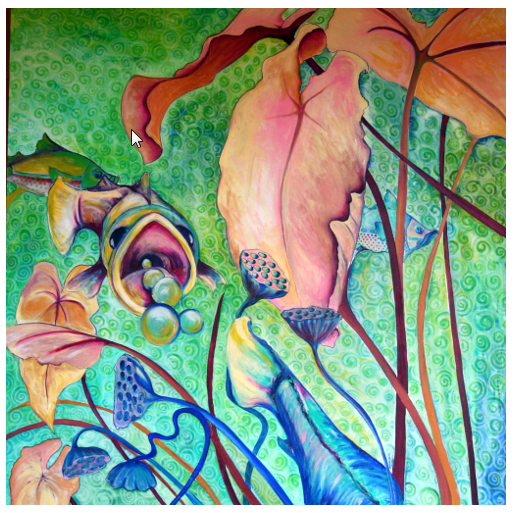
Liz Mazurek painting

Today the newest art exhibition of Liz Mazurek starts at Rocky Passes. The theme is “The Persistence of Existence”. There is also a three course Spanish dinner available at the opening. If you have not reserved just go for some wine tasting and have a look at the colorful paintings of Liz. Rocky Passes Estate is worth a visit.

Address:
Vitto Oles & Candi Westney
Rocky Passes Estate
1590 Highlands Rd
Whiteheads Creek
Vic 3660
Australia
+61 3 5796 9366
www.rockypasses.com.au


Rural life – fishing in the dam

April 10, 2010

It took me a while to resume blogging. I did not keep my promise to post at least a photo a day. I am sorry about that. My first week of holidays on the farm was very eventful and I had a lot of things to do. But today it is raining and I have some time on my hands. Work can wait.

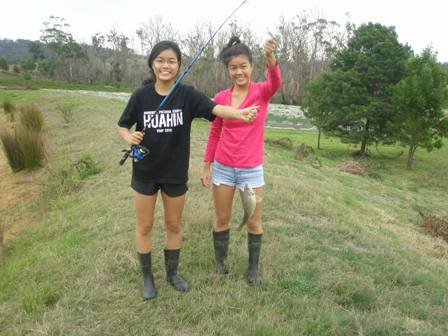
Yesterday was one of these beautiful autumn days. We decided to go fishing in the dam. Some years ago we had stocked the smaller dam with some silver perch. We took the fishing rods, got some scrubworms and off we went to check out if the cormorants left some fish for us humans.

To cut a long story short, Lucy was the first to catch a silver perch,then came Charlotte and finally Helen, all with their first ever fish. The fourth fish was thrown back into the water. Three beautiful fish should suffice for a hearty country meal. Later Margit pan-fried the perch with a few local herbs and butter. It looked beautiful, but came up a little bit muddy. This was possibly because of the rain and yabby activity. We threw in a couple of yabby nets, which should provide us with a nice lunch in a few days.

Lucy with her first ever fish

The silver perch

Lucy searching for a suitable worm

Charlotte and her first fish

Another silver perch – Lucy, Helen, Charlotte and Michael

Food and local wine at the dam

Of course, we tasted a lot of local wines. I chose a bottle of ‘2003 Kinloch Estate Pinot Meunier’ and a bottle of ‘2004 Two Hills Merlot’. I love the Pinot Meunier Malcolm Kinloch makes. A bottle of our own wine

The fishing party

Beautiful silver perch

Ready to be eaten

Needless to say that we had a wine with the fish. I selected a ‘2009 Sauvignon Blanc cleanskin’ from Steve Sadlier, our friend and vintner. which he had given to me the day before. That was a wonderful choice. The Loire style Sauvignon Blanc from the Yarra Valley complemented the flavour of the white fish perfectly.


Heading home

April 1, 2010

When you read this I might be high up in the sky, asleep on the plane and dreaming of my two weeks vacation on the farm in Glenburn, Victoria. Or if you come a bit late to this blog entry, I sit already on our terrace, enjoying the autumn days together with friends and family and we eat and drink, and laugh and have fun.

The wine we’ll drink will be definitively be Two Hills Merlot. We might also drink some of our friends newest releases, cleanskins, or right from the barrel. Or we take a long walk in the vineyard. Or I sit on my brnadnew tractor and slash the grass. Or or or. So many possibilities but one thing is sure: we will have a jolly good time.

I do not know if I will be blogging. I might start a series of short entries such as “a photo a day” or something like it. If you do not see me on The Man from Mosel River for a while do not worry. I will be in heavan drinking great wines in the company of friends. Seeya soon.


Climate change and the vineyard

February 26, 2010

Two Hills Vineyard

Most of my libertarian friends are avid and passionate non-believers in global warning and climate change. They fiercely contest the validity of many research results. This sometimes reminds me of religious zealotry. However, one has to say that their opponents do not hesitate to falsify data and blackmail the public emotionally and otherwise. But many libertarians live in a constant state of denial when it comes to climate change. Well, so be it. I do not know where to stand in this debate but I would categorize myself as an “unremitting sceptic” in this regard.

Having said that, the changing climate pattern over the last two decades in my own vineyard and observations from vineyards around me cannot be ignored. Recently, Prof. Edward ‘Snow’ Barlow, professor of horticulture and viticulture and head of the School of Land and Environment (Agriculture and Food Systems) at the University of Melbourne and a practising viticulturist (he has a 24 ha vineyard in the Strathbogie Ranges) has published his new research findings about climate change and its effects on Victorian viticulture. An article in The Age by Jeni Port (10 January 2010) alerted me to this research.

One of the main trends in Victoria seems to be that vintage time moved forward considerably since 1982. In one location at the Mornington Peninsula it has come forward by 40 days in 40 years for Pinot Noir and 32 days for Chardonnay. At other locations, for instance at Tahbilk, one of Victoria’s oldest winery, picking days have fast tracked by 20 days.

Since we established our own vineyard (Two Hills Vineyard) in Glenburn in 1996-97 we had a high degree of variations in our growing seasons. But 10-12 growing seasons is not long if you want to see patterns. After all, we are the only vineyard in the location and comparative data are few and far between.

Our grapes

The Cabernet which we pulled out in 2001 might under these changing conditions been able to ripen the fruit after all. Should we have left it in? These and many more questions beg an answer. What will an earlier harvest mean for us? Will our early ripening varieties produce better yields or a higher quality of fruit? In contrast to other production locations we have sufficient water to irrigate if necessary, but is our fruit quality really higher than before?

If the “commercial life” of a vineyard is about 25 years, we are at about half-time. If Prof. Barlow’s predictions of vintage time for Victoria in 2030 and 2050 are realistic, we might be just in the position to make it, so to say. The selection of grape varieties for replanting in about 2025 could be based on a much broader scientific knowledge.

Prof. Barlow thinks that Australian vintners and winemakers are at the forefront of climate change, “the canary in the coal mine”, as he puts it.

Life is full of adventure, especially in the rural hinterland of Melbourne.

The article in The Age closes with the remark, that Prof. Barlow “rarely meets a climate sceptic in the wine industry”. From my conversations with libertarians I cannot confirm this, but libertarians are mostly found in urban centres and hardly in the field.


Let there be wine in 2010

December 31, 2009

Pokal of German Riesling

Another year is coming to an end. And what a year this was. We were almost wiped out by the wild fires in February. We had no vintage and no income from the grapes but bought a new traktor. We had sufficient rains but grape prices in Australia promise to be the lowest in recent history which does not bode well for Two Hills our little boutique vineyard in Gelburn, Victoria. So what will 2010 bring for us small vintners?

Many grape growers have pulled out their vines. Thousands of hectares of vines are no more. This is most likely not enough to save the price slide. Many more of us will have to give up and/or supplement their incomes with off-farm work.

There are quite a few “lifestyle” people among us. They will have to decide if the price of “their hobby” is still affordable for another year. Then there are the pure investors, some of them lured into grape growing out of taxation reaons. They will be the first to abondon the industry for greener pastures or just walk away from their losses.

Some of us are the ever optimists banking on the future such as myself. “It will all come good”, one day or not at all, but we hang in there for the love and the passion and the satisfaction growing a good product which will reward our efforts. “Bring it on”, one more time, and let the wheel of life run another circle.

This is my last post for 2009. I will end my three years of wine and food blogging with a total of 401 blog entries. Uff, I made it. This means that every 2.6 days I prepared a new piece during the last 36 months. I am chuffed but not sure if I can keep this up. I have still not found an answer to the question: Shall I continue or do something else? Would that mean to stop drinking wine and eating good food?

I will keep on contemplating about this conundrum.

Another year in Bangkok is coming to an end. The last 16 months since our arrival were quite busy, full of change and excitement. We have not seen much of Thailand as yet but there is, god willing, still some time for that.

Tonight, the four of us will join the Bangkok St. Patricks Society’s New Years Eve party on a boat on the Chao Phraya river. I guess we will have a couple of drinks, maybe dance, and we will celebrate the end of another year on this plante and welcome 2010.

I will let you know how it went. But let me say: Happy New year to all of you. God bless you.


Tractor delivered

December 14, 2009

I know that many of the visitors of my blog are not interested in my “farm affairs” (statistics and comments point to that sad conclusion). This might have to do with the fact that most wine consumers are urban people removed from the realities of rural life and work on the land.

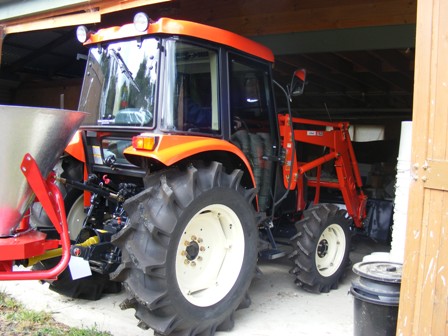
Nonetheless, I am thrilled by the fact that my new tractor was delivered last Friday. Michael, my brother in law, and Steve Sadlier, who manages our vineyard were there when Gordon rocked up with the trailer and dropped off our brand new Daedong tractor, received the good and stored them in the shed. We are ecstatic about this. I cannot wait to try the new Daedong out next time I am visiting. Michael took a couple of pictures which I show below.

Loading the machine off the trailer

Brand new Daedong tractor

Instructing the new user, Steve and Gordon

Get the machine into the shed

Dob well done, Michael and Steve


Bordeaux wines: Château La Gravière and pasta for dinner

December 13, 2009

The amatriciana pasta

There are just too many châteaux out there. I confess that I do not know much about the wines from Bordeaux. This wine region produces between 700 and 900 million bottles of wine every year. It is divided into 57 appellations. About 10,000 producers call themselves ‘châteaux’, the number of grape growers is about 13,000.

Fortunately, Haut-Médoc, just north of the city of Bordeaux, at the left of the river Gironde covering about 4,600 ha of vines, is smaller but still carries lots of different châteaux. The area used to be marshland until Dutch merchants began to drain it in the 17th century. From grazing land to vineyards (reminds me of my own story and Two Hills Vineyard in Glenburn which is largely grazing land, but in the hills, no marshes to be seen), what a great success story.

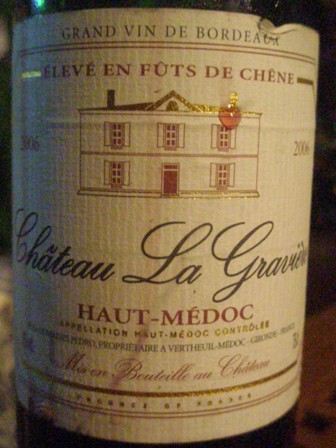
2006 Château La Gravière

Our friend Emmie had given us this bottle (above), a ‘2006 Château La Gravière’ from Haut-Médoc, after her return from Europe. The Château La Gravière is actually situated on the right bank of the river, in Lalande-de-Pomerol AOC. It’s a small producer with only 2.3 ha under vines whose flagship wines are Château La Gravière, a typical blend of Merlot (80%) and Cabernet Franc (20%) and Moulin de Gravière, its second wine.

The label is owned by the Rougefort Group. Total production from the Lalande-de-Pomerol AOC is about 500 cases per year. The Haut-Médoc wines (left bank of the river) are an addition to the portfolio. The character of the wines is quite different from the Lalande-de- Pomerol wines which is partly due to the blending formula, partly due to the different terroir.

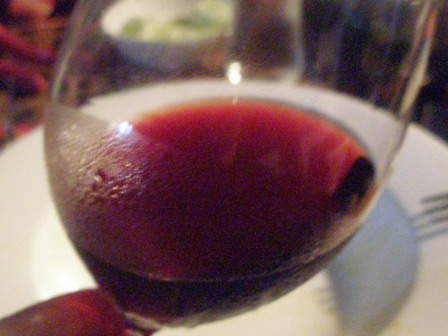
The colour of the wine

The wine was very pleasant, full of vanilla and berry flavours. We just loved it. It could cope well with the strong flavours of the amatriciana pasta and the bacon in it. My prejudices against Bordeaux wines (which are partly the results of my ignorance) were utterly refuted.