Jewels of the Upper Goulburn Wine Region Part I

October 25, 2008

Today, I want to start a new series and introduce to you some wine and grape producers from our wine growers association, the Upper Goulburn Winegrowers Association. I plan to feature three to four wineries and vineyards at the time. The selection is random. I will start with the wineries with open cellar doors. Of the 30 odd members of our association, about 9 belong to this category. Another 12 are vineyards which also produce some wine under their labels but conduct wine tastings only by appointment. All the others are fruit producers only and do not sell wines commercially.

The first cohort of wineries to be presented consists of Kinloch Wines, Rees Miller Estate and, a small boutique winery, called Rocky Passes Estate. I want to be honest with you. I have tasted wines made by Malcolm Kinloch (Kinloch Wines) and David Miller (Rees Miller Estate) but not the ones made by Victor Oles (Rocky Passes Estate). I have visited the two former wineries (and I know Malcolm and David) but not the latter.

But this is no impediment to write about all three of them. Anyway, we are going to visit Australia for Christmas and we might take this opportunity to get to know the Rocky Passes people.

I am starting with Kinloch Wines. Malcolm and Susan Kinloch have established a wonderful wine business. The vineyard is located in the Booroolite Valley, about 15 minutes by car from Mansfield (almost next to another famous winery of our region: Delatite Winery).

This year at the Federation Sq Showcase Series the Kinlochs were rewarded two gold medals, one for their “2004 Mary Friend Cabernets-Merlot Blend” and another for their “2006 Don Kinloch Sparkling white”. Moreover, the “Mary Friend” red was judged the Overall Best Red Blend in its class at the Award presentation for the Victorian Wine Awards.

2008 was a most unusual year in the Upper Goulburn. Kinloch Wines harvested a record 34 tons of fruit of outstanding quality. From the 2008 vintage three wines have been released so far (cellar door prices in brackets):
-Unwooded Chardonnay (A$ 18)
-Sauvignon Blanc, and (A$ 22)
-a first rosè (A$ 18) made from Pinot Meunier grapes.

I have tasted earlier vintages of the two white wines and they are delicious. When we visited Kinloch Wines in winter, one could see Mount Buller in a not so distant distance, all in white with a beautiful snow cap.

How to find them:
Kinloch Wines
In the Booroolite Valley, the cellar door is warm and friendly and offers gourmet luncheon platters on weekends and public holidays.
Address: 221 Wairere Rd, Boorolite – 15 minutes from Mansfield
Open: 10.00 am to 4.00 pm daily
Tel: 5777 3447
Email: info@kinlochwines.com.au
Web: www.kinlochwines.com.au
Contact: Susan and Malcolm Kinloch
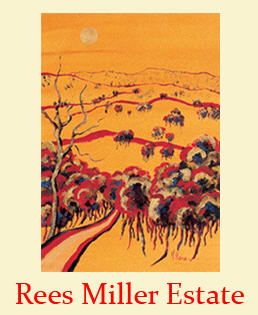
Rees Miller Estate is the next winery in my cohort. Located near Yea – about 15 minutes drive on the highway to Alexandra/Mansfield – Sylke Rees and David Miller own and operate a fully certified biodynamic vineyard and winery. Today about 7 ha are under vines, the farm has a total of about 64 ha. Sylke and David are both very much committed to the protection of the environment, and the organic production of food. They intend to produce pure products for consumption in a way that supports the land and its people.

We got to know Sylke and David when our wine stall was just adjacent to theirs at the 2007 Alexandra Food and Wine Expo. David conducted a very interesting wine tasting, actually my first wine tasting at such an event, and Sylke sold the wines. When we visited their cellar door some time later, they were both on Christmas holidays. To my great surprise Rees Miller wines were available at our duty free wine store in Jakarta, and we did not have to suffer any shortages of their beautiful reds.

How to find them:
Rees Miller Estate
Fully certified biodynamic vineyard situated on the Goulburn Valley Highway, just east of Yea.
Address: 5355 Goulburn Valley Highway, Yea
Open: 10.00 am to 4.00 pm daily
Tel: 5797 2101
Email: info@reesmiller.com
Web: www.reesmiller.com
Contact: David Miller or Sylke Rees

The last vineyard in this first cohort of Upper Goulburn wineries with cellar doors is Rocky Passes Estate, a small boutique vineyard of about 6 acres (5 acres Shiraz and 1 acre Viognier) located in Whiteheads Creek, near Seymour. I only know their one-page website and their listing in our membership directory. Rocky Passes Estate is another vineyard dedicated to organic grape growing and wine making (there are quite a few in our region). Cropping levels are kept low (about 2 tonnes per acre). The cellar door was opened in 2006. The wines can be ordered by mail, phone or e-mail.

How to find them:
Rocky Passes Estate
Situated at the southern end of the Strathbogie Ranges, the wines are made using organic practices and biodynamic preparations.
Address: 1590 Highlands Rd,
Whiteheads Creek, Seymour
Open: Sundays 11.00 am to 4.00pm or by appointment
Tel: 5796 9366
Email: rockypasses@activ8.net.au
Web: www.rockypassesestate.com.au
Contact: Victor Oles or Candy Westney

I hope I could stimulate your curiosity. The Upper Goulburn Wine Region is a rural place with real people who love what they are doing, have passion for their wines and commitment to the environment.


Family meals and the emptying of my wine “cellar”

July 4, 2008

Our last 60 days in Jakarta have started. Soon we will be moving to Bangkok. We try to enjoy every day. Apart from sorting out things, we are spending our time at home with family meals and drinks.

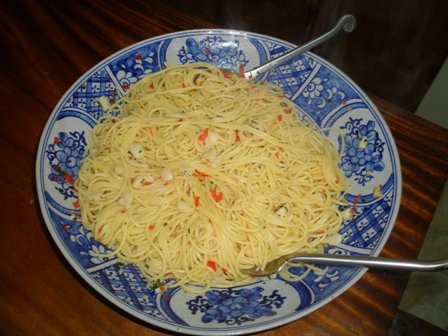
A delicious seafood pasta

I do not have a large supply of fine wines left but some of the bottles I have kept for special occasions. So what did we drink over the last couple of days? Here is a quick run-down:

‘2002 Léon Baur Gewürztraminer Grand Cru Pfersigberg’, alc. 13.5 % Vol.
We drank it before lunch as an aperitif. This is an aromatic wine, very generous in its flavours. It comes from a limestone “terroir” and is the gem of the Léon Baur collection. Low yields make great wines. It’s rather high in alcohol and has 15.2 g/l in sugar. A very enjoyable Gewürztraminer typical for this grape variety (www.leon-baur.com)

‘2003 Wiltinger Gottesfuss, Riesling Kabinett Feinherb, Reichsgraf von Kesselstatt’ , alc. 11 % Vol.
As you know, I love wine from the Saar River, and Wiltingen is one of the major location to produce first class Riesling wines. “Feinherb” is the German word for semi-dry. “Gottesfuss” is one of the best locations in Wiltingen, a very steep, stony slate ground which produces a fine, acidic, and balanced wine. Normally I prefer dry Rieslings but with a spicy Asian meal, the semi-dry version does very well. (www.kesselstatt.com)


‘2005 Hollick Coonawarra Reserve Chardonnay’,
alc. 13.5% Vol.
We had it with a seafood pasta. What a delicious Chardy this was. Although cellaring for up to 7 years is recommended, the bottle did not last that long. It displayed aromas of white peach, had crisp acidity and balanced creamy overtones. Though the wine was matured in French oak for 10 month, it was not “over-wooded”. Beautiful (www.hollick.com).

‘1999 Mildara Coonawarra Cabernet Sauvignon’, alc. 13.5% Vol.
The Mildara brand belongs to the Fosters Group (www.fosters.com). Liz and Walter brought it with them and we had it with all kinds of cheeses, salamis, coleslaw, salads and all kinds of “nibblies”. Despite its age, it displayed all the freshness of a typical Coonawarra wine. The colour was a deep purple. The intense aromas ranged from cassis, to dark berries and plum with hints of mint and herbs. The 18 months in oak have given the wine great depth and bony tannins, mellowed by age. The wine had an excellent structure. It was well aged.

‘2004 Knappstein Clare Valley Enterprise Vineyard Cabernet Sauvignon’, alc. 14.5% Vol.
The bottle retailed for US$ 26.50 at the Jakarta duty free store in Jalan Fatmawati. I had it reserved for a special evening. the wines is Clare Valley Cabernet Sauvignon at its best. Wonderful creamy, cassis, blackberry and mulberry flavours. A big Australian wine, full and complex but heavy which lingers on long after you swallowed the last drop. The fruit is grown on the “terra rossa” soils. Low yields guarantee the quality of the fruit. 2005 was an excellent year with a long ripening season. We had it after a meal just for enjoyment. This is a great wine indeed. (www.knappsteinwines.com.au)

The farewell dinner with our Australian friends (Brett, Janie, John and Dhanya) last night was a delight. We drank some very good wines. I only mention them in passing. Hope you don’t mind. We started with a pre-dinner drink, a ‘2006 Vasse Felix, classic dry white’ from Margaret River, Western Australia. The entreés we washed down with a ‘2007 Yarra Burn Sauvignon Blanc Semillon’ from the Yarra Valley, Victoria. We switched to red before the main course (a pasta bolognese), first to a ‘2004 Cape Mentelle Cabernet Merlot’ and then a ‘2003 Vasse Felix, classic dry red’. Three Margaret River wines stood against the cool climate SB form the Yarra Valley. It was a wonderful evening. No sadness was to find only the joy of being together and having a good time. I love this Australian attitude to life.


News from Two Hills Vineyard

January 23, 2008

twohillsinjanuary.jpg

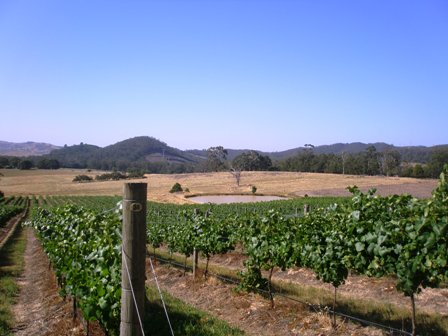
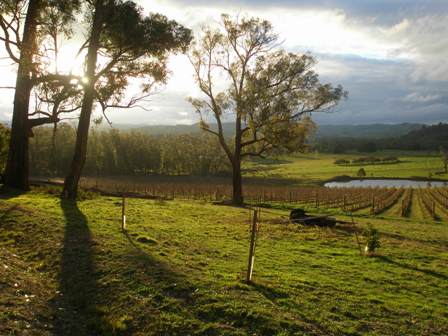
In the back, you can see the two hills which gave the vineyard it’s name.

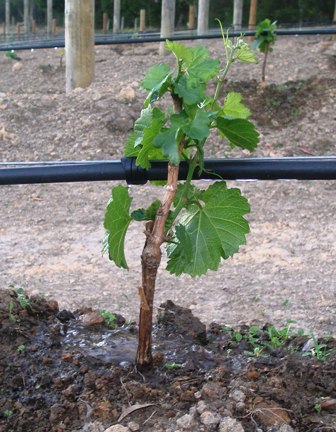
2008 promises to become our best year ever in the almost 13 years history of Two Hills Vineyard. A new block of Chardonnay has been successfully planted in early December 2007 and with this we will be able to produce on site one more ‘single vineyard wine’ in a couple of years from now, to be precise in about 2013. I will hopefully have retired by then from my work overseas.

chardy-1.jpg

Young Chardonnay plant

chardy-2.jpg

Morning in the Chardonnay

chardy-3.jpg

Chardonnay block

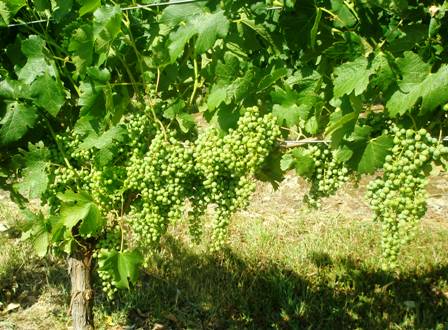
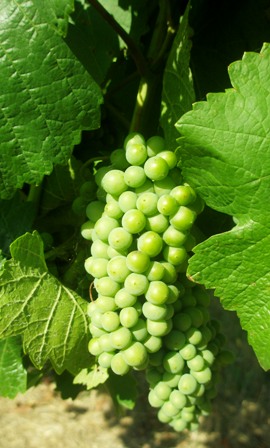
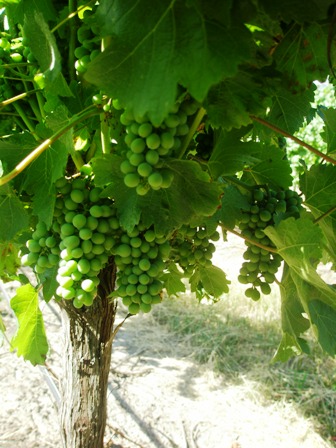
The fruit on the vines of the other three varieties looks really good (as the pictures below show). Despite the already mentioned freak hail storm on December 22nd, the fruit is healthy and in abundance. We expect to harvest about 25 tonnes of fruit from 3.5 ha under vines this year.

Because of the extreme heat we had in early January, vintage time might be earlier than in previous years, maybe in late February; usually it is in the middle or end of March. We in the Upper Goulburn Wine Region (www.uppergoulburnwine.org.au) are usually starting to harvest our grapes later than the colleagues in the Yarra Valley further south.

young-merlot-grapes.jpg

Young Merlot grapes

young-pinot-grapes.jpg

Young Pinot Noir grapes

young-sb-grapes.jpg

Young Sauvignon Blanc grapes

Our old Fiat tractor will be retired in 2008. Because of a generous donation from my mother it can be replaced with a newer model with some more horse power. We will also retire our old Mazda 626 car which is not exactly a useful farm vehicle but which served us well as a means of transport during the short months we spend on the vineyard during the last 12 years.

We will hopefully also get around in sowing one of the front paddocks with a horse loving grass mixture. Then we will have the plot fenced in by Peter Thwaites and turned into a horse paradise where our horse enthusiastic daughters, Lucy and Charlotte, can keep their ponies and other horses when we visit Glenburn.

We have started to irrigate our vines. I hope their will be no large bushfires as in 2007 when extensive smoke tainted many grapes. If the high temperatures persist, the likelihood of fires will rise too.

Finally, we have decided to extend our dwelling on the vineyard. We plan to link the old shed with a new wing to become our house, a proper residence so to speak.

Let us see what 2008 has up its sleeves.


Vineyard news – Two Hills in winter

August 21, 2007

thwinter07.jpg

Victorian winter and Two Hills Vineyard

I would like to bring you up to date on some recent developments. The dry season seams to be over in our neck of the wood. When we arrived at Two Hills Vineyard our small dam was full and the larger “irrigation” dam was slowly collecting runoff water from the surrounding hills. However, when I was digging out some blackberry roots I quickly discovered that the ground was still rather dry. Only about the first 5 cm of soil showed some moisture but below there were hardly any to find; not quite dry as a bone but still too dry. We will need much more rain in order to refill the ground.

unproonedwines.jpg

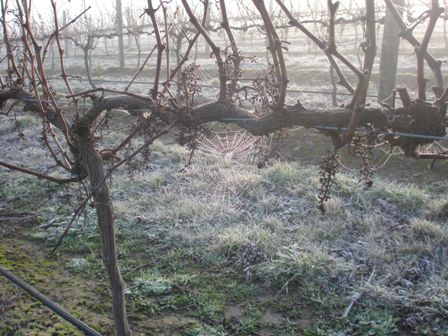
The un-pruned vines

Another exciting news is, that we are extending our vineyard. We are in the process of planting 1 ½ acres of Chardonnay (clone P 58). The posts are almost in. Peter Thwaites could not finish the job because it was too boggy. The spacing is 3 meter between the rows and 6 meter between the panels. Pro panel we will plant 4 vines (1.5 m per vine). We have 20 new rows of different length but about 1200 vines should find a new home at Two Hills Vineyard. We have to be patient though. Experience suggests that we will have to wait another four to six years before we can drink the first drop from this site.

postschardonnay.jpg

neblock.jpg

The new Chardonnay block in the making


Up North

April 8, 2007

I travelled north, from Jakarta to Taoyuan, Taiwan where I am going to teach for a week at the International Center for Land Policy Studies and Training (ICLPST). The flight was very comfortable in the business class of China Airlines. The menu I chose was all seafood. Boiled baby prawns with tomato and lettuce leaves as entrée and fish and prawn satay in ginger light soya sauce with Shanghai noodles as main course. On top of the wine list I found to my surprise a German Riesling from the Mosel-Saar-Ruwer, my home region in Germany where also Trier, my hometown, is located (www.trier.de). Home sweet home, and out of this melancholy, I asked for it.

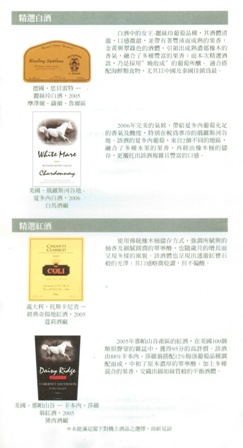
menu-taiwan-small.jpg

It said: 2005 Spaetlese, but I could not resist! The description claimed the wine is “rich, buttery layered with flavours of orange zest, Asian pears and golden delicious apples, with a subtle, smoky back note”. I could not taste any of this. For me it was “sugary” and the steward was so kind to let me have the second white wine on the menue: a Chardonnay from the US. 2006 White Mare Russian River Valley (Sonoma County), depicting a white horse on the label, not my type of label but what could I do. I did not know the winery. There was also a red (Cabernet Sauvignon), 2005 Daisy Ridge with the same white horse label.

The second red wine was from Italy, a Chianti Classico 2005 from Coli in Tuscany. After a couple of glasses of the Chardonnay, which I quite liked, I moved on to the Italian wine and stayed with it for the rest of the flight. By the way, the service was great at this flight, so many nice stewards and stewardesses, unbelievable. I can only recommend China Airlines. The wine list, though, could be changed. OK, I did not try the champagne, a Drappier Brut which got 89 point from the wine spectator. There are much better Rieslings from the Mosel or the Saar to choose from. I would also replace one of the US wines with an Australian Shiraz maybe or a Merlot.

I watched a movie, read in my Tim Winton book (The Turning) and arrived in Taoyuan in no time, well rested, fed and happy.

temple-small.jpg