German Vineyards in March

March 18, 2008

March is a great time of the year in the Northern hemisphere. Nature is ready to go, buds are almost bursting, waiting for the right temperature, the hours of sunshine which make the difference, warm the soil and the plants. As every year another miracle is in the making.

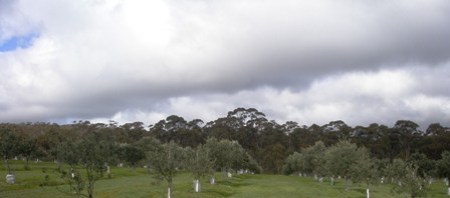
The vineyards are neatly pruned and ready to go shortly before the new growing season begins. The following pictures from the Saar Wine Region might give you an idea.

vineyardin-march.jpg

The colour scheme is still dominated by greys and dark winter colours but here and there we can see greenish spots, and soon spring will have driven winter away.

The slopes are steep and every vine has its own post. This one is very well tended, not a single stem or blade of grass can be detected.

pruned3.jpg

The pruning is of a special kind too. In Australia we hardly see this kind of binding the canes.

pruned1.jpg

It is not easy to spread organic manure in the vineyards at these steep slopes.

menure1.jpg

A metal sledge is used to bring the manure to the vines.

pruned2.jpg

Apart from the well tended vineyards (as above in Ockfen, Saar) we also find here and there a neglected one or one in a rather ‘chaotic stage’ but they are the exception rather than the rule.

chaoticvineyard.jpg

The neglected vine garden


Being Irish for a day

March 17, 2008

I love the Irish and of course Ireland.

webstpats08.jpg

When Noreen Seward, the president of the St. Patrick Society in Jakarta (www.stpatricksjakarta.org), opened the annual St. Pat’s Ball last Saturday and invited the odd 500 invitees to all be Irish for the event, Margit and I joined in wholeheartedly, as always, I might add.

What a night this was. The food at the Jakarta Ritz-Carlton Hotel was extraordinarily good. It consisted of the following dishes:

– Donegal Tuna Tartar with Fried Capers, Sticky Rice and Avocado Coulis
– Orange Campari Sorbet
– Duet of Irish Tenderloin with Mustard Seed Crust and Stuffed Chicken Breast ‘Pratai Calisle’ and Root Vegetables
– Apple tart with Vanilla Custard
– Coffee, Tea or Irish Coffee
– Petit Fours

The wines, a white and a red, were provided by Vin + Wine Boutique and were solid French wines from Bordeaux. After midnight a potato and leek soup was provided.

The entertainment was Irish dances and later an Indonesian pop band played contemporary tunes and brought everybody in the room to their toes.

Six well distinguished Irish dancers of a group called ‘Celtic Rythm’ performed spectacular Irish dancing. They came all the way from Dublin (thanks to the support of Etihad Airways, the National Airline of the United Arab Emirates). The four women (Linda Masterson, Louise Corrigan, Anne Collins and Laura Harrington) and two men (Christopher Mckenna and Kevin Curran) did a great job in enthusing the crowd.

Moreover, two groups of young dancers, all trained by Alison Forrow, also showed their skills. It was lovely to see those 8-9 year olds dance the traditional dances. They were so serious and diligent. What a delight.

We made it home in the wee hours of Sunday morning, enchanted, exhausted but utterly happy. Cheers to St. Patrick.


German Food

March 16, 2008

While in Germany, I had the opportunity not only to sample some excellent wines but I indulged also in some other delicacies.

In the “Gummersbach Beerhouse” (Brauhaus Gummersbach) for instance I could not resist the temptation to order a knuckle of pork. Harald, one of the interpreters at the seminar, took the photo with his mobile phone (thanks Harald). Needless to say, it was delicious but a lot of meet for a not so enthusiastic meet eater like me.

knuckle4.jpg

The pork knuckle at Brauhaus Gummersbach

The other German specialty I indulged in was ‘Wheat beer’ (Weizenbier), hard to beat if freshly poured from the bottle.

weizenbier.jpg


Back home again

March 15, 2008

Two weeks is a long time. My return to Jakarta had to be celebrated. We cracked a very special bottle. Last year at the Alexandra Food and Wine Show, Tim and Caroline Miller from the Henke Winery gave a bottle of ‘1997 Shiraz Cabernet’ to us when we all swapped bottles after the show.

I had brought it with me to Jakarta. We opened it and needless to say, it was delicious. Just the right wine for coming home. It’s a 84-16 blend. The wine is made in open fermenters in a mix of traditional and modern technology. Then it matures in American oak puncheons and is cellared for a couple of years before release. Henke wines are made in an old traditional Victorian style not easy to find these days.

The ‘1997 Shiraz Cabernet’ is a full bodied wine with an intense fruit character. One can almost taste that the cropping level is low and the wine is made from old vines.

Henke was the first vineyard and winery established in the Upper Goulburn Wine Region (www.uppergoulburnwine.org.au). Its Shiraz and Cabernet vines were planted at Yarck on the lower slopes of the Black Ranges (at about 230 meter elevation) between 1968 and 1970. The first vintage was made by the founder, Herb Henke, in 1974. Unfortunately, Henke has no webpage, you have to make appointments by phone. It’s worth visiting them. Tim and Caroline Miller are lovely people and produce stunning wines. The countryside at Yarck is also lovely and only about 1 1/2 hours away from Melbourne.

henke1.jpg

Address:
The Henke Winery
175 Henke’s Lane
Yarck, Victoria 3719
Ph.: 03-57976277


9. Wine Rally – Wines for every day

March 8, 2008

weinrallye.jpg

Sorry folks, but this time it does not work. I cannot avoid to write pro domo. The wine I drink every day, is our own. I have to add that this only applies if we are in Glenburn, Victoria. In the past we had once the opportunity to import our own wine for private consumption in Jakarta. But ever since, due to the vagaries of importing into Indonesia, we were not in the position to establish Two Hills as a ‘house wine’ for everyday consumption.

At Two Hills Vineyard we have so far made two varietal (single vineyard) wines from our grapes:

– a single vineyard Sauvignon Blanc (2000, 2001 and 2002 vintage) and
– a single vineyard Merlot (2001, 2004 and 2006 vintage)

Thomas Weber (www.wein-als-geschenk.de) wrote the following tasting notes for the ‘2002 Sauvignon Blanc’:

“Dezent hellgruener Farbton, Holunder- und vor allem Stachelbeerenaromen vor einm rauchig minieralischen Hintergrund. Kraftvolle lebendige Saeure und ein langer fruchtiger Abgang.”

In English this might read as follows:

“Subtly light green hue, elderberry and especially gooseberry aromas before a smoky mineral background. Powerful lively acids and a long fruity finish.”

And the ‘2004 Merlot’ was described by Thomas as follows:

“Der blutrote Wein duftet aus einem eleganten ausdrucksvollen Koerper vielschichtig nach reifen Waldbeeren. Eine angenehme Saeure vor fein ausbalancierten kraeftigen Tanninen fuehrt zu einem langanhaltenden Finish.”

which translates into:

“From an elegant complex expressive body the dark red wine shows aromas of mature berries. Pleasant acidity before finely balanced tannins, leads to a long-lasting finish.”

Well, thats what Thomas wrote for a blind wine tasting in Trier last year. Since I drink it every day (unfortunately, when I’m in Australia only), usually with a meal (lunch or dinner), I lost the ability to describe the wine anyway.

picture-077w.jpg

This is were we drink most of our wine. On the space at the entrance, I hesitate to call it terrace, of our little house cum vineyard shed. Apart from drinking Two Hills wines, we drink our friends wines. Usually, we swap cases of 12 bottles. We swap with Gayle Jewson and Steve Sadlier.

Gayle has a small vineyard in front of her house in the Yarra Valley, in fact just a couple of acres of Pinot Noir and Chardonnay. The Pinot is a “cleanskin” (Gayle has no label as yet) and it is called ‘Pip’s Paddock Pinot Noir’, a wine which can only be bought directly from Gayle.

The other house wine, we consume, is from Steve. His vineyard is called Nenagh Park. He is mainly a contract grower (about 9 ha under vines) for Yering Station and other well known wineries in the Yarra Valley. Steve’s Chardonnay is to die for, so is his Pinot Noir. He sells his wines (cleanskins) without label to friends and through a private network. Watch out for Nenagh Park in the future.

Visit us, and I will serve you all these wines. Promise.


On the road again

February 27, 2008

I am on my way to Europe again. My last evening at home in Jakarta we spend with a bottle of ‘2005 Understudy Cabernet Petit Verdot’ from Pertaringa Vineyards, a winery in the McLaren Vale, South Australia.

I bought it in our local duty free shop at Jalan Fatmawati for US $ 15.50 and its a ripper of a wine with a great quality-price ratio.

It is made of 70% Cabernet and 30% Petit Verdot grapes, traditionally vinified and matured in French and American oak. The ‘Understudy Cabernet Petit Verdot’ is Pertaringa’s “second wine” after the flagship reds (Pertaringa’s Rifle and Hunt Cabernet Sauvignon).

The wine has a dark red colour and a very intense nose of blackcurrant. It is spicy and rich in flavour, has a good structure, length and a long finish. needless to say that it won a couple of awards in various wine shows.

Pertaringa is not exactly a small vineyard (www.pertaringa.com.au). It has 31 ha under grapes, most of it Shiraz (13 ha), but also Chardonnay (4 ha), Pinot Noir (4.5 ha), Riesling and Semillon (3 ha each), and smaller areas of Cabernet, Sauvignon Blanc and Frontignac. The vineyard was planted in 1970 and purchased by Ian Leask and Geoff Hardy in 1980. Ever since it’s been run by them and their families. Pertaringa is an Aboriginal name and means ‘belonging to the hills’.

pertaringa2.png

Understudy Cabernet Petit Verdot

Address:
Pertaringa Wines
Conerner of Hunt and Rifle Range Roads
McLaren vale
South Australia 5171
Ph.: +61-8-83238125
Cellar door open seven days a week (Mon-Fri 10am-5pm, rest 11am-5pm)

PS: I’ll be gone for a while. Please leave messages.


Ghin Ghin Olive Grove

February 26, 2008

What an exotic name, you might say: Ghin Ghin. Its the place name of a location a couple of kilometers West of Yea, a charming country town of about 1000 inhabitants (about 28 km north of our vineyard), a little more than an hours drive northeast of Melbourne, Victoria.

To tell you the truth. We went with what Australians call “a ute” (a utility vehicle) to the tip near Ghin Ghin to dispose of some old stuff we had cleaned out of our shed.

Near the turnoff from the main highway (along the Goulburn Valley Road towards Seymour), the Ghin Ghin Farmstore and Café (www.meetthemaker.com.au) is located.

The beautiful Victorian cottage contains a small café where you can also buy various local products including extra virgin olive oil and olives coming from the olive grove behind the cottage where about 650 trees are planted.

The cottage used to be a stable located on a dairy farm which has been in the hands of the Lawrance family for over 70 years. Scott Lawrance and his partner Frank Schoenemann run the Farmstore Café open from October to May.

olivetrees.jpg

A young olive grove in Central Victoria

We dropped in by chance, had an interesting chat, an enchanting encounter and left enriched by a couple of olive oil bottles and preserved olives. Next time we are in Glenburn, we will spend some more time to check the place out.

Address:
Ghin Ghin Farmstore and Café
211 Ghin Ghin Road
Yea, Victoria
Ph.: +61-3-57972734

PS: Olive trees are very much in vogue in Australia. One can see olive groves in all parts of the country. We at Two Hills Vineyard have planted about 100 trees and intend to produce olive oil as well.


Sunday lunch the Roman way

February 24, 2008

We had a ripper of a lunch today, incredibly delicious, I tell you.

Do you know “The Philosophers Kitchen”, a wonderful cooking book ? Francine Segan has done a great job bringing to life recipes from ancient Greece and Rome.

You will not believe me, we had salmon with rasberry glace. Fish with a fruit sauce, you might ask? And you are right, I was sceptical as well but it’s an incredibly wonderful dish.

We had three more dishes from this cookbook though with some variations because we could not get all the necessary ingredients in Jakarta. The fish was served with rice and cucumber salad with coriander vinaigrette (Pythagoras suggested this dish) and a mushroom dish, ‘field and forest salad’.

First I though of a white wine, maybe a Chardonnay, but then I changed my mind and chose a Yarra Valley ‘Gulf Station Pinot Noir’ from the ‘Australian Winemaker of the Year 2007’, Steve Webber of DeBortoli Wines in Dixons Creek, a wine readily available from the duty free shops in Jakarta. It complemented the food perfectly. The rasberry sauce and the dark forest fruit aroma of the wine matched perfectly.

Here are the recipes (in abbreviated form):

You start with the ‘rasberry glaze’ ( a fruit sauce).

Heat 2 medium shallots in a pan in which you have heated 2 tablespoons of butter on low heat until the shallots are softened, add 1/2 cup of vinegar (ideally rasberry vinegar which, but we did not have this and used apple cider vinegar quite successfully), add 1/2 pint of fresh rasberries (frozen ones might also do, but the fresh stuff is much better) and cook for about 15 minutes. Then you have to press the liquid through a filter so that the solids can be removed, add a tablespoon of honey and some butter and keep the glaze warm.

Then you prepare the salmon (steaks or fillets) which need to be seared in hot olive oil.

The cucumber salad is made from European cucumber (cut very small, maybe graded in a food processor) with 2 ounces of feta cheese, 1/4 cup of heavy cream, add fresh cilantro leaves, some muscatel or sherry vinegar, coriander, extra virgin olive oil, lemon juice, a table spoon of honey, salt and freshly milled pepper (and golden raisins if you like, which we did not do).

For the mushroom salad we used fresh ‘portobello’ and enotaki mushrooms which were served in a olive oil vinaigrette with forest and garden herbs, freshly milled pink pepper and 2 tablespoons of finely chopped pistachio nuts.

The rasberrry sauce and the salmon harmonise wonderfully. It’s also a delight for the eyes, these colours are amazing. I tried to take photos and hope you get an idea what was served.

salmon.jpg

The salmon with the rasberry glaze

waldsalat.jpg

The mushroom salad

As you know, I am not the cook in our family. Margit surprised us all with these dishes. When she told me about it earlier, I somehow did not pay attention. But boy was that a delicious meal. If the old Romans ate like that, I would not mind having been born 2000 years ago. If you happen to visit us, we might surprise your tastebuds with salmon and rasberry sauce.

I wonder which Italian wine would have harmonised with this meal. Steve Webber’s Pinot Noir from the Yarra Valley was good enough and helped ‘to reach out’ from the old to the new world.

Well, I did not have access to any good bottle at the time, but maybe you can help me. Looking forward to your wine suggestions.


Surprise surprise: Rees Miller wines in Jakarta

February 23, 2008

The other day when we went to our duty free bottle shop in Jalan Fatmawati we discovered to our great surprise a whole stack of wines from Rees Miller in Yea. Never before did such treasures reach our local water whole. The price was right too, 19.90 US$ we paid. It was a 2001 vintage, the Wilhelmina Falls and the Thousand Hills. David, you have to update your website now and add Indonesia as export destination of your wine. We are very happy with this unexpected development. Cheers to Upper Goulburn and Rees Miller.

reesmillersmall.jpg

The two bottles


Shakespeare in the Vines – Sevenhill Cellars

February 22, 2008

Ever since my friend Neville Rowe became general manager of Sevenhill Cellars in the Clare Valley I have followed this interesting enterprise though the internet.

The Clare Valley is one of Australia’s oldest and most famous wine regions, about 120 km north of Adelaide, South Australia. Sevenhill Cellars is located south of the small country town of Clare which gave the valley its name (along the B 82).

The vineyards and the cellar are owned by the Jesuits (Society of Jesus) (www.sevenhillcellars.com.au) who migrated to Australia (from Austria) in 1848 so seek a more peaceful life. In 1851 they established Sevenhill Cellars. It is the oldest winery in the Clare Valley and the largest producer of sacramental wine in Australia. Watch out for the ‘St. Aloysius Riesling 2005’ , their flagship wine (ranked 34th in the “Top 100 Rieslings” of the 2005 Sydney Royal Wine Show) but also try some of their fortified wines – Liqueur Tokay, Verdelho and Frontignac or the ‘Jesuit Fine Old Tawny’. Hope this is enticing enough for Riesling lovers to check it out.

Originally the place was called “Open ranges” but the Jesuit settlers called it “Sevenhill” reminiscent of the seven hills of Rome. The intention was to make the place a centre of Catholicism in this part of Australia and to produce sacramental wines. Today, they also produce table wines for the laicist consumers.

shakeaspeare1.jpg

Every year a Shakespeare play is put on at Sevenhill, called “Shakespeare in the Vines”. If you are around today, you are lucky because the romantic comedy “Twelfth Night” is shown on Friday 22 and Saturday 23, February. The ticket costs 35 A$ only. I am sure you will have a stunning night and the opportunity to choose from a variety of excellent wines.

The play is divided into five acts. It is actually quite complicated for me to give you a short account. I would like to refer you to http://absoluteshakespeare.com where you can read details about the story line and the characters.

I only want to mention that one of the most beautiful songs Shakespeare ever wrote can be found in this play. It goes as follows:

Come away, come away, death,
And in sad cypress let me be laid;
Fly away, fly away, breath;
I am slain by a fair cruel maid.
My shroud of white, stuck all with yew,
O prepare it;
My part of death no one so true
Did share it.
Not a flower, not a flower sweet,
On my black coffin let there be strown;
Not a friend, not a friend greet
My poor corpse, where my bones shall be thrown:
A thousand thousand sighs to save,
Lay me, O, where
Sad true lover never find my grave,
To weep there!”

Thumbs up for Sevenhill Cellars

neville2.jpg

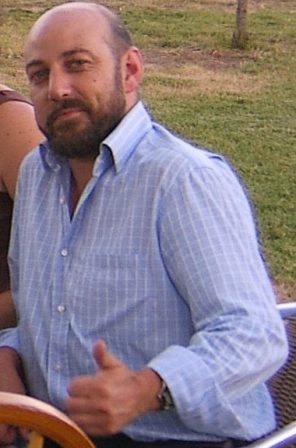
Neville Rowe, general manager, Sevenhill Cellars

Address:
Sevenhill Cellars
Box 13 Sevenhill SA 5453
Ph.: (08) 8843 4222
e-mail: info@sevenhillcellars.com.au