Winery review: Del-Gatto Estates, Prince Edward County, Ontario

November 30, 2011

Del-Gatto Estates Winery

In the morning of August 2nd, we visited Del-Gatto Estates Winery, located in Cape Vesey, in the eastern part of Prince Edward County, Ontario.

It should remain the only winery in the East of the island we had a chance to visit because of time constraints.

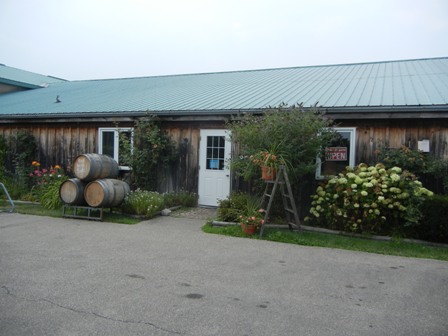
The tasting shed looked a bit lost but was easy to find.

Del Gatto Estate is a family business which was established by Pat and Heidi Del-Gatto in 2002. The land was purchased a year earlier. On about 6 acres various grape varieties were planted.

Vinifera grapes have a hard time under the harsh climatic conditions found in this part of Canada. Therefore, Pat planted mostly hybrid varieties. Among them are the whites Vidal Blanc, Geisenheim (GM322), Chardonnay, Traminette, Frontenac Gris and Seyval Blanc. The red varieties include St. Croix, Leon Millot, Baco Noir, and Frontenac.

The Del-Gatto vision is “to create quality, hand crafted and distinctive, affordable wines”.

The cellar door with the Italian flag

Inside the tasting shed

Tasting two rosé wines, one three hours the other three days on lees

We tried the Vidal and two rosé varieties as well as the Cabernet Franc. All of the wines were quite distinct from what we had tasted so far. The hybrid varieties make interesting wines, usually with high acidity, a modest fruitiness, a medium body and a not too long finish. It takes a while to get used to their distinct taste but after that….it’s lovely all the way.

Since we could not take many bottles on the plane back to Europe, we decided to buy only two: the Vidal and the Cabernet Franc. The former we consumed with out friends Dominik and Kymm in Stratford, the latter we took back to Bangkok.

New plantings

On the back of the tasting shed, some of the vineyards are located. We found the newly planted lot next to a well established in the photo one below.

The stony soils are not very deep but mineral rich. Rare Waipoos and Solmesville clays are found in this part of the island. Also terroir and climate are very different in the East of Prince Edward County.

We learned that hybrid varieties do not have to be buried in the ground during the ice cold winter, which is also called “hilling” (covering the vines with soil). This saves about 5000 $ per ha. However, vinifera varieties have to undergo this procedure. The de-hilling takes place at the end of April. It is very labour intensive work.

The annual production at Del-Gatto Estate is about 400-500 cases.
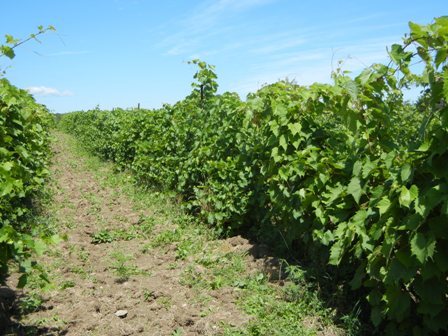
Hybrid grape varieties

Young grapes on the vines

A bottle of Vidal
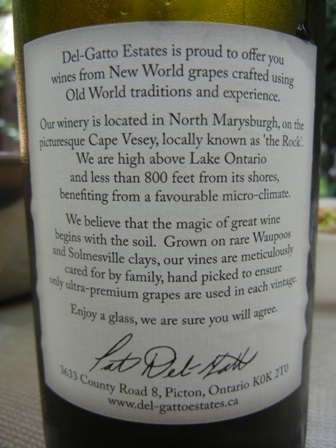
Back label

The 2010 Vidal

The cellar door staff was very friendly and helpful. We loved this place, despite the little blandness of the surroundings. The exploration of the Eastern part of Prince Edward County was truely enjoyable. You should see for yourself.

Address:
Del Gatto Estates Winery
Bella Vigne
3609 County Road 8
Picton, Ontario
K0K 2T0
Te: +1-613-476-8198
email: info@del-gattoestates.ca
www.del-gattoestates.ca


Restaurant review: ‘Kirchstuebel’ in St Martin, Pfalz

November 23, 2011

The St Martin church, picture taken from the yard of ‘Kirchstuebel’

Just below the church of St Martin in the hamlet of St Martin, Pfalz, a very charming little restaurant is located, named ‘Kirchstuebel’, literally translated as ‘the little parlour of the church’.

The Adam brothers

My brother Wolfgang had taken me there for a reunion dinner, just the two of us, on a dark November night.

The wine village of St Martin, with about 200 ha under vines, is located right at the start of the foothills of the ‘Pfaelzer Wald’, the hilly forest of the Pfazl region.

What a jewel of a little place this is. The country inn ‘Kirchstuebel’ is a rustic, and very cozy family owned and operated restaurant which offers local and non-local food, and a wide variety of local wines.

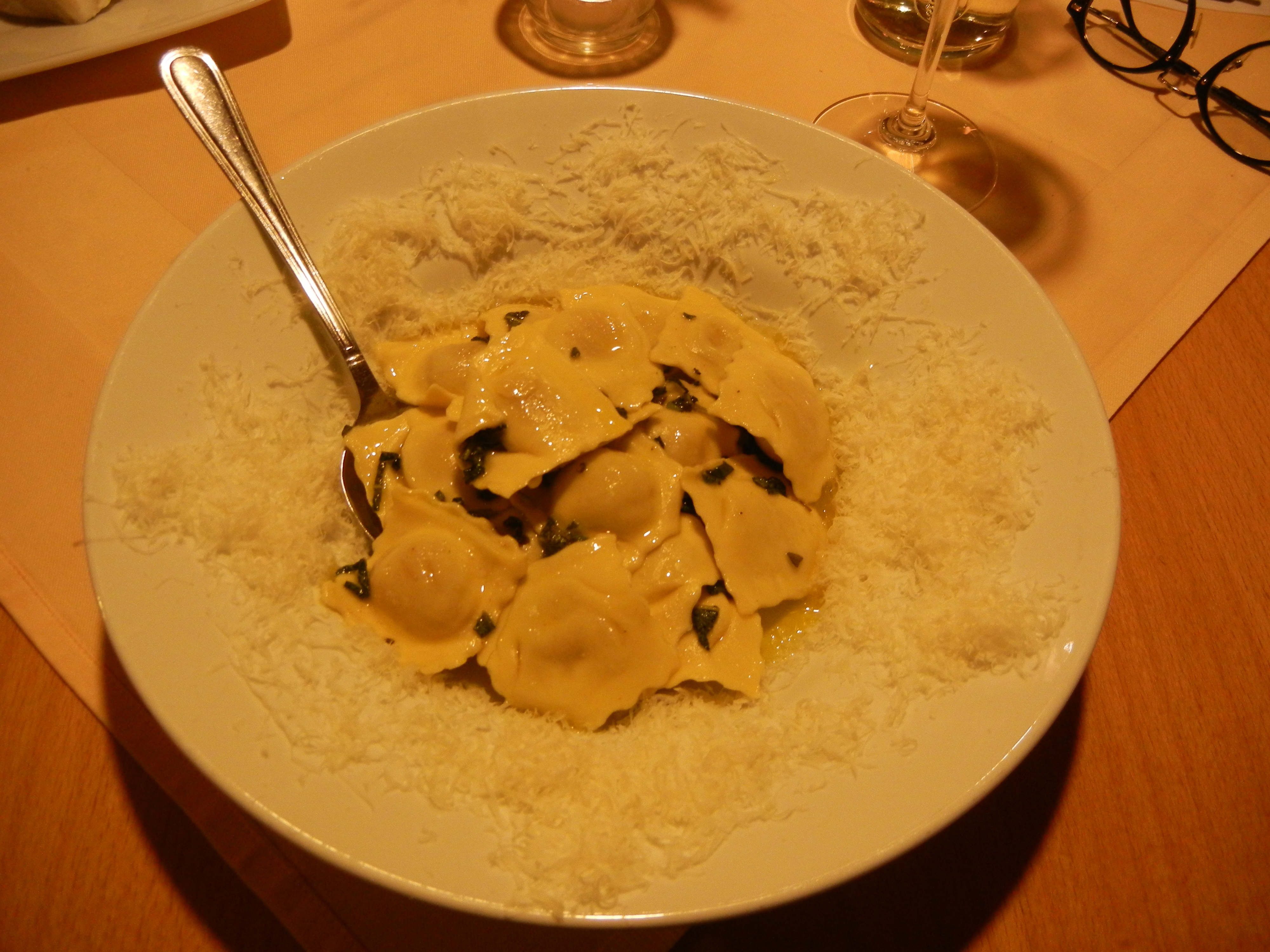
I was hungry and chose tortellini with porcini mushrooms and parmesan cheese. My brother was less hungry and went for a plate of selected goats cheese which was served with local bread. Boy I tell you how delicious these two dishes were, incredible.

The goats cheese selection contained harder and softer cheeses, some were mellow and creamy, others burly and forceful.

My tortellini were just a dream. They used an excellent olive oil, and first quality parmesan cheese. I was in “Schlemmer”- (gourmet) heaven.

Tortellini ai funghi porcini

Selection of goats cheese

The bread basket

The wine selection is another treasure of the ‘Kirchstuebel’. The list includes many locally made wines from St. Martin and vicinity. There is lots of variety and lots of choice. I, of course, went for the truly local stuff. Where could I get a wine from St. Martin when living in Asia, I thought.

With my tortellini I had a ‘2010 Sauvignon Blanc’ by the Brothers Ziegler Estate (Weingut Gebrueder Ziegler). The Ziegler family looks back at 200 years of experience in grape growing and wine-making. Today, the family business is run be Ulrich (the viticulturalist) and Juergen Ziegler (the wine-maker).

The wine has 12% alcohol, residual sugar of 6.7 g and acidity of 6.8. I loved its freshness, with aromas of tropical fruit.

2010 Sauvignon Blanc by Weingut Ziegler

I somehow sensed that my brother would not finish the goats cheese, and therefore ordered after I had tasted the SB, a red wine. My choice was a ‘2008 Pinot Noir Spaetlese dry’ by Weingut Roessler-Schneider, a family winery also located in St Martin.

Also this wine was very fruity. Cherries and blackberries were the dominant tastes. The colour of the wine is dark red, not the murky red of other Pinot Noir wines. I found it a very feminine wine, round and soft, with a presence.

2008 Pinot Noir Spaetlese dry by Weingut Roessler-Schneider

Needless to say, we had a great time. I wish for some more of these reunions.

Anyway, I will have to come back to this place in the daytime. The village of St Martin seemed so charming in the night, with its narrow little lanes, the old stone and timber framed houses. One must have a great view over the flats of the Pfalz.

If you visit the Pfalz region, you should definitely make time for St Martin and explore its wineries and country inns.

Address:
Weinstube Kirchstuebel (wine bar and restaurant)
Kirchstrasse 9
67487 St Martin/Pfalz
Tel:+49-6323-949131
www.kirchstuebel.de
For opening hours, please visit the website!


The other day in Germany 1: 2009 J.J. Adeneuer No. 2 Spaetburgunder dry

November 16, 2011

2009 Adeneuer No. 2 Spaetburgunder dry

At a recent business dinner a dry Pinot Noir from the Ahr was served. It was a ‘2009 Adeneuer No.2 Spaetburgunder dry’ by Weingut J.J. Adeneuer in Ahrweiler, Ahr.

The ‘2009 Adeneuer No.2’ costs about Euro 16.- to 17.-, and is a ripper of a German Pinot Noir.

Since my main course was a fish dish, I had chosen the Riesling wine (more about this later), not a difficult choice for a Riesling aficionado like me.

But later in the evening when the dinner dragged on, I also had a good look at the red wine served with the food. I love the Pinot Noir wines from the Ahr, the smallest wine region in West Germany, therefore I had to taste it.

When I was a student at Bonn University we would sometimes skip some lectures and go on a spontaneous trip to the Ahr river. The Ahr valley is a very romantic place, a little jewel for a young student in love with life and everything.

Because of the darkness of the dining room, I could not verify the expected pale red colour of the Pinot Noir. The aromas were dense and fresh, strawberries and other red berries came to mind. The wine is medium bodied with fine tannins, a very good structure and a long finish. I found ratings on the internet between 17 and 18 points (on the 20-point scale).

I wished I had ordered some red meat as well…..

Address:
Weingut J.J. Adeneuer
Max-Planck-Str. 8
53474 Ahrweiler
Tel.: +49-2641-34473
Fax.: +49-2641-37379
web: http://adeneuer.de
Opening hours:
Mo. – Fr. 9.00 – 12.00 h and 13.30 – 18.00 h
Saturday 10.00 – 15.00 h
Sunday and holidays only with appointment


3rd International Symposium on Tropical Wine – Chiang Mai, Thailand 2011

November 13, 2011

Sorry folks, I have been absent from the scene for a while. My day job kept me busy, too busy, i.e. away from wine appreciation and culinary exposure trips. Frankly speaking, I had the chance to sample some good wines (alas) but I had no time to write about it.

But finally, my highlight of the year has arrived: I am in Chiang Mai, in northern Thailand, right now and participate in my first ever wine symposium:

the 3rd International Symposium on Tropical Wine.

The chairman of the Thai Wine Association welcoming the participants, Nikki, wine-maker of GranMonte, on the right

Boy can you believe it, me the amateur among all these experts, the wine makers, vineyard owners, oenologists, scholars and wine scientists. These serious guys come from many countries. Tonight at the welcome reception I talked to people from Thailand, India, Myanmar, Brazil, France, Australia, South Africa and my native Germany.

The enthusiastic wine tasters at work

As most scientist, the organizers did not waste words, but went right into the serious stuff and invited all the participants to indulge in tasting the wines on offer from Brazil, Myanmar/Burma and the host country Thailand.

At first I was a bit hesitant but then joined in the tasting wholeheartedly. I found it so interesting to talk to the wine-makers and vintners, and listen to the experts who went from table to table.

I cannot say which wine and/or winery I liked most. One thing is for sure Terry Cummins and the others at the organizing committee did an awesome job in getting this conference together and running.

Tomorrow the serious part of the symposium is going to start. I will need some good sleep to get ready for the many presentations and talks. Seeya tomorrow.

PS: The Thai Wines Association has currently six members, all of them professional and enthusiastic vintners. Congratulations to you for getting such a distinguished crowd of exerts together, luring them to come to northern Thailand during these times of floods is not an easy thing to do.


Roast venison in Trier with a Merlot from Two Hills Vineyard

September 30, 2011

Whenever I visit my family in Trier, they spoil me with super delicious food, mostly game dishes. Heinz is a passionate hunter and he reserves only the best meat for me. This time young roast venison was on the agenda = my plate. I tell you, it was awesome.

The young roast venison

Venison with vegetables and egg noodles

2001 Merlot from Two Hills Vineyard

I washed the venison down with a ‘2001 Two Hills Merlot’, which is still a drinkable wine. The softness of the Merlot tannins went well with the savoury taste of the young game.


Winery review – Closson Chase Vineyards, Prince Edward County, Ontario

September 23, 2011

I know that not that many people visit my blog entries on Canada, its wineries and wines. However, that may be, I am going to continue to introduce some of the places we have visited during our summer vacation. I have two reasons for this:

1. because I believe that Canadian wine is worth to take note of (tasting and drinking!), and
2. because I am convinced that in the next couple of years some of the Canadian wines will hit international wine markets and might be more readily available to consumers outside the Americas.

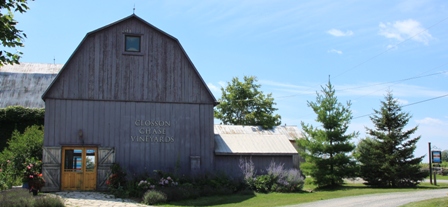
The Man from the Mosel in front of the famous Closson Chase entrance

The evening before we visited Closson Chase Vineyards, we had a glass of its 2009 Chardonnay which tasted strange, very strange. In hindsight I think it was off.

However, in some of the brochures collected from the Picton tourist office I had read a story about Deborah Paskus, the iconoclast viticulturist and celebrated wine-maker of Closson Chase, which led me to believe that we have to go and see the place with our own eyes.

Closson Chase was established in 1999. It produces exclusively the Burgundy varieties Chardonnay and Pinot Noir wines, some from its own vineyards, some from leased properties nearby.

We visited Closson Chase on the 2nd of August, a beautiful summers day. The cellar door is located in Hillier on the Western side of Prince Edward County.

Closson Chase has about 30 acres under vines. The soils are
limestone rich. The low yields and the French inspired vinification and barreling are responsible for the superior quality of its wines.

In 2009, Jancis Robinson, the guru of the international wine circuit, called Closson Chase Vineyards one of the two finest producers in Ontario.

The historic barn

The cellar door and tasting room is housed in a century old barn which has been restored. The day we visited an exhibition of moden art was shown on the premises.

The back side to the entry where the garden is located

The garden where we tasted the wines

The tasting at Closson Chase Vineyards is pricy in comparison with other place on Prince Edward County. For a tasting of three wines one had to pay 12 C$ (uff!!!). We drank two glasses of unoaked Chardonnay, and one glass of Pinot Noir.

The garden ist just wonderful located on the back side of the old barn. We sat their completely satisfied. The wines were stunningly good. We bought a bottle of Chardonnay and one Pinot Noir to take home to Bangkok. Only one bottle “survived” the journey. More about the Pinot Noir when we have it with a meal.

Closson Chase is a must visit if you are in Ontario.

A Closson Chase vineyard

Old vines with grapes

Address:
Closson Chase Vineyards
629 Closson Road, Hillier, Ontario K0K 2J0
Tel: +1-613-399-1418
Fax: +1-613-399-1618
E-mail info@clossonchase.com
www.clossonchase.com


Ruwer Riesling – Van Elkan semi-dry, slate Riesling, Mertesdorf

September 18, 2011

Many of my friends in Trier just love off-dry Riesling wines. One of them is my old high-school friend Juergen Olk who lives in Eitelsbach.

When we visited him and his family in July he produced this wonderful bottle of Riesling from the Ruwer valley. The Ruwer river is a tributary to my beloved Mosel.

I did not know the Van Elkan winery. Although I am not that much a lover of semi-dry (or semi sweat) wines, I must say that I liked this wine.

Christina and Marco van Elkan started their venture into the wine industry in 2003. Their philosophy of low yields and minimum intervention pays off. The quality of their wines is already well recognized.

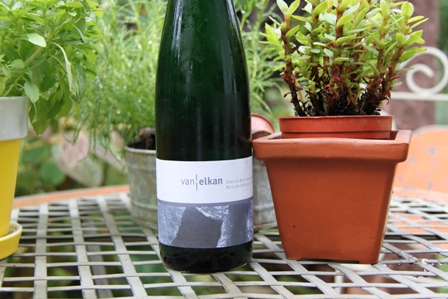
2010 Van Elkan semi-dry, slate Riesling

The van Elkan wines are reasonably priced (7.00 to 9.80 EURO per bottle).
I wonder what the dry wines of the van Elkan family estate taste like. Something to explore further.

Address:
Christina and Marco van Elkan
Rieslingweg 1
54318 Mertesdorf
Tel: +49-651-9954475
Fax: +49-651-9954476
info@vanelkan.de
www.vanelkan.de


My wine of the month: Jean-Pauls Vineyard 2007 de Castella Shiraz Cabernet

August 29, 2011

I have written about the wines produced by Jean-Pauls Vineyard near Yea, Victoria earlier.

August is a special month anyway since it carries my birthday, and I needed to be spoilt somehow. That is why I opened one of “my treasure wines” the other day. Wine bottles are heavy and one cannot carry many on the plane. Moreover there are customs regulations which somehow limits further the number of bottles on can carry. Believe me it is not easy to decide which bottle to take on the plane.

But we brought this bottle of ‘2007 de Castella Shiraz Cabernet’ by Jean-Pauls Vineyard.

William de Castella is one of our neighbours so to say. His Jean-Pauls Vineyard is situated near the pcituresque country town of Yea, about a 30 minutes drive from our farm in Glenburn. Will is also a member of our association, the Upper Goulburn Winegrowers Association.

Will de Castella started his operation in 1994. From about 6 acres under vines he produces only 200 cases a year, a tiny amount in comparison to much larger family and industrial operations. His vineyard is organically certified and produces exquisite fruit. I just love boutique vineyards and wineries since the passion of the people behind the operation directly transpires into their wines.

The de Castella family carries a famous name, Will’s ancestors where the pioneers of the Yarra Valley and the Victorian wine industry in the 19th century. I love his fruity and delicate wines which are well balanced and just a delight. This blend of Shiraz and Cabernet combines the strength of both varietals.

So this wine made my day after a busy and stressful day in the office. We had it with food, of course, one of our customary family meals which are so enjoyable.

If you should visit Victoria, please take a day and drive up to Yea and check out some of the wineries along the way. You will not regret it.

Address:
Jean-Pauls Vineyard
RMB 6173, Yea, Vic 3717 (postal)
Upper Goulburn VIC
Tel.: +61-03-5797 2235
www.jeanpaulsvineyard.com.au


Winery review – Marynissen, Niagara-on-the-Lake, Ontario

August 27, 2011

Marynissen Estates, Niagara-on-the-Lake

We were pressed for time when visiting the Niagara peninsula area. Therefore, we decided to visit only one winery. Our choice was Marynissen Estates, situated in the Niagara-on-the Lake wine region of Ontario.

The cellar door of Marynissen

Marynissen Estates was founded by John Marynissen who came to Canada from Holland in 1952 and started growing grapes with his wife Nanny in 1953. Since 1990 the winery is up and running. John was one of the pioneers of the Canadian wine industry. He was renown for his wine-making skills. In 1978 he was awarded the title “Grape King”. John was the first to plant Cabernet Sauvignon vines in Ontario.

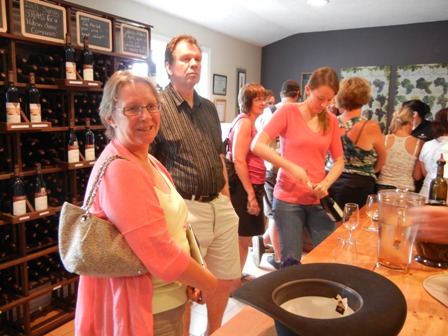
His daughter Sandra encouraged him to invest in a winery. In 1996 and 1997 Marynissen Estates won awards for the best red wine. Today, Sandra continues the family tradition. The cellar door is located in an unassuming shed. When we entered the tasting room it was buzzing with customers.

The sale is on

There is wine

We were served by a nice young lady, Ellie was her name. She was very friendly and efficient and helped us find our wines. We started tasting a flight of white wines.

Margit, Dominik and Ellie opening a bottle

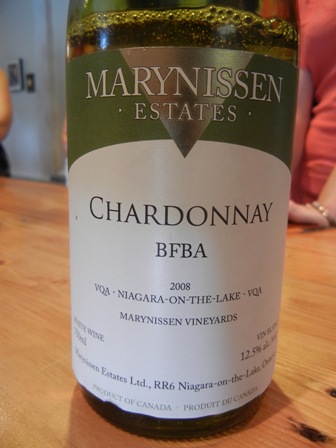
The whites included the Marynissen 2008 Summer Solstice, a 2008 Riesling and a 2008 BFBA Chardonnay. Dominik just loved the Riesling and decided to buy a case to take it home.

We were constrained because we had already six bottles in our luggage to bring home to Germany and felt a bit uneasy. Riesling could not be my choice anyway. We were heading to Trier, Mosel, to Riesling heaven so to speak. We decided not to take owls to Athens.

The Summer Solstice

This wine is an interesting blend of Gewuerztraminer (50%), Riesling (30%), and Chardonnay (20%, not a very common mixture of grapes for a white wine.

2008 Marynissen Riesling

Barrel fermented, barrel aged Chardonnay

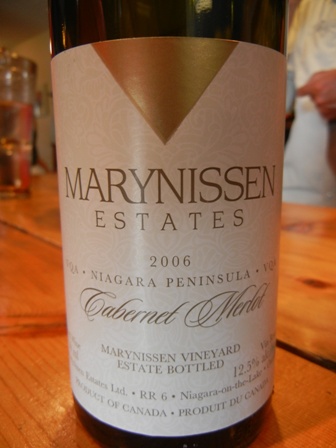
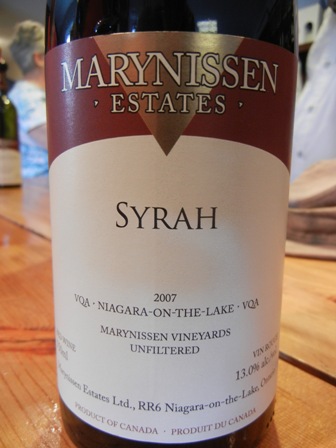
We also tasted some of the red wines. I loved the Cabernet Merlot blend and the Syrah of which we bought a bottle to take home.

The Marynissen Cabernet Merlot blend

The Syrah we brought back home to Germany

Around the cellar door are some of the Marynissen vineyards. I immediately noticed the “strange” way the vines are pruned. I had learned earlier that in some parts of Ontario the vines are buried in the ground during the cold winters. This is of course very costly and very labour intensive. The year old canes are covered with soil and in spring dug out and clipped back to the trellis.

A Marynissen vineyard

The vines with grapes

The “head” of the trunk of the vine which in Australia is about one meter from the ground, is located right above the ground in Ontario so that it can be easily covered by top soil in winter (also called “hilling”).

Marynissen Estates is a great place to visit. I highly recommend it to anybody wanting to explore Canadian wineries and vineyards.

Address:
Marynissen Estates
1209 Concession 1
RR#6,
Niagara-on-the-Lake
Ontario, Canada L0S 1J0
Tel: +1-905-468-7270
Fax: +1-905-468-5784
info@marynissen.com
www.marynissen.com


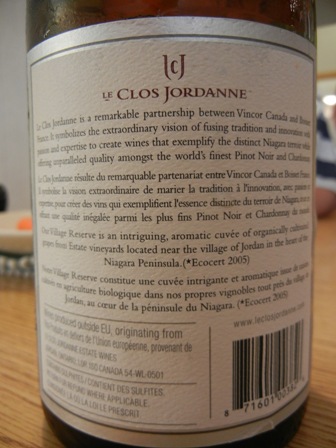
Wines of Ontario – 2007 Le Clos Jordanne Village Reserve Chardonnay, Ontario

August 25, 2011

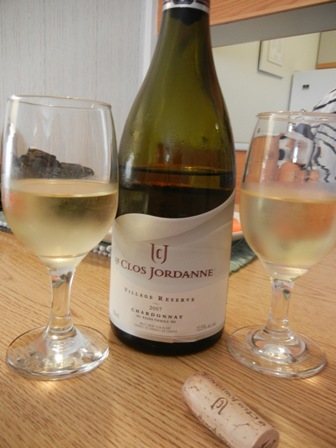
One of the best Chardonnays I drank while touring Ontario, Canada was the ‘2007 Le Clos Jordanne Village Reserve Chardonnay’. I bought it in a bottle shop in Ottawa, a very interesting capital city, where we had a great time.

Le Clos Jordanne is a kind of joint venture between the old and the new world wine industries, a partnership between Vincor Canada (a Constellation company) and the Boisset family of Burgundy. 130 acres under vines is not a small investment either. Only Pinot Noir and Chardonnay wines are produced.

The village reserve Chardonnay is a cuvée of organically produced fruit from three vineyard locations. I liked its zest, the fine acids, its creaminess, the good structure and the long finish. Boy did we enjoy this elegant drink with our seafood pasta.

At our last day in Ontario we visited the Niagara falls and passed Le Clos Jordanne but had no time left to drop in and taste some more of their wines because we had to get to the airport in Toronto. What a shame. We’ll do it next time.