Gérard Eyraud – Domaine de Rapatel

March 17, 2010

My newest treasure

When I got home the other day from a week long business trip, the two boxes of wine by Gérard Eyraud were already waiting for me.

I told you that we had attended a wine tasting at Lake House and that we just loved the wines presented to us by Gérard.

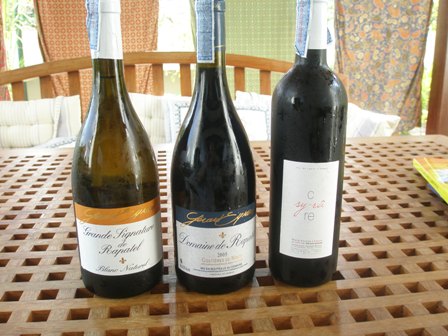
Grand Signature de Rapatel – the Roussanne – Bourboulenc blend.

The Syrah, Grenache and Mourvèdre blend

The Syrah – vine de table/table wine

More about these wines later, maybe even some tasting notes. Stay tuned.


Wine tasting at the Lake House in Bangkok

March 7, 2010

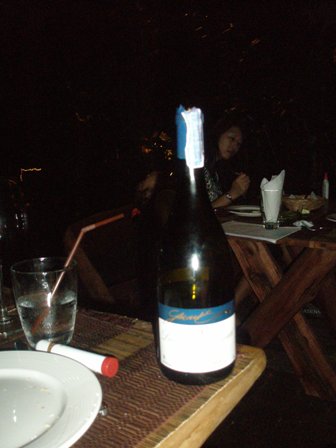
The bottle of red by Domaine de Rapatel at Lake House

In the morning when we drove past Lake House on our way into town, we decided spontaneously that we should go there for dinner. Margit had seen a review about the place in the Bangkok Post. Of course we had to check the place out ourselves.

It was already dark when we arrived but the surroundings of the lake were very romantic. My camera, however, could not cope with the conditions. We choose a small table in the garden and had just ordered our food when an excited waitress came and invited us to a wine tasting. Surprise surprise, we thought, why not taste some wines.

In a small room in the main building, we met the winemaker, Gérard Eyraud, his daughter and grandson, and some more French people from the wine importer. We tasted four wines, three from Gérard, one from another producer from Southern France (Domaine Bouche Red, Cote du Rhone). I had nothing to write with, took no notes and also forgot completely to take a picture of the winemaker and his family.

The white from Domaine de Rapatel was a blend of Roussanne with Bourboulenc with a taste of apricots, one red was a blend of Grenache with Syrah and the third one was a blend of Syrah, Grenache and Mourvèdre (14.5% vol. alc.). The last one I know for sure, because we could not continue to drink the wine I had ordered earlier, after we had tasted these wonderful fruity wines made by Gérard. In the process we got to know Matt, one of the three co-owners of the restaurant, from Melbourne and established that his brother Dan is an old mate of my nephew Nik Meinhold. How small the world is.

Gérard and Christine Eyraud have about 15 ha under vines southwest of the city of Nîmes. Gérard sells most of his wine as Vin du Pays du Gard, the grand cru wines are labeled “Costières de Nîmes”, a wine region in the Carmargue, in the South of France. I have visited the city and its surroundings but had never tasted wines from there before. I loved the fruitiness which reminded me of Australian wines and not necessarily typical for French wines.

We had a jolly good evening. The tapas we had ordered were delicious, the wine was just superb. The staff was very friendly. We went home with the sincere intention to come back and taste some more wines. By the way the wine list of Lake House is quite extensive, and the prices are the best I have seen in Bangkok so far.
Needless to say that we ordered a couple of dozens of the wines the next morning by e-mail. More soon about these wines maybe with proper tasting notes.

PS: During the wine tasting we also learned that the house used to belong to Tiziano Terzani (14.09.1938 – 28.07.2004), an Italian journalist and writer, and a native of Florence. He stayed there for about two years. The house was called “the turtle house”. He also had lived in Beijing, China for a while where he was the correspondent for the German magazine Der Spiegel, until he was thrown out. I red his book “Behind the forbidden door: travels in unknown China” in 1986.

Address:
Lake House
http://www.lakehousebkk.com
18 Soi Prommitr, Sukhumvit 39
Bangkok, กรุงเทพมหานคร 10110, Thailand
+66-2-662 6349


Bordeaux wines: Château La Gravière and pasta for dinner

December 13, 2009

The amatriciana pasta

There are just too many châteaux out there. I confess that I do not know much about the wines from Bordeaux. This wine region produces between 700 and 900 million bottles of wine every year. It is divided into 57 appellations. About 10,000 producers call themselves ‘châteaux’, the number of grape growers is about 13,000.

Fortunately, Haut-Médoc, just north of the city of Bordeaux, at the left of the river Gironde covering about 4,600 ha of vines, is smaller but still carries lots of different châteaux. The area used to be marshland until Dutch merchants began to drain it in the 17th century. From grazing land to vineyards (reminds me of my own story and Two Hills Vineyard in Glenburn which is largely grazing land, but in the hills, no marshes to be seen), what a great success story.

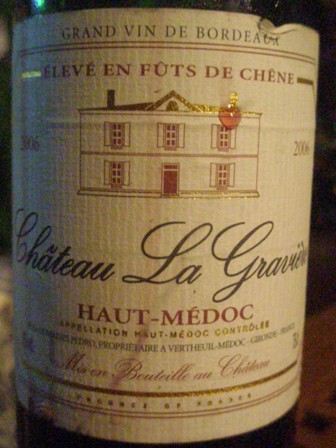
2006 Château La Gravière

Our friend Emmie had given us this bottle (above), a ‘2006 Château La Gravière’ from Haut-Médoc, after her return from Europe. The Château La Gravière is actually situated on the right bank of the river, in Lalande-de-Pomerol AOC. It’s a small producer with only 2.3 ha under vines whose flagship wines are Château La Gravière, a typical blend of Merlot (80%) and Cabernet Franc (20%) and Moulin de Gravière, its second wine.

The label is owned by the Rougefort Group. Total production from the Lalande-de-Pomerol AOC is about 500 cases per year. The Haut-Médoc wines (left bank of the river) are an addition to the portfolio. The character of the wines is quite different from the Lalande-de- Pomerol wines which is partly due to the blending formula, partly due to the different terroir.

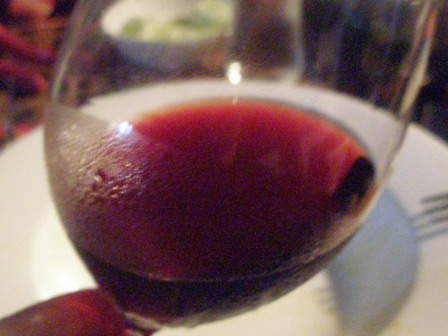
The colour of the wine

The wine was very pleasant, full of vanilla and berry flavours. We just loved it. It could cope well with the strong flavours of the amatriciana pasta and the bacon in it. My prejudices against Bordeaux wines (which are partly the results of my ignorance) were utterly refuted.


Champage: Larmandier-Bernier

December 5, 2009

Champagne by Larmandier-Bernier

We were so lucky. When Timo visited us a couple of weeks ago, he brought with him a bottle of ‘Blanc de Blancs, Premier Cru, Extra-Brut’ by Larmandier-Bernier, Champage/France. We do not drink much champagne these days, just too expensive in Thailand. I was more than happy to fetch the champagne glasses when Timo produced the bottle from his luggage. I admit that I had never heard about this producer but since I do not know much about champagne that did not bother me.

Timo Meyer pouring the champagne

But this drop deserves a special mention. It was the perfect wine to celebrate a reunion. Larmandier-Bernier is a small champagne house. Pierre and Sophie Larmandier’s basic philosophy is to make a natural wine starting in the vineyard right through to wine-making. They go for small yields, old vines, and hand picking. They practice biodynamic viticulture. The motto is balance in diversity.

The ‘Blanc de Blancs’ is mainly made of the 2006 Chardonnay vintage with reserve wines from 2004 and 2005 of about 40%. It is an elegant champagne, mineral, floral notes can be detected, a sparkling wine with a beautiful finish.

Champagne producers are hard hit by the decline in demand partly caused by the impact of the global financial crisis. In the USA sales of champagne shrank by about 43% in 2009. In Britain and France the decline was lower, 33% and 7% respectively. In contrast lower-price sparkling from other sources, mostly cheaper wines from Italy and Spain are up this year. I just hope that especially the small champagne houses can weather this crisis. It would be a shame to lose them.


How to open a bottle of wine

November 26, 2009

This is another technique to open a bottle of wine (and not breaking off the neck) if you are not in possession of a proper bottle opener.

Please do not mind the French.
The clip is self-explanatory, in fact amazing. It shows “where there is a will…….”.

Cheers


Restaurant review: Bombay Palace, Kuala Lumpur

November 17, 2009

Bombay Palace

A beautiful building houses the Bombay Palace: 1001 nights come to mind

I usually do not use business dinners as a source for my blog entries. However, in the case of Bombay Palace I make an exception from this rule. I had started the day (a Sunday) with an Indian breakfast to which my friends took my in one of the many shop-house-eateries in Bangsa. Needless to say that it was super delicious.

Bombay Palace1

The excursion of my taste buds to the Indian subcontinent continued with the dinner at Bombay Palace. I always wanted to dine there but the occasion never arose. Therefore, I was very excited about the prospect of a dinner in this famous restaurant. Ever since living in New Delhi I love north Indian food.

Bombay Palace2

A water fountain decorated with roses was to be found in the entrance hall

I did not feel like eating any meet, and therefore ordered a vegetarian “platter”, a selection of various vegetarian north Indian dishes as you can see from the photos below. The food was excellent, and so was the service in the restaurant. I can only highly recommend the place. You must eat there! if visiting Kuala Lumpur.

Bombay Palace3

Condiments

Bombay Palace5

My “selection” of vegetarian dishes

The wine list included wines from all over the world. After discussing wine preferences with my fellow diners, I selected a French wine, a ‘2006 Sancerre’ by Pascal Jolivet, a Sauvignon Blanc from the Loire, France (12.5% vol. alc.). I love Sauvignon Blanc wines not only because we grow our own but because I just love the finesse, the crispness and the fruity flavours.

Pascal Jolivet is a unique guy with a strong philosophy when it comes to the making of fine wines. With more than 30 ha under vines the Domaine Pascal Jolivet is not a boutique producer. His vineyards are located in Sancerre and Pouilly-Fume in the Loire valley. In the USA the ‘2006 Sancerre’ retails for about US$ 22. We very much enjoyed this clean and crisp wine, just the right choice since it went well with our meals.

I admit that this was my first encounter with a wine of Pascal Jolivet. I do not drink much French wine but this time I was in an exploratory mood which is good from time to time. I recommend it and also the Sancerre by Pascal Jolivet.

Bombay Palace4

The wine list

To sum up my experience I must say that the evening at Bombay Palace was just great. The food was excellent and the wine list gives you enough choice to find a complement to the north Indian cuisine. I will come back, promise.

Address:
Bombay Palace
www.bombaypalacerestaurantkl.com
215, Jalan Tun Razak
Kuala Lumpur, Wilayah Persekutuan 50400, Malaysia
+60 3 2145-4241


A pesto pasta with Alsatian Riesling

October 25, 2009

My homecoming was celebrated with a dinner featuring one of my favorite pasta dishes: a pasta al pesto. But it did not stop there. The basilico for the pesto sauce was grown on our terrace. Freshly harvested the leaves were processed with pine nuts and the best olive oil we could get hold of in Bangkok. The pictures below shows the different stages of the pesto-making process.

Basilico1

Basilico leaves

Basilico2

Healthy leaves of home grown Basilico

Basilico3

Pesto in the making

Basilico4

The fresh pesto sauce

I tell you this pasta was worth killing for. What ‘profumo’, goodness me, it filled our kitchen, the living room and transcended to the terrace where it filled my nostrils long before the dish arrived. We treasured every bite.

If you think that in the 1760s French cultural supremacy was so dominant that Italian cooking was considered totally inferior even by Italians. Local cooking had to have the coda, “”perfected in Paris” to be taken seriously. Today, every second top restaurant in Bangkok and indeed in all cosmopolitan world cities is Italian. That’s just amazing!

Basilico5

Linguine with pesto

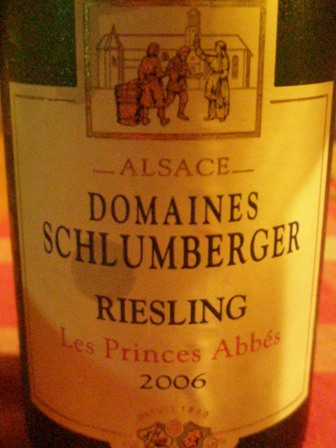
We celebrated the reunion with a French Riesling from Alsace, a ‘2006 Les Princes Abbes, Domaines Schlumberger, Riesling’. The price was a bit on the high end for us. TBH 1,600, about 32 Euro (or US $ 48), from our local super market is quite some money. That it sells for about US $ 20 in California somehow consoled me. We thought that life is just too short to waste it with drinking cheap wine and the occasion warranted something special, and special this Alsatian Riesling was.

Schlumberger1

This wine is just a wonderful specimen of Alsatian Riesling and it went very well with the pesto pasta. The fresh and fruity wine with aromas of citrus, lime and lemon and some floral notes, opened our taste buds wide. The wine has character and shows its typical Alsatian traits with some refined and not overpowering petrol notes. Alcohol is 12%, and just right. The finish is pleasantly vibrant but not overly long.

Schlumberger2


Country living: The good life in Ramsdorf, Westphalia

May 31, 2009

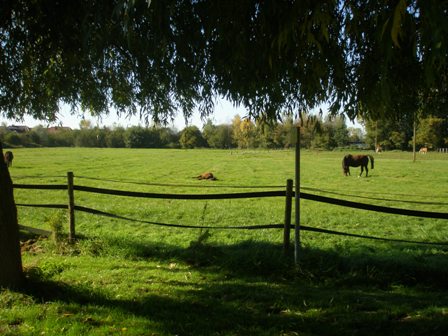
The land

Rams16

The Münsterland, Westphalia is not exactly a wine region. People in this rather flat but beautiful rural part of Germany, just an hours drive from the Industrial heartland of the Ruhr (the drive can be as short as 30 minutes only), prefer to drink beer and “Korn”, a spirit also called “Schnaps” distilled from wheat and other grains.

The farm houses are made of red bricks, have large wooden doors, usually green, high gables and are just magnificent. They stand alone within the land belonging to them, accompanied by large stables and barns, all erected in the same style, a wonderful sight. I went there to visit my friends Uli and Elfriede in a small hamlet called Ramsdorf.

Rams15

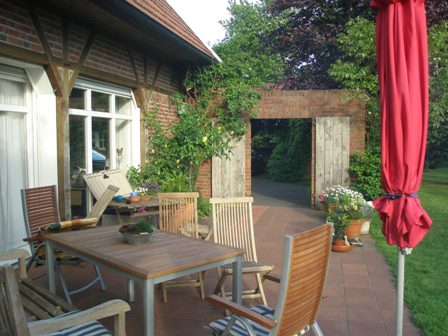
My friends Uli and Elfriede’s house, formerly a cottage of the estate (from the back)
Rams00

The backside with the outdoor furniture

The Food

As the people so the food, one could say. Rural people everywhere developed healthy, nutritional type of foods; no-nonsense stuff, usually based on the raw materials the land has to offer. So the Münsterlaender cuisine has a lot of sausages, ham and various kinds of meats, served with potatoes, and green vegetables.
Rams0

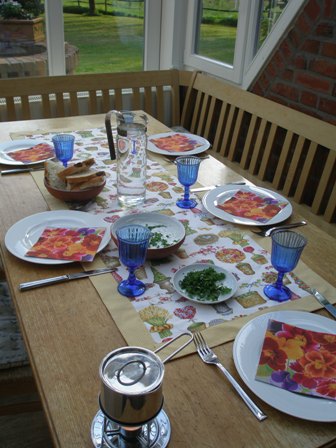
The table in the patio

Rams1

Beautiful beef

Rams2

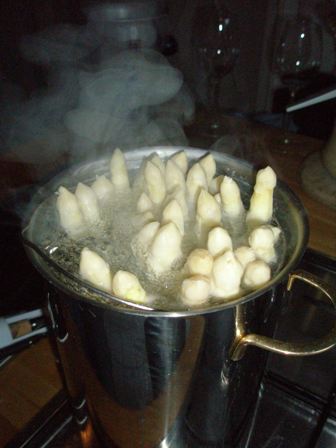
Fresh asparagus in a special asparagus cooker

Rams3

The finished product: asparagus

Rams4

The finished product: the steaks

Rams5

Our meal of asparagus, potatoes, ham and a steak with melted butter

The wines

We did of course also drink wine with this delicious meal. We started while the asparagus was still cooking with a ‘2008 Knipser Sauvignon Blanc dry’ by Weingut Knipser, Pfalz, a wonderful wine, fresh, fruity with structure and depth.

The brothers Volker and Werner Knipser (and since 2005 Stephan, Werner’s son) are the owners of this vineyard and winery in Laumersheim, Pfalz. The family operates the estate since 1876. Today about 40 ha are under vines. The brothers were the first in this part of the Pfalz to use small barriques barrels to mature their wines. They also increased the area under red varieties and replanted with high quality rootlings. In 2009 the were awarded “Vintner of 2009” by Gault Millau for their innovative ways and their high quality wines. My first Knipser wine, I drank many years ago when living in Beijing. My friend Norbert Finkel, a journalist from the Pfalz, introduced me to the Knipser wines long before they became fashionable.

Rams6

‘2008 Knipser Sauvignon Blan dry’ in the bottle

Rams7

..and in the glass

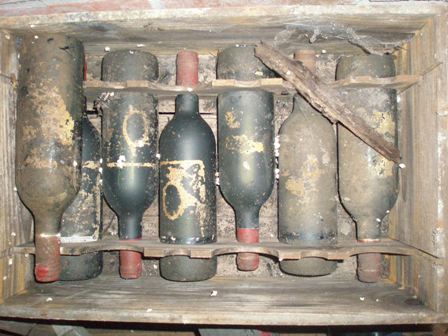
After the white, we longed for some red and went out into the shed where Uli stores his wines. Here we unearthed an old wooden box with red wines from Bordeaux, France.
Rams8

Treasure trove

Rams9

The chosen one

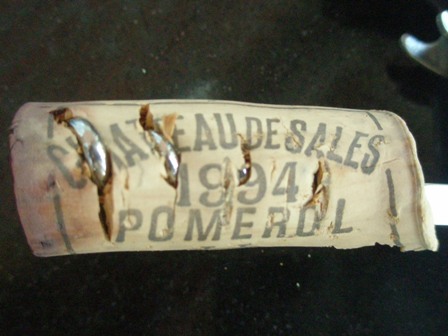
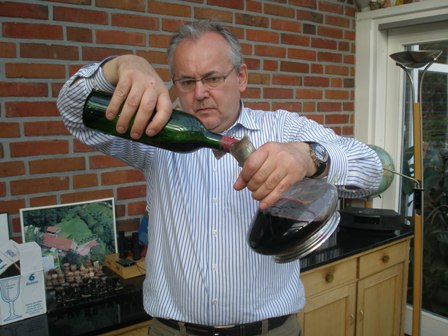
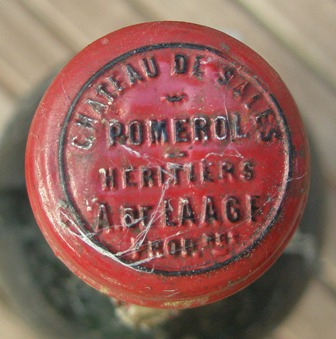
We selected a ‘1994 Château de Sales’, a Bordeaux blend from Pomerol, France. Uli de-cantered the wine, the drop was excellent but needed to be drunk. So we had “discovered” it at the right time. The blend was full flavoured, with structure and harmonious tannins and very enjoyable with our food. The wine sells on the internet in the UK for £ 30-35 and in continental Europe for about the same amount but in €.
Rams10

The top of the capsule

Rams11

The cork

Rams1112

Uli de-cantering the Bordeaux

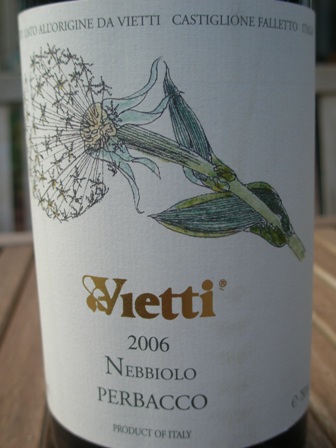
We finished the evening with an Italian wine, a ‘2006 Vietti Nebbiolo Parabacco’ from Langhe, Piedmont in Italy. That was quite a change from the Bordeaux. The wine was rich and complex. It showed well balanced tannins which were chewy at the finish, just great for a red. What a pleasurable wine to end a very pleasurable day with my friends in the Münsterland.
Rams12

The Nebbiolo bottle from Vietti

The people

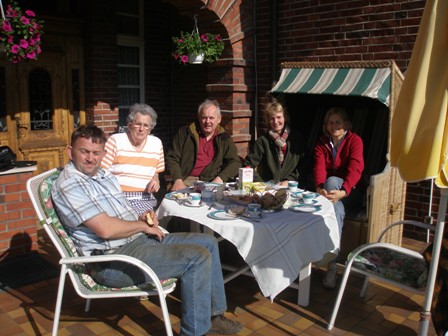
I quickly introduce my friends, the three Hillejan families. Georg and Barbara are the farmers, aunt Doris, the mother of Georg and Ulrich, and Ulrich and Elfriede, my old friends from University days. I used to work on the farm as an intern during my students days when Uli’s father Alfons was running the estate. I loved to work for uncle Alfons. He was a great man. But I did not only work but also play there. We celebrated quite a few events (a few weddings among others) on that farm, had wild parties and a great time playing farmers.
Rams13

Georg, aunt Doris, Ulrich, Barbara and Elfriede on the veranda of the old farm house

Rams14

Three men on a mission, Ulrich, me and Georg