Drowning in wine?

June 14, 2008

In todays Daily Wine news“, I found an article describing the recent changes in the Australian wine industry.

It starts with saying that “between 1997 and 1999 an unprecedented 40,000 hectares of grapevines were thrust into the soil across the nation”. Uff, I am one of those lunatics who put in vines during that time. Only a little, though, 3.5 ha to be precise. Now it (the land, our land) contributes as Two Hills Vineyard to the grape heap and/or wine lake. The increase in area under vines led to a 40% increase in output. Such growth was never seen in the history of the Australian wine industry before.

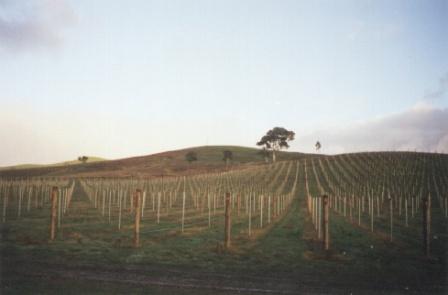
Two Hills Vineyard with the two hills in the background

Well, but I am actually exaggerating. There is no wine glut any more one could argue. Although it was not easy to find a market for our fruit, the very fact that there was fruit in abundance forced us to add value to the operation, e.i. make wine and sell it in Germany. We have survived so far. Of the last 8 vintages, two were to our full satisfaction, and the trend is positive. There is reason for optimism.

We are mainly growers and sell most of our fruit. The remaining part is turned into wine, mostly our Merlot grapes fall into this category. It allows me breathing space. I do not need to sell as fast as possible but rather on a pace we can stomach.
In the good old days growers had long-term contracts with wineries. Paradise has been lost ever since and the “spot market” is a true hassle. Some wineries are not relay reliable partners and it takes a while to sort out the ‘jewels’ from the ‘chaff’. That is costly for small vineyards. To run after small amounts of money and unpaid bills can be a hazard and it is a hassle. But some wineries treat their growers well. I know it from our friend Steve Sadlier, viticulturist (who tends our small property) and supplier of prime fruit to Yering Station in the Yarra Valley/Victoria.

Good to learn from the Daily Wine News article that the grower-producer relationship is about to change in response to the international market place and the flexibility required there. If that relationship, one of asymmetry in the past, would be more balanced, what a good news. Last vintage we had many cases of wineries retracting from earlier price offers. When they realised that the expected shortage of grapes was not to come and that they got sufficient fruit, they lowered fruit prices.

Another trend the Daily Wine News detected is that big companies shift away from developing their own vineyards. Well in the mid 1990s when the growers had no problem with selling any amount of fruit, wineries wanted to be on the save side and therefore invested in the establishments of their own vineyards. This is not only expensive, it also prevents the wineries from investing in other aspects of their business, for instance cellar technology, etc.. Some large wineries, it is said, rely on about 25-30% of their own vineyards, the bulk of their fruit intake is bought from growers.

Another welcome trend is that the industry is moving away from cheap fruit from warm and irrigated wine regions. That sounds nice to a small vintner from a cool climate region (the Upper Goulburn Wine Region). The rising water costs have hit growers hard and the change of demand does the rest: turn this land to other crops, maybe water saving food crops. The rising worldwide demand for food might be the incentive needed for that tectonic shift.

However, for small vineyards the development of boutique style wines and their own labels is a sine qua non for survival. And survive we will. Cheers


Wining and dining at Two Hills Vineyard

May 13, 2008

Since a long time I wanted to show you again some more pictures from our vineyard. Two Hills Vineyard in Glenburn, Victoria, is such a marvelous place. Maybe I am getting homesick. Normally we visit in July/August but this year we are planning to go to Germany, Spain and Portugal.

Our vineyard from the East (first Merlot, than Pinot Noir)

winingthv2.jpg

The table set on the grass

With visiting friends….

diningthv3.jpg

….and more visiting friends.

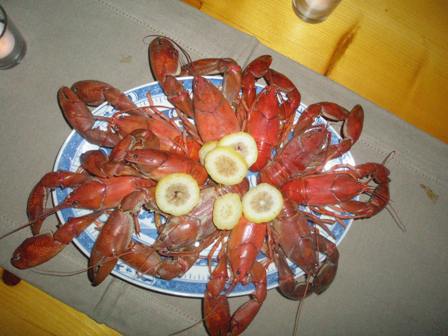
Delicacies from our dams: yabbies, an Australian kind of crayfish


Gourmet cheese: Australia at the top

March 29, 2008

At the 27th Biennial World Championship Cheese Contest in Wisconsin, USA an Australian parmesan cheese has won the top honors. Mil Lel Superior Parmesan is the lucky winner. Their cheese scored 98.5 out of 100 points and beat entries from USA. New Zealand and Europe for the best tasting parmesan cheese of the world. One would have expected an Italian cheese to win these honers.

There is a strong controversy about parmesan cheese. A European court rules recently that only cheese produced near the Italian town of Parma can legally bear this name.

Mil Lel cheese is produced in the town of Simpson in southern Victoria by the Dairy Farmers co-operative. The members of the co-operative are, of course, very proud of this achievement.

Results World Cheese Championship
Category 19 Parmesan

1. Simpson Grana Team Australian Co-Operative Foods Lidcombe, NSW 1825, Australia Best of Class Mil Lel Superior Parmesan

2.Aaron Quick Sartori Food Corporation Antigo, WI USA Second Award Sarvecchio parmesan

3. Josh Krause BelGioioso Cheese, Inc. Denmark, WI USA Third Award Parmesan

Also in category 34 – Camembert & Other Surface (Mold) Ripened Cheeses – Australian products were the best, and again it came from Victoria.

1. Burnie Team National Foods, Ltd. Mulgrave, Victoria 3180, Australia Best of Class Tasmanian Heritage Traditional Camembert

2. Burnie Team National Foods, Ltd. Mulgrave, Victoria 3180, Australia Second Award TH Signature camembert

3. Roland Weidenholzer Berglandmilch / Schardinger A-4066 Pasching, Austria Third Award Schardinger Rahm-Camembert

I could not find any German cheese among the award winners. Most categories were dominated by USA cheeses but there were also winners from the Netherlands, New Zealand, South Africa, Switzerland, Sweden, Italy, Canada, Portugal, Denmark, Austria, Spain and France.

The overall winner, however, was a cheese from Europe. World Champion was

Le Gruyere Switzerland
Made by Michael Spycher
Kaeserei Fritzenhaus
Wasen, Switzerland
Champion Round Score: 98.82

The First Runner-Up came from Italy.

Gorgonzola
Made by CERPL Cheesemakers
CERPL for DCI Cheese Co.
Bologna, Italy
Champion Round Score: 98.56

The Second Runner-Up came again from Switzerland.

Emmentaler
Made by Bernhard Naf
Kaeserei Guntershausen
Guntershausen, Switzerland
Champion Round Score: 98.42

Check out the results on the following website:

www.wischeesemakersassn.org

Happy tasting of your own cheese.


Back home again

March 15, 2008

Two weeks is a long time. My return to Jakarta had to be celebrated. We cracked a very special bottle. Last year at the Alexandra Food and Wine Show, Tim and Caroline Miller from the Henke Winery gave a bottle of ‘1997 Shiraz Cabernet’ to us when we all swapped bottles after the show.

I had brought it with me to Jakarta. We opened it and needless to say, it was delicious. Just the right wine for coming home. It’s a 84-16 blend. The wine is made in open fermenters in a mix of traditional and modern technology. Then it matures in American oak puncheons and is cellared for a couple of years before release. Henke wines are made in an old traditional Victorian style not easy to find these days.

The ‘1997 Shiraz Cabernet’ is a full bodied wine with an intense fruit character. One can almost taste that the cropping level is low and the wine is made from old vines.

Henke was the first vineyard and winery established in the Upper Goulburn Wine Region (www.uppergoulburnwine.org.au). Its Shiraz and Cabernet vines were planted at Yarck on the lower slopes of the Black Ranges (at about 230 meter elevation) between 1968 and 1970. The first vintage was made by the founder, Herb Henke, in 1974. Unfortunately, Henke has no webpage, you have to make appointments by phone. It’s worth visiting them. Tim and Caroline Miller are lovely people and produce stunning wines. The countryside at Yarck is also lovely and only about 1 1/2 hours away from Melbourne.

henke1.jpg

Address:
The Henke Winery
175 Henke’s Lane
Yarck, Victoria 3719
Ph.: 03-57976277


Murrindindi

February 15, 2007

What is “Murrindindi”, you might ask? This is a location in central Victoria along the Murrindindi River. It is also the name of the shire where Two Hills Vineyard is located (www.murrindindi.vic.gov.au).

According to Wikipedia the Woiwurrung people lived in these parts of the Upper Goulburn when the first white settlers arrived in 1837. In the Woiwurrung language Murrindindi means “living in the mountains” and indeed this part of the Upper Goulburn Wine Region (www.uppergoulburnwine.org.au) is quite hilly and mountainous. It was all covered by forests.

There has never been a Murrindindi town. The first settlers (squatters as they are called in Australia) cleared the forests and farming and timber became the main industries in this region. A short lived gold rush began in 1868.

Murrindindi

Mountain view in Murrindindi

Although most of the area was deforested by the early 20th century, systematic protection and re-planting of trees has occurred and today the eastern part of the Melba Highway from Glenburn to Yea is in some parts quite densely forested again with Mountain Ash and other gum varieties.

Tourism is on the rise (www.murrindinditourism.com.au). Accommodation is easily available. There are good opportunities for trail riding, fishing, trail biking, and bush walking, specially along the Wilhelmina Falls and along the Murrindindi River.

Also the wine industry has made Murrindindi its home. Since the late 1980ies and the early 1990ies some vineyards were established in the Murrindindi area. In comparison with my native Mosel River, this might seem a rather short history of wine production. Indeed, vintners and winemaker here are true pioneers. There are fours vineyards in the vicinity:

▪ Penbro Estate
▪ Murrindindi Vineyards
▪ Yea Valley Vineyards and
▪ Two Hills Vineyard

All are members of the Upper Goulburn Wine Growers Association but only Penbro Estate has a website (www.penbroestate.com.au). There cellar door used to be the Glenburn Pub in Glenburn. Murrindindi Vineyard’s cellar door is at Marmelades Café in Yea, a small country town about 25 km to the north along the Melba Highway.

Whereas the Celtic Treverer had hundreds of years of site and varietals’ selection opportunities, so that today a rich and extensive knowledge base exists in the Mosel wine industry with well established vineyards and wineries.

The vintners in Murrindindi had only a couple of years of trial and error and are still searching.

We at Two Hills had to pull all our Cabernet grapes out because they would not ripen in the cool and harsh climate with its short autumns. They were replaced with Pinot Noir.

Last year was our first but promising Pinot vintage. The variety seems to be better suited to our conditions then the long ripening Cabernet. We plan to extend our vineyard and plant 0.4 ha of Chardonnay this year.

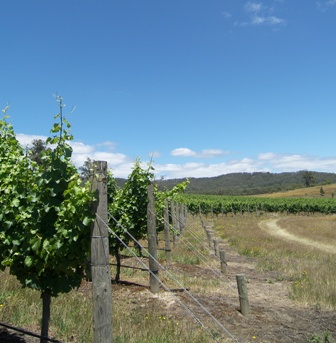
Vineyard in Murrindindi

Vineyard in Murrindindi


Barbecueing – The Australian Pastime

January 19, 2007

My wife gave me as Christmas present the Mercedes Benz of the grills. a Weber. The Weber, a Canadian product, is the most sophisticated among a wide range of grills (www.weber.com). I have already one with gas but now the round, shiny Weber is decorating my backyard. It was easy to assemble the thing, even for a man with two left hands like me.

In Australia, the mother country of my wife, grilling is a men’s affair, no work for women. I am a lousy cook, I admit this. When we are back on the vineyard usually my brother in law, Michael, (or any other Australian male nearby) is doing the grilling, but in Jakarta there is no Michael. Now I ran out of excuses, and the Weber is there calling for me.

The second impediment for me becoming a master griller is that I do not appreciate meat very much. Not that I am a vegetarian, no, I am rather a selective meat consumer. There are days I cannot swallow the flesh of animals and stick to green stuff exclusively. The biggest challange for me is to find out when the meat “is done”.

I knew long before Christmas Day that I would get a Weber. The packaging gave it away. It was just to bulky under the Christmas tree. So mentally I was somehow prepared for it. I also knew that Margit had bought a Turkey to be prepared for Christmas lunch. And Tukey it was, my first grilled masterpiece.

The photo below depicts me doing my job as an Australian man. Sorry for the outfit (no Akubra; www.akubra.com.au; another icon of Australian identity), but it’s hot in the tropics. The Turkey tasted wonderful. I am sorry for the winedrinkers. When I stand next to a grill I can only drink beer. A case of Tooheys Red, the favourite hops drink of my brother in law, was consumed in the battle with the grill and later with the meal I drank the last supply of my Bitburger Beer from my hometown. Margit drank sparkling and the girls had water.

Adam and the Weber