The North-South Pipeline: Impressions from Glenburn

February 3, 2009

northsouth3

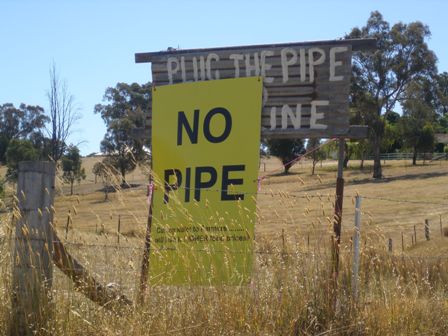
Yello poster billboard at the roadside opposing the pipeline

My opposition to the North-South Pipeline is well known. This has not changed after we had the opportunity to observe what is going on on the ground. Long lines of black pipe are lined up along the main highway around Glenburn these days.

Traffic is stopped at several intersections to allow the equipment of the pipeline companies to move in and out. The route of the pipe is along the Melba Highway switching sides unexpectedly. I wonder how they will get the pipes in under the highway. Will they stop the traffic and dig them in? We will know soon. Every day the residents of Glenburn are reminded of the fact that they are treated with sovereign contempt by their elected political leaders.
northsouth0

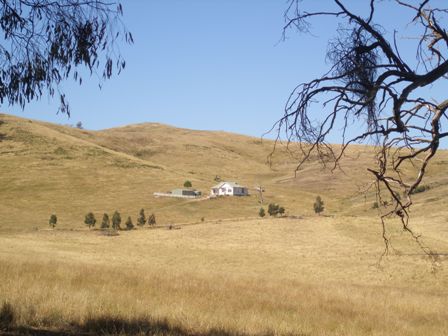
The dry countryside between Glenburn and Yea

The land around Glenburn is dry these days. There are also large areas where there are hardly any trees left. Earlier residents have cut them down to extend the pastures for their cattle and sheep, a grave mistake as we know today. To re-establish trees on these barren hilltops is a challenge. Efforts to this end are often unsuccessful in this many year-long lasting drought.

northsouth1

This installation was put up by local farmers

Everyone of our neighbours and residents along the prospective path of the pipeline we talked to were all opposed to it. I have not found a single supporter of the “beast”, that’s what I call the pipe.
northsouth2

Plug the pipe and other protests

The pipe is going to be built, no doubt. I estimate the costs to be at least double the projected amount (from an 750 million A$ estimate, the direct costs will grow to a 1.5 or more A$). The taxpayer, this is all of us included, are going to pay this bill. The political costs are for the political parties to bear at the next election. If people still remember the violation of good governance principles and procedures by the labour government, they might not vote for them. Also people caring for the environment might vote other than labour. The country folk around Glenburn will definitely not vote labour, many of them never have. My personal wish is that labour will be defeated for the pipeline (and other such) plunder at the next election. Any government which treats their people with contempt as shown buy the Brumby administration deserve to be defeated regardless of its ideological persuasion.

northsouth4

Near Devlin’s Bridge, they left an old oak tree standing and built around it. Hope the tree does not mind the digging and the invasion. In other places, especially in the Toolangi State forest, broad aisles are cut into the forest and cleared of every vegetation. I wonder how these aisles will hold in stormy conditions. Once the forest cover is cut through, they remaining trees might be vulnerable to gusty winds and storms; they might be at risk of falling over.

northsouth5

Protecting the pipe from the people

The whole marked-out-route of the pipeline is fenced off. The long lines of the black pipe, I guess about 100 to 120 cm in diameter, can be seen from the road following the contours of the land. It looks like a giant worm, an earth worm so to say. I wonder if one day the pipeline will be used to pump water up-country. Instead of sucking it dry, reclaimed waste water and desalinated water could be pumped inland thereby helping the rural population to cope with the coming droughts. Of course then the rural people will have to pay for that. Melbourne Water would rub their hands in delight of the additional revenue generated.
northsouth6

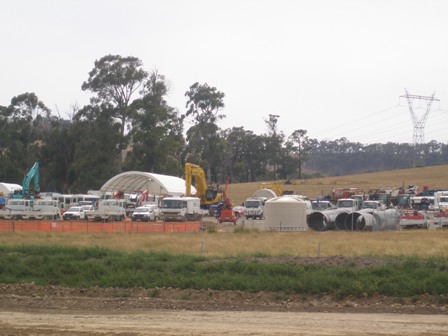
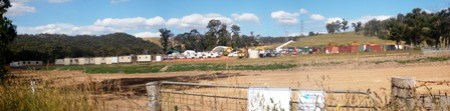
The “base camp” of the pipeline people, under security surveillance and protection for 24 hours a day
basecamp-pipeline

This panorama view of the “base camp” attempts to depict how large the area is used for storage of the equipment, the machinery, the vehicles, the office containers and all the other gear needed to built the pipeline. But it seems to be much larger to the human eye than the photo can show.

The opponents of the pipeline have put up a wonderful website called, Plug the Pipe, full of useful material, plans, maps, audio and video clips as proof for the political plunder in the making. I myself have written two pieces in this blog describing the idiocy of the project. There is not much to add, I must say. The story of the pipe is a story of bad governance in 21st century Victoria. Let us how the next generation of political leaders will make up for the damage incurred by their predecessors.


Wild pig from Schoden, Saar

January 31, 2009

schoden111

The village of Schoden (left) at the Saar River

The Saar is one of my favourite tributaries of the Mosel river. I love its wines, the landscape, the villages and the people. In early December I was roaming the region again, and visited Schoden, a small village near Wiltingen, where my friend Heinz and his mates have rented a hunting territory for many years.

schoden12

Herrenberg, one of the best terroirs in Schoden, left the Saar river

There is also a vineyard and boutique winery called Herrenberg which is owned and operated by Claudia and Manfred Loch. The vineyard above belongs to them. Their wines are hand crafted and award winning.

schoden13

The vines are ready for pruning, single vines where two canes are tied down

schodenkeiler1

A young wild boar killed in early December offering good quality game

The forest along the Saar are inhabited by various wild animals. Particularly numerous and very difficult to hunt down are wild pigs. Wild pigs inflict huge damages to fields, orchards, paddocks and from time to time even on vineyards. But if a young pig has been successfully killed, the meat makes a wonderful lunch or dinner or both.

schodenkeiler21

Liver and kidneys of the wild pig above

Here is a wild pig goulash recipe:
-500 to 800 gr. of wild pig meat
-some bacon
-onions
-some oil
-tomato paste
-150 ml red wine
-350 ml of extract from boiling game
-sour cream
-laurel, tyme and juniper berries
-salt and pepper.

If you want to enjoy it with mushrooms, you could add a selection of various wild forest mushrooms, preferably “funghi porcini” (Steinpilze in German). I just love them; they are great with wild pig.

The cooking process is like any other goulash. Add the sour cream at the end so that the goulash is not too watery.

My tip: buy the wild pig meat from the hunter if you can and make sure the animal was “not too old” (buy meat from year-old animals). This is easy if you live in Germany.

As the pairing with wine is concerned, I suggest a good red (14% alcohol), preferably a Malbec from Argentina or a Tempranilo from Spain or a Barolo from Italy. A GMT from Australia, maybe from McLaren Vale, would also do. Of course you could also have a Saar Riesling with it. From Schoden I recommend a Riesling from the Loch family of Herrenberg.


Jean-Paul’s Vineyard, Yea

January 30, 2009

Recently I had the opportunity to taste wines from Jean-Paul’s Vineyard in Yea, Victoria, a boutique vineyard owned and operated by Will de Castella. The de Castella philosophy is, “it’s all about the fruit”. The vineyard is organic/biodynamic certified. Will produces hand crafted, award winning wines of excellent quality. Jean-Paul’s Vineyard also recently joined our association, the Upper Goulburn Winegrowers Association.

jean-pauls12

‘2006 Jean-Paul’s Vineyard Shiraz’

I bought a bottle of ‘2006 Jean-Paul’s Shiraz’ and a bottle of ‘2004 Jean-Paul’s Bold Colonial Red’ from the Yea super market. Recently the ‘2005 vintage Shiraz’ was awarded 94 and the ‘2005 Bold Colonial Red’ 88 points by James Halliday. I guess that the different vintages might not have been significant as regards the quality of the wine. Who can taste a one or two point difference anyway.

Both wines were consumed together with friends over hearty Australian country meals. To say it from the outset, I loved both wines; they were delicious. Since I am more of a Shiraz than a CabSav drinker, I personally prefer the Shiraz.

If you are in the vicinity of Yea, grab some bottles of these wines, it’s a bargain. I also recommend to visit the Jean-Paul’s Vineyard website and order from there directly.

jean-paulss11

‘2004 Jean-Paul’s Vineyard Bold Colonial Red’

By the way: Will de Castella’s great grandfather was Hubert de Castella, the pioneer of the wine industry in the Yarra Valley establishing vineyards such as St Hubert’s near Yarra Glen.

Will and his wife Heather live since 1988 near Yea and produce small quantities of fruit from which distinct wines are made which won accolades for their outstanding quality.

Address:
Jean-Paul’s Vineyard
Post: RMB 6173
YEA VICTORIA 3717
AUSTRALIA
Phone: 03 57972235
Email: william@jeanpaulsvineyard.com.au
http://www.jeanpaulsvineyard.com.au


Impressions from Two Hills Road, Glenburn

January 28, 2009

twohillsroad11

Road sign at the turn-off from the Melba Highway

This week a blistering heat wave is going through Victoria, the worst in the last 100 years. Temperatures will be as high as 40 to 42 degrees Celsius. The grapes are at risk to shrivel and loose bunch weight, and many of the vines will suffer, but hopefully we will not loose the fruit.

thv-view1

Vineyard with the two hills in the background

Just two weeks ago, the grass in some paddocks was still green and we experienced one of the coldest Christmas in the last five years.

thv-chardy1

The Chardonnay block needs slashing but the vines look good.

thv-chardy11

The one year old Chardonnay vines look very healthy

thv-hay

Beautiful hay

Our neighbour Hilary at the end of Two Hills Road had the best hay ever and harvested 600 bales.

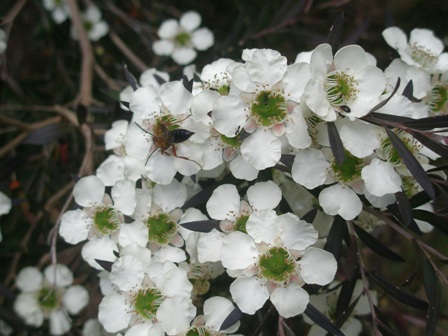
The native plants around the house flowered beyond belief.

thv-flowers1

thv-flowers

thv-flowers2

And the people were merry and in a celebratory mood.

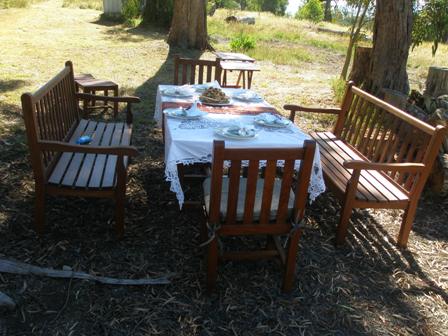
thv-table

Tables are set for food and drink

thv-people

Lucy, Michael, Helen, Charlotte and Margit

Hope you join us one day. Cheers


Auld Lang Syne – Die Toten Hosen

January 27, 2009

I found on the internet a very different version of the Robert Burns song “Auld Lang Syne”. It is from a German rock band called: “Die Toten Hosen” which translates into English as: “the dead trousers”.

Enjoy. Cheers

PS: Any type of wine can be paired with this song. Even non-wine alcoholic and non-alcoholic drinks might do.


The Poet’s Birthday – Burn’s Supper in Bangkok

January 26, 2009

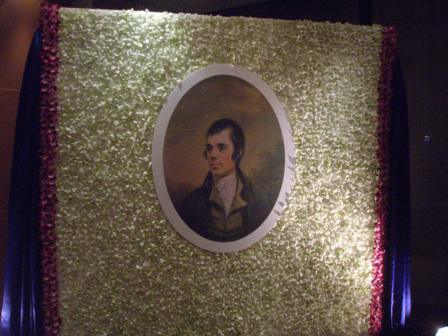
rburns1

Robert Burns, the portrait at the entrance of the hall

About 100 diners, mostly Scots and their friends, had gathered in the Amari Watergate Hotel in Bangkok to celebrate the 250th anniversary of the birth of Robert Burns, Scotlands national bard and its most famous poet. Every year thousands of Scots people worldwide celebrate the life of this great man. This year’s 250th celebration was of course very special.

That was also true in Thailand. The Bangkok St. Andrew’s Society and its chieftain, John McTaggert, had invited to an evening of celebration, and a celebration it was. Our friend Rab Thomas had gathered a group of friends and we were the lucky ones to join in.

rburns2

“250 years in ice”

The members of the Bangkok St. Andrew’s Society had ample opportunity to show their talents. At past Burn’s Suppers in Jakarta, a Robert Burns impersonator was invited. Though his presentation of the poems and hymns was very professional, it somehow deterred the members of the local society to take the recitations on to themselves.

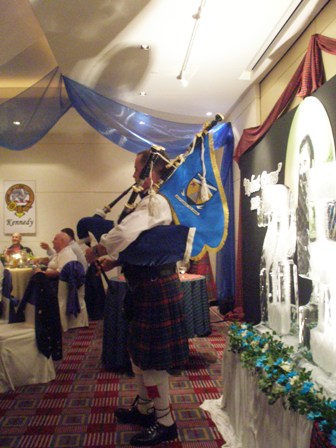
rburns3

Mike Brooks did the piping

There is obviously no shortage of talent in Bangkok. The Selkirk Grace was spoken by Willie Christie. When the haggis was presented and stirred, Mike Brooks spoke the address to the haggis. Duncan Niven gave ‘the Immortal Memory’, John McTaggert the ‘toast to the Lassies’, and Louise Blackwood ‘the Lassies Response’. All the speeches were presented in a very witty, pithy, funny, sardonic and enthusiastic way. It was such a pleasure to listen to them.

Also the haggis with tatties and neeps was very good. I enjoyed again the wonderful Scottish cheeses. The wine came from Australia and was quite decent. It belonged to the, what I call, “industrial wine” category. There is no harm in drinking it, just the brand name never sticks.

rburns4

After dinner we went all outside to bid farewell to the British Ambassador, made a circle, held hands and sang together “Auld Lang Syne” („old long since“). I recognized the song immediately, because its German version (“Nehmt Abschied Brueder”/ farewell brothers) is very well known in my native lands.

I vividly remember when as a boy I first heard the song from our kitchen window. A group of pilgrims had gathered in front of our house in a circle and sang “farewell brothers”, before boarding their buses to take them home.

When we held hands in Bangkok and sang Burn’s song, the magic also worked on us. It is a powerful song, even in German, though the German text is quite different from the English or the Scottish version. What I did not know is that the song was written by Robert Burns. In life learning never ends.

When Robert Burns died at the tender age of 37 in 1796 he left behind 13 children from 5 women. That’s quite an achievement. Obviously Burns loved women and ‘love’ was one of his favourite themes. This is why I present to you Eddie Reader and her version of “My love is like a red red rose”.

Cheers to Robert Burns. See you next year at the Burn’s Supper.


Pink Moscato

January 24, 2009

pink-mocato1

What has become a real fashion in recent years in Australia is drinking Pink Moscato. I admit from the outset that this is not my wine. However, in the summer heat of an Australian Christmas, Pink Moscato is a well sought after, low alcohol (6-7%), refreshing and for some addictive drink.

In the Yarra Valley, Giant Steps Vignerons and Innocent Bystander Winemakers may have been the first to respond to this fashion trend with a vengeance. It’s ‘2008 Innocent Bystander Pink Moscato’ (12 A$ for a 375 ml bottle!) is made in the Moscato style of northern Italy. The grapes (Gordo Muscat and Muscatel/Black Muscat) come from Swan Hill and Glenrowan wine regions respectively. The pink colour is also different from other such wines. Some describe it as “nipple pink” others as “rose pink”.

We had a different Pink Muscato wine and drank a bottle of Evans and Tate ‘2008 Classic Pink Moscato’ from the Margaret River in Western Australia. The brand belongs to the McWilliams wine empire, one of the biggest family-owned wine businesses in Australia.

The grape base of this wine is completely different from the Innocent Bystander’s. Its a mixture of 49% Sauvignon Blanc, 30% Shiraz, 15% Canada Muscat and 6% Chardonnay. The wine has 6.5% alcohol and displays a very fruity character (tropical fruits such as guava, pineapple and passion fruit). The colour of the Evans and Tate Moscato is more like a rose.

pink-moscato2

I personally prefer a “real” wine, even in the summer heat and would rather go for a true cool climate region produced Sauvignon Blanc, alternatively a Pinot Blanc or Pinot Gris would be my preferred choices.


Riesling from the Upper Goulburn

January 23, 2009

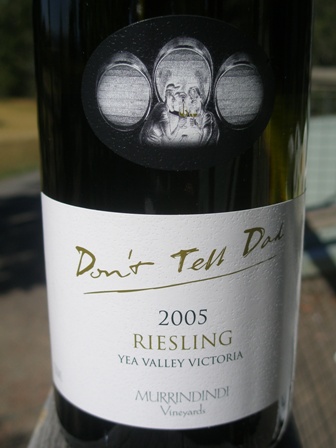
dont-tell-dad1

‘2005 Don’t Tell Dad Riesling’, Murrindindi Vineyards, Upper Goulburn Wine Region

Being a Man from the Mosel I love Mosel Riesling wines and find it hard at times to appreciate other styles of Rieslings. Australia produces out standing Riesling wines. Most of them are of the Alsatian style, they are thick bodied and coat the palate. Moreover, petrol is the dominant nose when you sniff it. Although finding petroleum notes is a common occurrence in aged Riesling wines, it is usually not to be found in young wines coming from the Mosel. And this might be why, though appreciative of those Rieslings from Alsace and Australia, I usually prefer a Mosel Riesling. Here I like the young freshness, the balance between acidity and minerality, the zest, and the exuberance.

But in my meandering search for new experiences, I always give Australian Rieslings a go, often reluctant I admit. The best Australian Rieslings come from Eden Valley and Clare Valley in South Australia.

In his 2009 edition of ‘The Australian Wine’, Jeremy Oliver, a famous Australian wine writer, ranks a Riesling from Victoria, the ‘2007 Seppelt Drumborg’ from Henty (98 points) as the best for the year. Henty, a little known wine region outside Australia, is located in South Western Victoria near the border to South Australia, between Hamilton and Portland. Henty has about 25 vineyards including 12 wineries. The nine Rieslings which follow in the rankings of Jeremy Oliver all come from Eden (4) and Clare (5).

The more I was pleased when James Halliday recently ranked a Riesling from our own wine region, the Upper Goulburn Wine Region, quite highly and gave 87 points to the ‘2006 Barwite Upper Goulburn Riesling’.

While browsing the shelves of the supermarket in Yea , I bought the above bottle of the ‘2005 Don’t Tell Dad Riesling’ from Murrindindi Vineyards, also a member of our wine growers association. Wines from Murrindindi Vineyards have won accolades of praise by wine critics and judges. To cite James Halliday again, he awarded the ‘2006 Murrindindi Don’t Tell Dad Shiraz’ 89 points, the ‘2006 Murrindindi Chardonnay’ 88 and the ‘2005 Murrindindi Family Reserve Cabernet’ 88. The 2005 Riesling even got 89 points.

I brought the above bottle to a dinner with my friends Hillary (from the end of our street), Beth and Richard and was amazed. The petroleum note was not as dominant as with some Rieslings, the wine has elegance and length which I liked. The ‘2005 Don’t Tell Dad Riesling’ retails for about 15 A$ and is a bargain. Check it out. I will drink it again when back in Glenburn.

PS: The Top 10 Australian Riesling wines according to Jeremy Oliver 2009:

1. 2007 Seppelt Drumborg, Henty, 98
2. 2007 Mountadam, Eden Valley, 96
3. 2003 Peter Lehman Reserve, Eden Valley, 96
4. 2005 Leasingham Classic Clare, Clare Valley, 96
5. 2002 Pewsey Vale Vineyard, Eden Valley, 96
6. 2007 Grosset Polish Hill, Clare Valley, 96
7. Kilikanoon Mort’s Reserve, Clare Valley, 95
8. 2005 Taylors St. Andrews, Clare Valley, 95
9. 2007 Grosset Springvale, Clare Valley, 95
10. 2008 Leo Buring Leonay DW L17, High Eden, 95


Restaurant Review: Libertine in Melbourne

January 22, 2009

libertine

During the four weeks in Glenburn, Victoria I made it to the big city (= Melbourne) only once. My friend Tony Arthur had organised a lunch with Joe and Helen and myself at “Libertine”, a French restaurant in North Melbourne.

When Tony mentioned the name of the place we were supposed to meet in town over the phone, I was already enthralled. For a liberal like me, “libertine” augured well, promising freedom of French provenance.

libertine1

The restaurant is tucked away between various other entrances and not easily glimpsed. I came in my pick-up truck from the countryside and had to circle the place.

The dining area downstairs is rather small but I understand they have more facilities upstairs. When I arrived at 12:30 sharp, my friends had already assembled. Most tables were still empty but that would change very quickly. The place was packed just a little later.

Tony, Helen and Joe had been travelling together in France. As a native of Trier, Mosel, just a few kilometres from France I am not exactly a stranger to French culture and cuisine and consider myself a “francophile”.

We started with aperitifs. I was introduced to a Floc de Gascogne. Based on a XVI century local recipe, this is a fortified sweet wine, a blend so to say, between fresh grape juice (2/3) and Armagnac (1/3). It is kept for about 10 months in the cellar. The aromas it displays are almond, jasmine, roses and honey. The alcohol content of the drink varies between 16 and 18%.

Also the second aperitif, a Pommeau de Normandie was a “mistelle”, in this case a mixture of apple juice with Calvados. It’s usually aged in oak barrels for about 30 months and contains 17% alcohol. The drink displays aromas of vanilla, caramel and butterscotch flavours.

libertine2

The Pommeau de Normandie

libertine3

The Floc de Gascogne

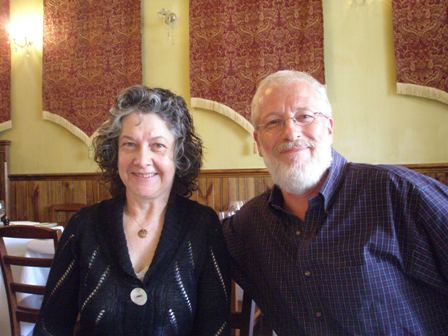
The next two photos introduce the diners. A happy lot they were. We had not met for more than a year. It was easy to lure me down to town from my farm upcountry in the Upper Goulburn to meet up and dwell on the happenings of the past months.

libertine5

Tony and Joe

libertine41

Helen and me

libertine6

My steak

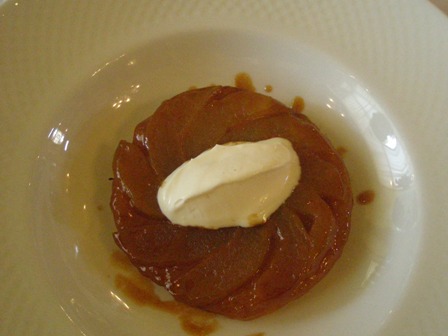
We all ordered the set menue were you have a couple of choices. I opted for the fresh onion soup, followed by a steak. The dessert I choose was a “tarte de pomme”, all very delicious. The service was relaxed but very attentive; the food of an excellent quality and taste for a very reasonable price.

We were also advised on the wines. We went with the house wine, all from bottles, a Roundstone Cabernet Merlot from the Yarra Valley. Helen had a Lis Neris Bianco from Italy. The blokes followed up with a glass of Tempranillo but by that time we were beyond producers and other wine information. I just did not record any of it any more because we were deep in philosophical conversation about love, life and the universe.

libertine7

The dessert

We had a coffee at the end, bid each other farewell and scattered in all direction with the sincere promise to repeat this as soon as possible but latest at our next visit in Australia.

The Libertine is a great restaurant. If you visit Melbourne you should schedule a meal either lunch or dinner with your friends in this atmospheric little place.

Address:
Libertine
500 Victoria Stret
North Melbourne 3051
Melbourne, Victoria
Australia
Tel.:+61-3-93295228
http://www.libertinedining.com.au


Sunday slow food: a roast

January 19, 2009

After spending Friday night and the whole of Saturday at the basketball court watching Lucy and Charlotte playing their first inter-school tournament in Bangkok (their team, the British Patana School came second), and a lot of fast plays and fast food, we were in for “slow food” on Sunday.

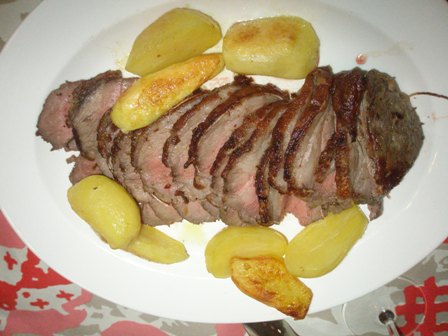
A traditional Sunday roast of sirloin beef, Yorkshire pudding, green vegetables and some roast potatoes was just the right stuff to make everybody happy.

sunday-roast1

Potatoes and the roast

sunday-roast3

The yummy Yorkshire pudding

sunday-roast2

Assorted green vegetables “vignole”

sunday-roast0

The red: a bottle of ‘2004 Two Hills Merlot’

sunday-roast4

Charlotte, the young and successful cook (with hat) and her sister Lucy

The Yorkshire pudding was prepared by my daughter Charlotte. She succeeded with this delicate undertaking; the pudding was delicious. Actually, it was the first Yorkshire pudding I ever tasted in my life.

Needless to say that the wine matched the food perfectly. I just love our own Merlot, especially the 2004 vintage. It’s such an elegant wine, with balanced acids and lots of red fruit character. Fortunately, we discovered some more bottles when inventorying our stocks in January.