Excursion along the Rhine: Weingut Sülz in Oberdollendorf

October 12, 2007

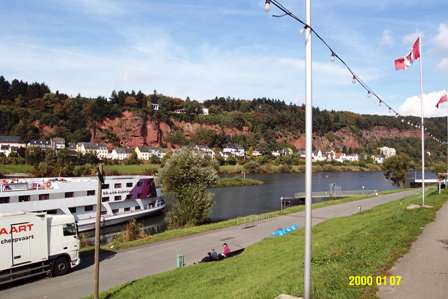
Carpe diem, ‘enjoy the day’ was the motto my wife suggested I should adhere to, while away from home for the two-month long stay in Germany. I try to follow this advice and make the best out of the separation from my family. Recently I visited a place of my youth, so to speak, from my student times at Bonn University. We used to visit a wine garden-paradise called “Weingut Sülz” (Sülz Estate) in Oberdollendorf near the Seven Peak Mountains (in German, Siebengebirge) on the south side of the Rhine river near Königswinter.

d1000352drachenf1.JPG

The Dragon Rock Mountains seen from the Rhine river

The cultivation of grapes and the production of wine have a long tradition here, dating back to the 10th century. In the 14th century ‘Gut Sülz’ (the Sülz Estate) belonged to the nearby monastry of Heisterbach. A country inn was established in 1656. The estate changed hands a few times. Today Weingut Sülz is neither a vineyard nor a winery, but a lovely country inn with a large open-space garden for its many visitors.

d1000318suelz8.JPG

Sülzenberg vineyards

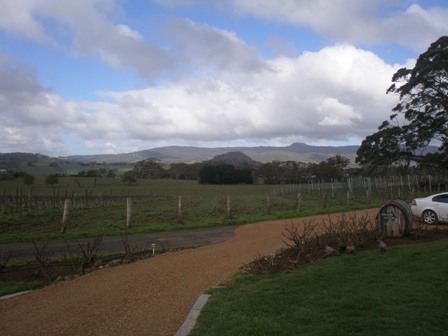
The location is splendid, featuring a beautiful view of the surrounding vineyards. The inn is to be found at the foot of the Sülzenberg, a vineyard location in the form of a theatre at the edge of the Seven Peak Mountains, south of Bonn. The vineyards might be the most northerly ones along the Rhine. Since land consolidation in 1973 and 1979 all vineyards in the theatre have been cultivated by the Blöser family (more about them in a separate later blog entry).

d1000306suelz7.JPG

The Sülz Country Inn

Since 1999 Andreas Lelke has been running the Weinhaus Weingut Sülz (www.weinhaus-gutsuelz.de). His list consists of more than 500 wines and has received multiple awards. His white wine list is dominated by Riesling wines. In 2000 the Riesling Society awarded Andreas Lelke its Riesling award. The German Wine Institute ranked his wine list as “very good” and the Wine Guide Gault Milau awarded its “best wine list” in 2007 to the country inn. It goes without saying that delicious food is served with the wines at Weingut Sülz.

d1000296suelz1.JPG

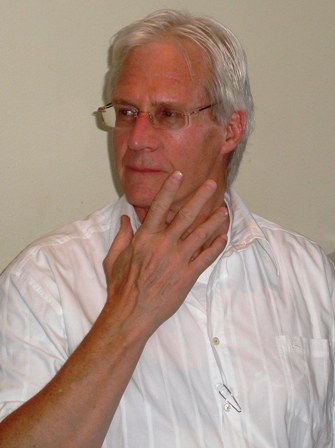
“What did I drink?” you might ask. Well, during my first visit I sat outside on the terrace and felt like drinking what the hill behind the inn (the Sülzenberg) had to offer. I had a choice between a Sülzenberg Riesling and a Sülzenberg Blue Portugese (Blauer Portugieser in German). I choose the latter. ‘Blue Portugese’ is an old vine variety grown mainly along the Danube river and in South-Eastern Europe. The variety has many different names in the various places it is grown. However, it has nothing to do with Portugal. I cannot recollect ever having drunk the variety before, so the tasting was a ‘maiden affair’. The picture below shows me with a glass of this dark red, but light and fruity wine in my hand. I took the picture myself, which might explain the strange posture.

d1000300suelz2.JPG


The next big thing: German Pinot Noir

October 10, 2007

d1000110pinot.JPG

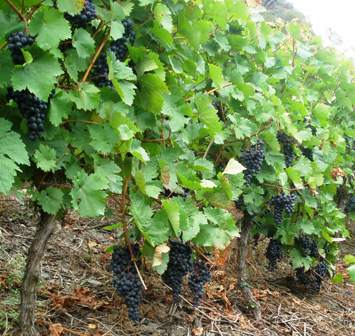
Pinot Noir grape

It seems that I’ve been drinking the right stuff: “Blauer Spätburgunder” as the Germans call it, Pinot Noir is all the vogue in “the German lands”. Traditionally, Germany has always been considered a white wine producer. The recent rediscovery of Riesling and the boom in worldwide Riesling demand supports this view.

Now it seems domestic attention has shifted to the colour red. In particular the Pinot Noir wines show a tremendous rise in quality and consumer demand. Wine experts in Germany praise the progress made and estimate that an increase in demand for German Pinot Noir is going to follow the Riesling boom.

But red varieties are no strangers to Germany, as I have pointed out in one of my recent blog entries (“Old friends, wine from the Mosel and other culinary delights”, 16. September 2007). Where would German red wines be if politicians had not meddled in the vintners’ affairs in the 18th century, as elector Clemens Wenzeslaus of Saxonia did along the Mosel?

d1000133pinot2.JPG

Vintage time for Pinot Noir 2007

My recent explorations of German wines made from the Pinot Noir grape can only confirm the wine writers’ opinions, though they mainly point to the wine regions of Ahr, Baden, Rheingau and Rheinhessen and seem to forget the next big thing, Pinot Noir from the Mosel.

I argue that the quality of Mosel Pinot Noir wines is as good as wines from the other regions and you will get a good drop at much less expense. The Ahr, pioneering Pinot Noir grapes for many decades, has always been considered a high-price red wine region. However, you do not have to spend €12 to 20 per bottle.

My favourite Mosel Pinot Noir wine producer, the winery of Alfons Sebastiani in Mehring offers a beautiful Pinot Noir for €5,40 the 0.75 litres bottle.

Another great Pinot Noir producer on the Mosel is Weingut Markus Molitor in Wehlen. I tasted his 2004 Molitor Spätburgunder at the Weinhaus in Trier (opposite the Karl Marx Haus in Brückenstrasse 7); it is very drinkable.

Less affordable are the Molitor 2004 Pinot Noir wines from the locations Graacher Himmelreich and Brauneberger Klostergarten (€35 to 49 /075 l bottle). These prices are an indicator for the general trend; Mosel Pinot Noir wines seem to be becoming the new cult wines. Wine producers and consumers will benefit from it.

As for the average wine drinker like myself, I do not worry about high prices as long as there are plenty of new wines to find, explore, and taste. My recommendation is to try some German Pinot Noir wines.


The Ahr Wine Region

October 7, 2007

Along the river Ahr, north of the Mosel, wine has been cultivated since Roman times. Documentary evidence dates from the 8th century. With its 550 ha under vines it is one of the smaller German wine regions (with 40 single locations). The most known wine locations are the settlements of Altenahr, Dernau, Heimersheim, Marienthal, Mayschoss, Walporzheim, Sinzig and Bad Neuenahr-Ahrweiler. The dominant soils are of deep vulcanic origin or blue slates. The climate is mild but in order to ripen the grapes the vineyard locations consist mostly of steep to very steep slopes, difficult to work and to manage (and costly as well).

d1000082ahr2web.JPG

The village of Dernau (or in latin Dagernova) and its vineyards

The Ahr is known as “the red wine paradise” and in contrast to other German wine regions red varieties dominate the production structure. About 85% of the area is planted with Pinot Noir, Blue Portugese and some Dornfelder. Among the whites we find Riesling but also some Müller-Thurgau and Kerner. This was not always so. It was only after the 30 years war that the growing pattern changed to red wines. The Catholic church and its many monastries were the pioneers in vine cultivation and wine production and, I may add, consumption. Today, the Ahr is one of the most popular destinations for wine tourism. Thousands of people from the big cities of the Rhineland north of the Ahr (Düsseldorf, Köln, Bonn, etc.) visit each year, especially during vintage in September and October. I had the great fortune to be one of them.

d1000111ahr3web.JPG

Pinot Noir grapes shortly before vintage

During the the last couple of weeks I had the opportunity to visit the Ahr wine region twice. My first visit was to attend the seventieth birthday celebration of my old friend Hans-Joachim Krekeler. Together with a dozen others, he invited me to a dinner at the famous winery, Meyer-Näkel in Dernau. The wines of this producer are renowned for their high quality. The restaurant is very good too. I had a fish dish, which was excellent, and tried some Riesling as well as their Pinot Noir wines. The fact that I could sit on a wooden bench which, given its design and making, must have come from Indonesia, added to the feeling of being right at home.

d1000031ahr1web.JPG

The restaurant cum cellar door of the winery Meyer-Näkel in Dernau

d1000123ahr4web.JPG

Steep slopes with new plantings

My second visit occured about one week later. Together with friends I walked from the village of Dernau to Resch. Needless to say we ventured into quite a few wineries, and what the Germans call “Strausswirtschaften”, a kind of outdoor cellar door, open during summer until vintage time. We also visited the wine co-operative in Dernau. We tasted some Pinot Grigio (in Germany also knows as Ruländer), and lots of red wines, Blue Portugese and most delicious Pinot Noir.

d1000127ahr5web.JPG

The Ahr “vineyard walking team”


What a degustative experience: Wine tasting in Trier

September 18, 2007

I had the great fortune to spend the most amazing culinary weekend in my hometown Trier. It was organised by my friend Thomas Weber and held at a restaurant called Bagatelle (www.bagatelle-trier.de) in a place called “Zur Lauben” in Trier.

thomas1.jpg

Thomas while giving us the introduction to the degustation

There were 10 of us, Thomas and Birgit, Peter and Baerbel, Rainer and Brigitte, Uli and Hiltrud, Ulrich and myself (another Rainer). Most of us did not know each other prior to the tasting. See some of the tasters in the picture below. The glasses were not empty for long.

thewinetasters.jpg

The meal consisted of three courses: an entree, a seafood platter, a venison main course and a desert. Needless to say that the food was very delicious indeed.

seafoodplatter.jpg

The seafood platter

Thomas had selected all the wines. He provided us with information about the wine producers and he had translated all the tasting notes into German (I am not translating them back, please visit the webpages of the wine producers for tasting notes). We tasted 9 Sauvignon Blanc and 6 Merlot wines.

The ‘9’ Sauvignon Blanc wines were the following:

– 2004 “Monmousseau”, Sancerre, AC-Loire (France)

– 2006 “Nehrener Roemerberg”, Weingut Theisen, Nehren, Mosel (Germany)

– 2005 “Lands End”, Hidden Valley Wines, Elim Vineyards, Cap Agulhas (South Africa)

– 2002 Two Hills Vineyard, Sauvignon Blanc, Upper Goulburn River, Victoria (Australia)

– 2003 Clairault Estate, Margaret River (Western Australia)

– 2006 Clowdy Bay, Marlborough (New Zealand)

– 2003 Johner Estate, Marlborough (New Zealand)

– 2005 Rodney Strong Estate “Charlotte’s Home”, Sonoma County, California (USA)

– the ninth wine was what is called in blind tastings a “pirate”, i.e. a wine which is not a Sauvignon Blanc.

The ‘6’ Merlot wines were:

– 2004 Bimbadgen Estate, Hunter Valley, New South Wales (Australia)

– 2004 Two Hills Vineyard Merlot, Upper Goulburn River, Victoria (Australia)

– 2005 Merlot, Auslese Weingut Guenther Steinmetz, Brauneberg, Mosel (Germany)

– 2001 Domaine Font-Mars, Languedoc (France)

– 2004 Marques de Casa, Concha Peumo Valley (Chile)

In addition and as in the white pannel there was as sixth wine also a “pirate” among the reds.

Tasting wines without restraint is a most wonderful thing. All of the participants were wine lovers with some considerable experience. The self-introduction showed that most of them were staunch Mosel wine afficionados (some with preference for off-dry Mosel wines) with some of them with likings for Spanish red wines. But generally new world wines were seen as somehow to be not very desirable as far as their taste buds were concerned. Well, we were to be taken all around the world with this blind tasting with considerable effects as I can witness.

I only became aware that two of my own wines were part of the tasting when the paper sheets with the information on producers and the tasting notes were distributed. I was of course scared not to be able to identify my own wines and Thomas teased me with the remark, that most producers do not recognize their own wines in blind tastings that he had attended. Well, these were challenging prospects. Without bragging about how many wines I correctly identfied during the evening, I would like to point out here that I did in fact identify the two Two Hills Wines which came as a relief.

We congregated at 17 h in the afternoon and parted company at about midnight. Needless to say that we had a jolly good time. We had to match the tasting notes with the wines and to make it not to difficult, we worked with a pannel of three wines at the time. The results were given after each pannel. Therefore, the odds were not ‘too big a stew to chew’. Tasting notes are indeed an interesting lead to wine but some of us felt more at ease with their own feelings and taste buds. Needless to say that after the completion of the tasting wine drinking did not stop. The dessert called for a dessert wine. Thomas selected from the restaurant wine list (Bagatelle has a very good wine list indeed). Unfortunately, I am not sure what we drank because my tasting notes became rather confused the longer the evening lasted. Moreover, we did not restrain ourselves to one bottle only but had several instead. One of them might have been a 1997 Maximiner Gruenhaeuser Riesling Auslese from Ruwer. Thomas is of the opinion that the first ‘sweet wine’ was a 2006 Drohner Hofberg from A.J. Adam.

Saying good bye was not an easy thing after these marvellous hours together discussing and enjoying wine and food. Ulrich and I walked back home to the Irminenfreihof (located in a part of town next to the old river harbour called Britannia) where my mothers house is located in an elevated spirit.

ulrichh.jpg

My friend Ulrich in a jolly good mood

PS 1: I love certain aspects of gobalisation and modern technology: while writing this down I am listening to wonderful music from Mozart broadcasted by the ABC Australian classic radio via the internet and of course I am enjoying a glass of 2004 Two Hills Merlot.

PS 2: Ulrich is our non-profit importer of Two Hills wines to Germany.

Address:
BAGATELLE restaurant and bistro
Zurlaubener Ufer 78
54292 Trier
Te.: 0651-29722
http://www.bagatelle-trier.de


Old friends, wine from the Mosel and other culinary delights

September 16, 2007

What a weekend this was. After my delightful tour along the Mosel River I finally reached my destination Trier, the 2,000 years old Roman town which I also call home. Saturday I should meet Thomas Weber, an old school friend from high school times at Hindenburg Gymnasium. It was about 33 years ago that we met last time. We were brought back together by another school friend, Juergen Olk who lives in Eitelsbach near Trier. Juergen told Thomas about our vineyard in Australia and through the shared love for wine we should be reunited. Thomas is a wine aficionado. He has written two wonderful books (wine as a gift) about wine (www.wein-als-geschenk.de). He had promised to organise a wine tasting for me (more about the tasting in my next entry). We met at the Porta Nigra, a Roman city gate and landmark of Trier. He introduced me to Birgit and the three of us had a cappuccino and later a “Viez” (a local variety of an apple and pear cider, very sour normally). It was a lively reunification and Thomas proposed to have dinner together at his parents place.

And dinner we had, the five of us. It was a culinary tour through many varieties of bread, cheese and olives. The wines were all from the Mosel region. We started with a dry 2005 Riesling from Staatliche Weinbaudomaene Trier, Rotliegender Schiefer (vines planted on red coloured slate), 12 Vol%. Nice and fruity wine, with typical Mosel Riesling character, citrus aromas, crisp and minerally. Then we moved to an off-dry wine from the Saar River, a 2002 Ayler Kupp, Riesling Auslese produced by Weingut Weber, Margarethenhof. The wine has only 8.5 Vol% alcohol; I guess 15 g/l sugar, a wine of great elegance and balance. From here we moved to a kind of new cult wine. The young vintner Andreas J. Adam (not related to my family) who took over some neglected vineyards from his grandfather, has recently become a new star in wine circles along the Mosel. We tasted a 2006 Dhroner Hofberg Riesling, a dry wine of great finesse. This locations is one of the best along the Mosel but was somehow forgotten until recently. The Weingut (winery) Andreas Adam is a boutique vineyard with about 1 ha under vines and a production of about 1500 bottles a year located in the small town of Neumagen. The German wine critics are full of praise for the young vintner and his excellent Riesling wines. German web entries give some idea about the character of the wines. Interesting is also the winerys own webpage which has the following web address: www.aj-adam.com.

aylerkuppfromschoden.jpg

Ayler Kupp in the background, Schoden in the foreground seen from the hights

To an Australian vintner wine prices for these excellent Mosel wines are a shocker. The “Weinbaudomaene” price list shows the dry Riesling (Staatliche Weinbaudomaene Trier, Avelsbacher Hammerstein, 2005 Riesling Kabinet, dry, 11 Vol%) for 3.20 € (!) per 0.75 l bottles. Other Rieslings do not cost more than 5.50 € which corresponds to 5 until 8 A$ cellar door prices. What heaven on earth the Mosel is for wine consumers. Even the Andreas Adam Riesling is available for about 12 € only. In Jakarta the minimum one has to pay for a reasonable Australian Riesling is about 10 €/bottle and these wines are hardly equivalent to the simplest of the Mosel Rieslings. In order to compete with those wines, we Australian vintners have to dig deep and improve wine quality and our cost structures considerably.

The shock of my life should soon follow when we tasted some Mosel reds. Yes, there are more and more red wines from the Mosel to be found, unbelievable. Over the last couple of years the acreage for Pinot Noir and Dornfelder is increasing continuously, reaching almost 10% of the total acreage under vines. We started with a Pinot Noir from Mehring, producer Alfons Sebastiani. Great drop displaying all the varietal characters of a good and earthy Pinot Noir. I remembered the many vineyards in the flats from my trip along the Mosel the other day but did not expect such beautiful wines. The Dornfelder we drank after the Pinot was not to my taste. I was also not impressed by the Acolon, a kind of “hybrid” variety (cross between Helfenstein x Heroldsrebe – Blauer Lemberger and Dornfelder) which produces deep red wines of a rather “tarty” character. But the Pinot was wonderful and so the evening ended with delight. Thanks to the hosts, the Weber family for their great hospitality and the good company.

Furthermore, Thomas informed me that the Mosel used to be a prime producer of red wines (I did not know this and can you believe this!) until the times of Kurfuerst (elector) Clemens Wenzeslaus of Saxonia (1739-1812) who became archbishop of Trier in 1768. Wenzeslaus issued on 30 October 1787 a new ordinance for the improvement of wine quality in his dominion along the Mosel River. The “bad” grape varieties, mainly reds and high acidity whites were to be replaced by “good” varieties, mainly Riesling vines. This ordinance was rigorously enforced by his administration and it was the kiss of death for most red varieties along the Mosel for many decades to come. The recent revival of red wine production is therefore not something completely new but rather a reminiscent of older days. I will have to try more of the Mosel Pinot Noir to see how they compare to Pinot Noirs from the Yarra Valley and the Upper Goulburn Wine Region (www.uppergoulburnwine.org.au) and of course my own.

On Sunday we had our usual lunch at the “Landgasthof Kopp” in Hentern (www.landgasthofkopp.com) near the Saar where we enjoyed good German country style food and local wines. Dinner was scheduled to be had at a gourmet restaurant in Trier called “Bagatelle” in “Zur Lauben”, a famous location in Trier next to the Mosel River with a beautiful view of the river and the red sandstone cliffs at the opposite side. Learn more about this in my next entry.

trier-4web.jpg

The red sandstone cliff “Weisshaus” from the “Zur Lauben” side of the Mosel River


Along the Mosel River

September 12, 2007

I have often traveled along the Mosel River by train. Last weekend I decided to abolish the train and drive by car from Kobern-Gondorf to Trier. Unfortunately, the sun did not shine. But despite this handicap it was one of the most marvelous trips I have recently made.

The Mosel River valley was buzzing with visitors and tourists. Groups of cyclists, tour buses, camper vans as well as people on foot, motorcyclists and others were cruising along the river and swarming the small towns and villages. Almost every settlement advertised its ongoing or imminent wine festival and vintners’ fair. Everywhere one could buy wines, have a meal or stay overnight. Vintage was in full swing in many places and the young fermented grape juice, in German called “Federweisser” was everywhere on offer.

rivermosel.jpg

Barges and a ferry on the river and a castle in the background

moselriver2.jpg

Steep slopes and a narrow valley, vines on “Graywacke” slate plates

The appelation of the wine region “Mosel-Saar-Ruwer” is the result of the Wine Act of 1909. From 1936 onwards wine labels could show this designation. In 2006 the German Parliament passed a new law abolishing “Mosel-Saar-Ruwer” and simply replacing it with “Mosel” and since August 1st, 2007 the region is officially called “Mosel” only.

The region consists of six sub-regions with 19 locations (Grosslagen) and 524 individual locations (Einzellagen). 5,500 wineries and vineyards are spread over 125 settlements, villages and towns. The total area under vines is about 9,000 ha, which produce annually about 850,000 hectoliters of wine (including 75,000 hectoliters of red wine). The largest wine producing acreages can be found in the settlements of Piesport, Zell (Mosel), Leiwen, Konz, Neumagen-Drohn, Mehring, Bernkastel-Kues and Trittenheim. I passed through some very famous vineyard locations such as “Bremmer Calmont”, “Wehlener Sonnenuhr”, “Erdener Treppchen”, “Ürziger Würzgarten”, “Piesporter Goldtröpfchen”, “Bernkasteler Doctor” and many others.

steepslopes1.jpg

The elevator “sledge”

steepslopes2.jpg

The “rail” for the “elevator”

The region has the largest extent of vineyards on steep slopes (inclinations range from 30% till 60%) in Germany. The Mosel region is also the biggest Riesling producer in the world (with about 5.000 ha acreage). Recently some of the more extreme locations have fallen fallow. Traditionally vines were planted on the steep slopes using single posts. In recent times they have been gradually replaced by modern trellis systems. For transport purposes, elevator systems were installed in some locations, as shown on the photos below. I was very surprised to find a lot of red grapes planted in the flat lands near the river. Most of them are Pinot Noir and Dornfelder grapes. There is an increasing trend to extend the acreage for red varieties and the Mosel has once again become a superb producer of red wines, especially Pinot Noir.

redgrapes1.jpg


Mosel and Rhine, rivers and wine

September 6, 2007

I just have arrived in Germany and I am sitting in the train from Mainz to Koblenz. Its 7:00 in the morning on a Saturday and it’s raining. September weather, Germans would say. The Rhine valley is so beautiful. We just passed Bingen and some beautiful old castles, forests and barges on the river. Some small vineyards are nestled in pockets on steep slopes. Within a couple of minutes the train passes through three wine regions, the ‘Rheingau, Rheinhessen’ and then follows the ‘Mittelrhein’ for a while.

350px-mittelrhein_burg_katz.jpg

(Source wikipedia: St. Goarshausen, castle Katz with Loreley rock)

The vegetation is still very green, only slight hints of autumn are to be seen here and there. Another spectacular castle rises on the next hill. I cannot provide you with all the names of these magnificent structures from ancient times. There are so many of them. Villages in white sit on the hilltops. How can they grow the vines on these steep slopes, on these slate plates? The ground consists of slate on top of greywacke, a kind of sandstone generally characterised by its hardness and dark colour. It is a texturally immature sedimentary rock found in Palaeozoic strata. ‘Greywacke’ is the typical ground of the Rhine-Mosel-Nahe river valleys and the adjacent hills.

260px-vineyard_zell_germany.jpg

(Source wikipedia: Vines on steep slopes on slate)

Lots of water flows in the river. My train is on the right side of the river northward bound. During my previous visits I always travelled on the left side of the river. Today I have the opportunity to look over from the other side, which offers quite an amazing new perspective. Another medieval settlement with castle and church: Bacharach, a famous terroir, very picturesque. The part of the Rhine river we are passing is called the Middle Rhine and starts in Bingen and ends in Bonn. From the train I can see the settlements of Oberwesel, Sankt Goar and Boppard; then we reach Koblenz, an old roman garrison town where the Mosel flows into the Rhine river.

More than 2000 years ago the Romans occupied this territory. Garrison cities such as Koblenz secured the area and kept the German tribes people at bay. The Romans used the Rhine and the Mosel rivers to transport goods and troops. Ever since that time, vines have been grown along the rivers Rhine and Mosel. Many of the parcels are quite small. Usually we find vineyards on the southern slopes. The vines are un-irrigated. In some locations elevators are installed to transport materials, equipment and the fruit. About 75% of the area is planted with Riesling on steep slopes (25 to 30˚). Other varieties are Elbling and Mueller-Thurgau. The climate allows the grapes to get sufficient sun and heat. Because the slate soils act as heat storage, releasing the stored heat slowly during the night; temperature fluctuations are kept to a minimum and the ripening seasons is prolonged. Cold air, however, is ‘drained’ from the land by the steep slopes.

The Middle Rhine is one of the certified wine regions of Germany. The area under wines has continually dropped over the last years because of the small farm size and the low profitability of wine production. In 2006 the total area under vines was only 380 ha. However, for many families income from wine production and sales is still an important component of their total family receipts.

In Koblenz I had to switch trains and therefore boarded a slow local carriage which would bring me to my hometown Trier. For me this is the most enjoyable part of the journey. Homecoming involves such strong emotions, almost like tasting a Riesling or any other fine wine. Most of the train route is along the Mosel river and the views from the train are stunning. The rain stopped and here and there light rays of sun broke through the clouds. The green of the vines and the trees is so intensive. Some of the vineyards were already covered with nets indicating that vintage time was near. This year, due to a mild winter and a very sunny spring, many parts of Europe have seen the advent of vintage time earlier than usual. Vintners in the Champagne, in northern France for instance, started to pick their fruit on 23 August already, about two to three weeks earlier than usual (and the earliest time on record since the 19th century).

288px-wolf_mosel.jpg

(Source wikipedia: The Mosel near Wolf)

We passed the settlements of Winningen, Kobern-Gondorf and Bullay. The same picturesque scenes as a couple of hours ago at the Rhine were to be enjoyed: vineyards on steep slopes, nestled high just below the hill tops which are covered with forests. A little later the train left the valley behind and entered the hills of the Eifel region. I said good bye to all the vines and vineyards knowing that I would soon meet them again near Trier and that I would soon hold a glass of Riesling in my hand and would taste the reward of extremely hard work on the steep slopes of the Mosel, the Ruwer or the Saar. For me nothing beats Mosel Riesling. I just love its minerality, its crispness, the low alcohol but high acidity, its freshness, the intense floral and citrus fruit characters. Zum Wohl. Auf ihre Gesundheit.


Hanging Rock Winery

September 4, 2007

hangingrock.jpg

During our recent holiday in Australia we once strayed from our home turf. We went west towards Bendigo. On our way back from a visit in Castlemaine, we came through the Macedon Ranges wine region where we had never been before. This was a perfect opportunity to get to know some of the wines there. I had always dreamt of visiting the famous Hanging Rock Winery (www.hangingrock.com.au) whose webpage I had visited before. Visiting ‘virtually’ is one thing, but nothing beats the real thing. So we pulled up for a tasting. The winery is situated near the small settlement of Woodend. From the cellar door one has a wonderful view of the famous Hanging Rock, a major tourist attraction of the region.

hangingrock3.jpg

The Hanging Rock seen from Hanging Rock Winery

It was a grisly day and we were cold when we entered the cosy tasting room. Andrew showed us some of the outstanding wines produced at the Jim Jim Vineyard . The Macedon Ranges is a cool climate region, producing some of the finest sparklings in Australia. We also tasted wines made from grapes from the Heathcote area, another well known wine region of Victoria. In sharp contrast to the Macedon Ranges, Heathcote is hot and therefore ideal for red varieties such as Shiraz.

We talked about all kinds of things; among others the challenges of the Asian, especially the Chinese, wine markets. We had a great time and bought a few wines, from the Rock range, the premium range (yellow label) and the super premium range (black label). Some days later, together with friends, we decided to sample the 2003 Heathcote Cambrian Rise (which won a gold medal at the 2007 Korea Wine show). It is indeed a very impressive wine.

From a brochure called milestones, I learned many interesting facts about the winery and its owner, John Ellis, and his family and friends. 2007 is a special year for the Ellis family and Hanging Rock. It marks the 25th anniversary of the winery and the 40th year of John Ellis in the wine industry. There are more causes for jubilation among them the 21st vintage at Jim Jim Vineyard and the 20th for the Heathcote Shiraz. In 2007 John Ellis was also elected the Chairman of the Small Winemakers Committee of the Winemakers federation of Australia.

hangingrock2.jpg

Lucy, Charlotte and Margit with a case of treasures from Hanging Rock

We did not try the sparkling (we were in red wine mood, I reckon) but the Rock Macedon Cuvée XI and the Macedon LD Cuvée VI were rated by James Halliday’s 2007 Wine Companion at the top of his “Best of the best” rankings. Congratulations. The winery is certainly worth a visit. Its not far from Melbourne. Have a great time there and say hello to Andrew.


The Wine Hub

September 3, 2007

Due to an alternator breakdown, we were grounded for three days at my brother-in-law’s house in Healesville. We used the spare time to visit interesting places in the vicinity; one of them was the Yarra Valley Dairy where we had lunch one day. The dairy also houses the Yarra Valley Wine Hub (www.yarravalleywinehub.com.au),in a section of the rustic Dairy shed that is managed by Brook and Stephen Powell ,where they sell local wines usually from small vineyards and wineries. The Wine Hub specialises in single-vineyard wines. It’s a great place. Margit talked with Brook about wine in general and Merlot in particular and within a short time they agreed to conduct a tasting of our 2001 and the 2004 Merlot vintages. Brooke liked them both and ordered a couple of cases. And ever since, Two Hills wines can be bought at the Yarra Valley Wine Hub in the Yarra Dairy near Yarra Glen. Check them out when you pass by next time.

winehub2.jpg


Wine Tasting at the Alexandra Food & Wine Expo

August 23, 2007

expotasting1.jpg

The tasting chamber

During the recent wine expo of the Upper Goulburn Winegrowers Association (UGWA, www.uppergoulbournwine.org.au ), three wine tastings were offered to the visitors. The tasting took place in the meeting chamber of the Alexandra Shire Council where the mayor and the council members convene their meetings. Because Margit and I (Two Hills Vineyard) participated for the first time in an event of the Association, we took the opportunity to learn more about the wines from the region and our fellow members. Margit participated in the first tasting conducted by Les Oates, from Growlers Gully (www.growlersgully.com.au) and chairman of the UGWA. She thoroughly enjoyed herself. I was scheduled for the second one with David Miller, winemaker and partner from Rees Miller Estate (www.reesmiller.com), is one of a few certified biodynamic wineries in the region (the other one I know of is Will de Castella and his Jean Pauls Vineyard near Yea (www.jeanpaulsvineyard.com.au).

expotasting2.jpg

David Miller, winemaker at Rees Miller Estate

David conducted the tasting with great passion. We tasted four wines, two reds and two whites. The first white was a 2003 Kinloch Chardonnay (www.kinlochwines.com.au) which displayed vanilla, melon and passionfruit characters. The second wine came from Barwite Vineyards (www.barwitevineyards.com.au). It was a 2005 Riesling with showed a floral character; it was a citrus bomb explosion in the mouth. Than we moved on to the reds, in this case two Shiraz wines, the first from Snobs Creek Estate (www.snobscreekvineyard.com.au.) It was a was 2005 Shiraz. The second, a 2006 Shiraz, came from the Rees Miller Estate (www.reesmiller.com) itself. Both displayed delicious black fruit characters but whereas the Snobs Creek Shiraz was elegant and showed cherry flavours, the Rees Miller wine displayed a creamy richness that was truly remarkable.

expotasting31.jpg

The four wines

All the wines were superb; they were clean and well crafted. They showed the outstanding quality of the cool climate wines the region can produce. David did a marvellous job in guiding the largely novice tasters through the various stages of grape growing and wine making. He answered many questions and in a twinkle of an eye, two hours were gone. All the participants were very satisfied, enriched by the experience and certain in the knowledge that winemaking is art, as David put it so convincingly. They went straight back to the showroom to sample more wines from the Upper Goulburn Region. The tasting was also a great opportunity to get to know the region’s wines and it enriched the expo tremendously. A great success I would say.