Impressions from Two Hills Road, Glenburn

January 28, 2009

twohillsroad11

Road sign at the turn-off from the Melba Highway

This week a blistering heat wave is going through Victoria, the worst in the last 100 years. Temperatures will be as high as 40 to 42 degrees Celsius. The grapes are at risk to shrivel and loose bunch weight, and many of the vines will suffer, but hopefully we will not loose the fruit.

thv-view1

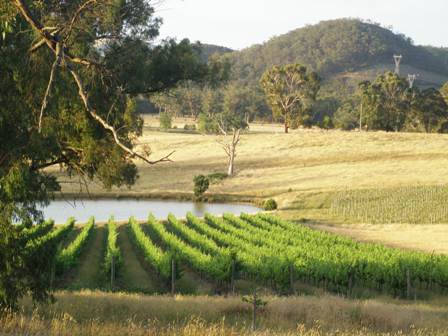
Vineyard with the two hills in the background

Just two weeks ago, the grass in some paddocks was still green and we experienced one of the coldest Christmas in the last five years.

thv-chardy1

The Chardonnay block needs slashing but the vines look good.

thv-chardy11

The one year old Chardonnay vines look very healthy

thv-hay

Beautiful hay

Our neighbour Hilary at the end of Two Hills Road had the best hay ever and harvested 600 bales.

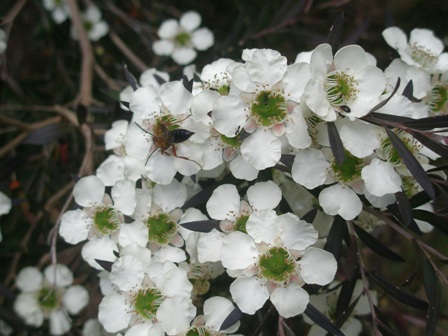
The native plants around the house flowered beyond belief.

thv-flowers1

thv-flowers

thv-flowers2

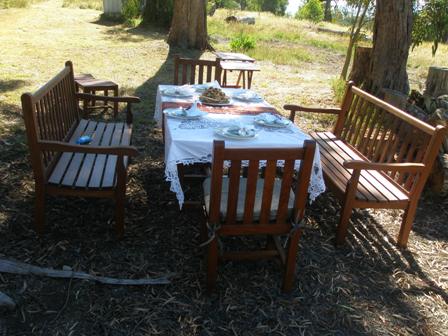
And the people were merry and in a celebratory mood.

thv-table

Tables are set for food and drink

thv-people

Lucy, Michael, Helen, Charlotte and Margit

Hope you join us one day. Cheers


Phylloxera in the Yarra Valley

January 8, 2009

On December 23 another outbreak of phylloxera in the Yarra Valley was confirmed. This is the third infection since 1. December 2006. Phylloxera is a small aphid that lives on the roots of grape vines. Despite almost a century of research no remedy has been found so far. An infection will inevitable lead to the death of the vine. Grape growers, vintners, wine makers and winery owners are concerned that the spread of the disease cannot be contained.

A new “Phylloxera Infested Zone” called the Maroondah PIZ has been declared around the known infested sites, with the boundary set at a minimum of 5km from all known phylloxera affected properties, and taking into account physical features including roads and rivers.

phylloxera-zone-yv-web

The Maroondah PIZ

One can see the affected vineyard from St Hubert’s road, near Punt Road Winery. It has obviously been treated. The dead vines are without any leaves.

The four photos below show some of the symptoms we look out for. All four photos come from a brochure called “Inspecting Vineyards for Phylloxera” on vine desease from South Australia.

phyll1

phyll3

phyll4

phyll2

Early signs of phylloxera

We at Two Hills Vineyard are very concerned too. Our wine is made in a winery in the Yarra Valley (Yering Farm Wines) and some of our contractors and vineyard workers are also working on vineyards there.

In order to not contract the vine disease we are attempting a certification with a protocol in place which will prevent our vines from being affected sometime in the future. It’s quite fortunate that we have no visitors in the vineyard and do not participate in the wine tourist trade. However, all people working in the vineyard and their equipment need to take proper precautions. We hope it will work.


“Greek dinner” at the vineyard

January 6, 2009

greek-dinner

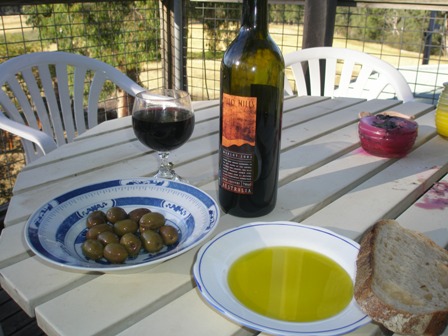
Australian olives and olive oil and Two Hills Merlot, what a treat !

From the outset, I apologize to all Greek people, Greece and Greek culture and so on. I did not in the least want to offend anybody or humiliate the great Greek culture.

What you see in this picture is of course not a Greek dinner, but just a modest dish of olives, Australian olives to be precise. They are coming from an olive groove in Tallarook. Juergen grew them and Michael cured them, and needless to say: they are delicious.

I am of course not known for being a (great) cook or a cook at all. Moreover, I am alone in the vineyard at Glenburn. However, before another session of fruit wire lifting in the evening, I made myself this little dish. The olive oil is also local coming from ‘down the road’. The bread comes from Giant Steps in Healesville and can match any rural bread from Europe.

I am almost done with the wire lifting, only the Pinot Noir is left. Hurrah!!!!

The evenings here are magic. You have to come and see for yourself one day.


Welcome 2009

January 1, 2009

clouds2009

Clouds over the hills around Healesville with mount St. Leonard (1028 m) to the left

As customary, we spent Christmas and New Years Eve with Michael, my brother in law, and his lovely wife Helen in their cosy family home in Healesville, Victoria. Boy did we have a great time. The time went by just too fast for the six of us.

The year 2008 is gone and with it the anxiety, the joy, the disappointments, the chagrin and the happiness. We deplore the losses, and welcome the changes.

The past year brought great changes to our family. We moved from Jakarta/Indonesia to Bangkok/Thailand, experienced a new job, a new school, a new environment, a new culture to get acquainted with and it will take us some more time to adjust, to understand, to appreciate, and to feel at home.

For 2009 our expectations are high. Our ambitions at Two Hills Vineyard are to continue to produce first grade fruit for excellent wines. Despite the loss of about 50% of our Pinot Noir grapes due to a severe frost at the end of October, we are very optimistic about the coming vintage. The Sauvignon Blanc fruit look very good, and our Merlot is in a good condition. The Chadonnay vines, now one year old, prosper and we have very few losses.

alan-johns1

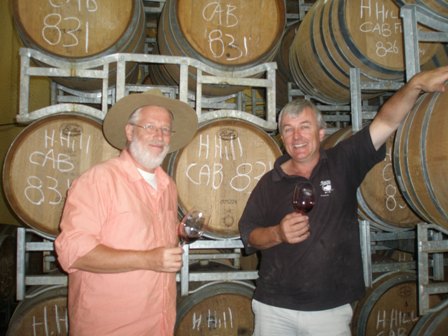
Tasting the 2008 Two Hills Merlot with Alan Johns, owner and winemaker of Yering Farm Wines

Our 2008 Merlot also showed promising first results. At Yering Farm, we tasted the young wine from various barrels. The wine was fruity, had good structure for a medium bodied wine, and the tannins were just right. We hope it will mature nicely so that we can present our customers with another excellent vintage of our flagship red wine from Two Hills Vineyard.

th2008new

Two Hills Vineyard, Sauvignon Blanc (left) and Chardonnay (right)

Temperatures are low for this time of the year but we had some rains which helped to make everything looking very green. A little digging, however, shows that the soil is still very dry and that we urgently need more rains. The general drought has bot been broken as yet.

A new year means new opportunities. Also in 2009 grapes will be grown, wines will be made, and we will get ample material to apply our taste buds to. Sampling fine wines and enjoy them with good food, either within the family or with our friends, will be our prime pastime in the 12 months to come. Hope you can join us. Cheers and a happy New Year to you all.

PS: I write this new blog entry from our vineyard. Yes, we installed a broadband internet connection on the last day of 2008. From now on, I do not have to hurry to a wireless spot (35 km from here) or any other place with an internet connection. Blogging will take a new dimension. Hurray!


Back on the farm at last

December 16, 2008

You cannot imagine how good it feels to be back home on the farm in Glenburn, Victoria. This time of the year Two Hills Vineyard is at its best. The sky is blue, the sun is warm and the vineyard is “in full steam”.

And puffing along, I am enjoying rural life wholeheartedly. Rest assured I will taste some wonderful wines, have fun with my family and catch up with friends. There will be many memorable barbecues and lunches on the “lawn” on the farm. We will drink delicious wines and I will come back in 2009 well rested with a tank full of new energy.

The Man from Mosel River is also taking a break from blogging. I might go down to the “Innocent Bystander” in Healesville which has a wireless service and I might enter a post here and there but do not expect much.

I would like to thank all my blog visitors, readers and contributors for their interest in the affairs of the Man from Mosel River. I wish your and your families a relaxing Christmas season and a good start into the New Year. Have a glass of fine wine here and there. Cheers


Thai Wines II

December 10, 2008

thaiwine03

Today some Thai colleagues invited me for dinner and presented to me a Thai wine. What a pleasant surprise that was. We tasted a ‘2004 Kirimaya Syrah’ from Gran Monte Family Estate Vineyard. The vineyard is located in the Khao Yai region north-north-east of Bangkok in the Asoke Valley.

The Gran Monte Winery is set in 800 acres of beautiful land. The varieties planted are: Syrah, Tempranillo, Chenin Blanc, and Clombard. My friends told me that the vineyards are family owned and operated. About 40 acres are under vines mainly Syrah and Chenin Blanc. The ‘2004 Kirimaya Syrah’ won a gold medal somewhere ( I could not identify it because it was too dark in the restaurant).

I loved this wine; it was very yummy. It showed all the characteristic of a well made Shiraz. My Thai friends promised to bring me some more bottles and suggested I should go and visit. The owner-winemaker supposedly worked for some years in Australia.

Great prospects, I would say, and another exciting plan for 2009. The Asoke Valley and the Gran Monte Winery are waiting for me. I’ll keep you posted.


Portugal – Along the Douro river

November 8, 2008

One of our day trips from Quinta de Gatao, near Penafiel, was a day trip to see the famous Douro river valley. It was a Sunday morning when we set out, the sky was high and very blue, in short, a terrific day.

We took the rural roads not the highway and descended to the Douro river through a narrow valley on a winding road. It was a wonderful drive. I love driving through almost any rural landscape, then my heart opens up and I feel free. There is so much to see for an agricultural engineer like me: the forests and trees, the fields and the crops, animals, houses, agricultural machinery, irrigation and rivers and of course the peasants.

It was mesmerizing when very of a sudden the river cam into sight for the first time. Majestic it was, large and blue, and of course a cruise ship could be seen slowly making its way down to the city of Porto.

douro-new1

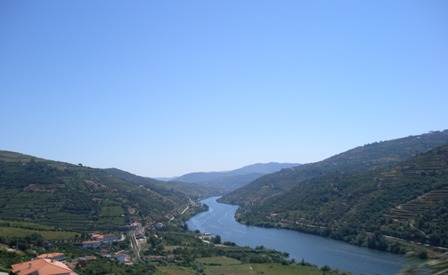
A terrific landscape is the trademark of the region.

Vineyards are all over the place, to be found on narrow terraces, usually just a few rows. Farm houses are also scattered among them. Here and there an olive orchard can be spotted.

Around midday we decided to visit Peso da Régua, a small town and the centre of Port in the upper Douro valley. Our guide book pointed us to Quinta do Castelinho, a winery cum restaurant where we planned to have Sunday lunch.

Since we do not speak Portuguese it was not easy to find the place. Though it was listed in our travel guide, the description how to get there was rather nebulous. After a very friendly man showed us the way, we made a stupid wrong turn and ended up on the freeway into the opposite direction. The rest was easy, we “chucked a u-ie” (no idea what the orthography says about this expression), as we say in Australia, and soon drove right into the yard of the Quinta do Castelinho Winery.

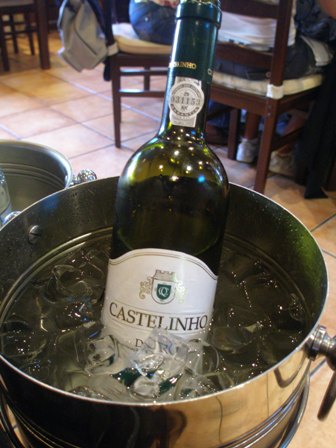
It was a beautiful Sunday lunch; we ordered a kind of continental cuisine. The waiter was very friendly, the service terrific. We had a bottle of their white, still wines which matched the food perfectly. The wine was fresh, clean and crisp, not complicated but a straight forward, excellent table wine.

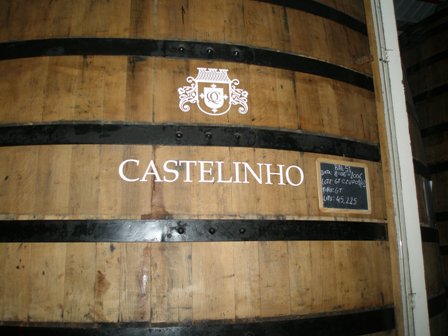
After lunch we were shown the winery. We watched a introductory film and wandered through the large storage facilities with huge tanks and barrels. The gift shop offered all kinds of local produce and other very attractive items.

castelinho12

With our guide We walked through alleys of huge metal bins.

The wooden storage bins were also enormous.

castelinho13

Some of the items on offer in the gift shop.

Only much later did we learn that Quinta do Castelinho is one of the largest producers of fortified wines in the Douro. The winery is owned by Saraiva family and managed by Manuel António Crúzio Saraiva, the son of the founder who had started the business in the 1960’s. Many of the vineyards are classified as “A”-grade, the best for the production of excellent fruit for fortified wines. This part of the Douro valley is the first ever demarcated wine region in the world. The Marquês de Pombal, prime minister of Portugal, ordered in 1757 that the borders of the valley be marked with solid granite markers. This demarcation coincided with the efforts of navigating the Douro river so that the wines could be shipped down to the port city of Porto.

We tasted also the above two fortified wines.

The Quinta do Castelinho Porto LBV 1997, Castelinho Vinhos (Portugal), left in the picture. The grapes used are: Touriga Nacional, Tinta Roriz, Tinta Barroca, Touriga Francesa

The wine has a dark, ruby red colour. The nose reveals intense and persistent aromas of black cherry, cherry jam, strawberry jam, blueberry and blackberry, some people detect the aroma of violets.
The wine is round in the mouth, well balanced and displays a beautiful finish. We have still one bottle here in Bangkok and treasure it which means that we treat it like medicine until we find a new source of supply.

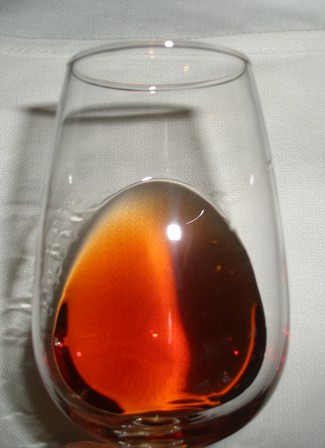
The wine on the right hand side in the picture above is the Quinta do Castelinho Porto Tawny 10 Years, Castelinho Vinhos (Portugal). The grapes used are the same as the first wine.

The wine shows a deep orangey colour. The nose is rich and intense with aromas of black cherry jam, cherry jam, almond, licorice, cocoa, leather, dried fig and some vanilla. Also this wine is elegant and complex with soft tannins. The finish is also long. It was difficult to decide which one we preferred. Therefore we bought bottles of both of them.

castelinho11

What a beautiful colour

And of course, we tasted some of their famous port wines. We bought a couple of bottle of different port wines as well as some bottles of the white wine we had for lunch which had appealed to us so much.

Because I was the driver, I had to limit my tastings but we left the Quinta do Castelinho wholly satisfied, very cheerful, well fed and with a lot of bottles in our possession.

Address:
Quinta do Castelinho Winery
Castelinho Vinhos S.A.
5054-909 Peso da Regua
Portugal

Tel: +351 254 320 100
FAX:+351 254 320 109
E-mail: castelinho@castelinho-vinhos.pt


Jewels of the Upper Goulburn Wine Region Part I.

October 31, 2008

Today, I want to start a new series and introduce to you some wine and grape producers from our wine growers association, the Upper Goulburn Winegrowers Association. I plan to feature three to four wineries and vineyards at the time. The selection is random. I will start with the wineries with open cellar doors. Of the 30 odd members of our association, about 9 belong to this category. Another 12 are vineyards which also produce some wine under their labels but conduct wine tastings only by appointment. All the others are fruit producers only and do not sell wines commercially.

The first cohort of wineries to be presented consists of Kinloch Wines, Rees Miller Estate and, a small boutique winery, called Rocky Passes Estate. I want to be honest with you. I have tasted wines made by Malcolm Kinloch (Kinloch Wines) and David Miller (Rees Miller Estate) but not the ones made by Victor Oles (Rocky Passes Estate). I have visited the two former wineries (and I know Malcolm and David) but not the latter.

But this is no impediment to write about all three of them. Anyway, we are going to visit Australia for Christmas and we might take this opportunity to get to know the Rocky Passes people.

I am starting with Kinloch Wines. Malcolm and Susan Kinloch have established a wonderful wine business. The vineyard is located in the Booroolite Valley, about 15 minutes by car from Mansfield (almost next to another famous winery of our region: Delatite Winery).

This year at the Federation Sq Showcase Series the Kinlochs were rewarded two gold medals, one for their “2004 Mary Friend Cabernets-Merlot Blend” and another for their “2006 Don Kinloch Sparkling white”. Moreover, the “Mary Friend” red was judged the Overall Best Red Blend in its class at the Award presentation for the Victorian Wine Awards.

2008 was a most unusual year in the Upper Goulburn. Kinloch Wines harvested a record 34 tons of fruit of outstanding quality. From the 2008 vintage three wines have been released so far (cellar door prices in brackets):
-Unwooded Chardonnay (A$ 18)
-Sauvignon Blanc, and (A$ 22)
-a first rosè (A$ 18) made from Pinot Meunier grapes.

I have tasted earlier vintages of the two white wines and they are delicious. When we visited Kinloch Wines in winter, one could see Mount Buller in a not so distant distance, all in white with a beautiful snow cap.

How to find them:
Kinloch Wines
In the Booroolite Valley, the cellar door is warm and friendly and offers gourmet luncheon platters on weekends and public holidays.
Address: 221 Wairere Rd, Boorolite – 15 minutes from Mansfield
Open: 10.00 am to 4.00 pm daily
Tel: 5777 3447
Email: info@kinlochwines.com.au
Web: www.kinlochwines.com.au
Contact: Susan and Malcolm Kinloch

Rees Miller Estate is the next winery in my cohort. Located near Yea – about 15 minutes drive on the highway to Alexandra/Mansfield – Sylke Rees and David Miller own and operate a fully certified biodynamic vineyard and winery. Today about 7 ha are under vines, the farm has a total of about 64 ha. Sylke and David are both very much committed to the protection of the environment, and the organic production of food. They intend to produce pure products for consumption in a way that supports the land and its people.

We got to know Sylke and David when our wine stall was just adjacent to theirs at the 2007 Alexandra Food and Wine Expo. David conducted a very interesting wine tasting, actually my first wine tasting at such an event, and Sylke sold the wines. When we visited their cellar door some time later, they were both on Christmas holidays. To my great surprise Rees Miller wines were available at our duty free wine store in Jakarta, and we did not have to suffer any shortages of their beautiful reds.

How to find them:
Rees Miller Estate
Fully certified biodynamic vineyard situated on the Goulburn Valley Highway, just east of Yea.
Address: 5355 Goulburn Valley Highway, Yea
Open: 10.00 am to 4.00 pm daily
Tel: 5797 2101
Email: info@reesmiller.com
Web: www.reesmiller.com
Contact: David Miller or Sylke Rees

The last vineyard in this first cohort of Upper Goulburn wineries with cellar doors is Rocky Passes Estate, a small boutique vineyard of about 6 acres (5 acres Shiraz and 1 acre Viognier) located in Whiteheads Creek, near Seymour. I only know their one-page website and their listing in our membership directory. Rocky Passes Estate is another vineyard dedicated to organic grape growing and wine making (there are quite a few in our region). Cropping levels are kept low (about 2 tonnes per acre). The cellar door was opened in 2006. The wines can be ordered by mail, phone or e-mail.

How to find them:
Rocky Passes Estate
Situated at the southern end of the Strathbogie Ranges, the wines are made using organic practices and biodynamic preparations.
Address: 1590 Highlands Rd,
Whiteheads Creek, Seymour
Open: Sundays 11.00 am to 4.00pm or by appointment
Tel: 5796 9366
Email: rockypasses@activ8.net.au
Web: www.rockypassesestate.com.au
Contact: Victor Oles or Candy Westney

I hope I could stimulate your curiosity. The Upper Goulburn Wine Region is a rural place with real people who love what they are doing, have passion for their wines and commitment to the environment.


Jewels of the Upper Goulburn Wine Region Part I

October 25, 2008

Today, I want to start a new series and introduce to you some wine and grape producers from our wine growers association, the Upper Goulburn Winegrowers Association. I plan to feature three to four wineries and vineyards at the time. The selection is random. I will start with the wineries with open cellar doors. Of the 30 odd members of our association, about 9 belong to this category. Another 12 are vineyards which also produce some wine under their labels but conduct wine tastings only by appointment. All the others are fruit producers only and do not sell wines commercially.

The first cohort of wineries to be presented consists of Kinloch Wines, Rees Miller Estate and, a small boutique winery, called Rocky Passes Estate. I want to be honest with you. I have tasted wines made by Malcolm Kinloch (Kinloch Wines) and David Miller (Rees Miller Estate) but not the ones made by Victor Oles (Rocky Passes Estate). I have visited the two former wineries (and I know Malcolm and David) but not the latter.

But this is no impediment to write about all three of them. Anyway, we are going to visit Australia for Christmas and we might take this opportunity to get to know the Rocky Passes people.

I am starting with Kinloch Wines. Malcolm and Susan Kinloch have established a wonderful wine business. The vineyard is located in the Booroolite Valley, about 15 minutes by car from Mansfield (almost next to another famous winery of our region: Delatite Winery).

This year at the Federation Sq Showcase Series the Kinlochs were rewarded two gold medals, one for their “2004 Mary Friend Cabernets-Merlot Blend” and another for their “2006 Don Kinloch Sparkling white”. Moreover, the “Mary Friend” red was judged the Overall Best Red Blend in its class at the Award presentation for the Victorian Wine Awards.

2008 was a most unusual year in the Upper Goulburn. Kinloch Wines harvested a record 34 tons of fruit of outstanding quality. From the 2008 vintage three wines have been released so far (cellar door prices in brackets):
-Unwooded Chardonnay (A$ 18)
-Sauvignon Blanc, and (A$ 22)
-a first rosè (A$ 18) made from Pinot Meunier grapes.

I have tasted earlier vintages of the two white wines and they are delicious. When we visited Kinloch Wines in winter, one could see Mount Buller in a not so distant distance, all in white with a beautiful snow cap.

How to find them:
Kinloch Wines
In the Booroolite Valley, the cellar door is warm and friendly and offers gourmet luncheon platters on weekends and public holidays.
Address: 221 Wairere Rd, Boorolite – 15 minutes from Mansfield
Open: 10.00 am to 4.00 pm daily
Tel: 5777 3447
Email: info@kinlochwines.com.au
Web: www.kinlochwines.com.au
Contact: Susan and Malcolm Kinloch

Rees Miller Estate is the next winery in my cohort. Located near Yea – about 15 minutes drive on the highway to Alexandra/Mansfield – Sylke Rees and David Miller own and operate a fully certified biodynamic vineyard and winery. Today about 7 ha are under vines, the farm has a total of about 64 ha. Sylke and David are both very much committed to the protection of the environment, and the organic production of food. They intend to produce pure products for consumption in a way that supports the land and its people.

We got to know Sylke and David when our wine stall was just adjacent to theirs at the 2007 Alexandra Food and Wine Expo. David conducted a very interesting wine tasting, actually my first wine tasting at such an event, and Sylke sold the wines. When we visited their cellar door some time later, they were both on Christmas holidays. To my great surprise Rees Miller wines were available at our duty free wine store in Jakarta, and we did not have to suffer any shortages of their beautiful reds.

How to find them:
Rees Miller Estate
Fully certified biodynamic vineyard situated on the Goulburn Valley Highway, just east of Yea.
Address: 5355 Goulburn Valley Highway, Yea
Open: 10.00 am to 4.00 pm daily
Tel: 5797 2101
Email: info@reesmiller.com
Web: www.reesmiller.com
Contact: David Miller or Sylke Rees

The last vineyard in this first cohort of Upper Goulburn wineries with cellar doors is Rocky Passes Estate, a small boutique vineyard of about 6 acres (5 acres Shiraz and 1 acre Viognier) located in Whiteheads Creek, near Seymour. I only know their one-page website and their listing in our membership directory. Rocky Passes Estate is another vineyard dedicated to organic grape growing and wine making (there are quite a few in our region). Cropping levels are kept low (about 2 tonnes per acre). The cellar door was opened in 2006. The wines can be ordered by mail, phone or e-mail.

How to find them:
Rocky Passes Estate
Situated at the southern end of the Strathbogie Ranges, the wines are made using organic practices and biodynamic preparations.
Address: 1590 Highlands Rd,
Whiteheads Creek, Seymour
Open: Sundays 11.00 am to 4.00pm or by appointment
Tel: 5796 9366
Email: rockypasses@activ8.net.au
Web: www.rockypassesestate.com.au
Contact: Victor Oles or Candy Westney

I hope I could stimulate your curiosity. The Upper Goulburn Wine Region is a rural place with real people who love what they are doing, have passion for their wines and commitment to the environment.


Portugal – Quinta da Aveleda

October 18, 2008

The first bottle of vinho verde I bought in my life came from a small local supermarket in S. Martinho de Recesinhos near Penafiel about 40 km east of Porto. We had just put up at Quinta de Gatao and went to shop for some groceries. I browsed the shelves of the wine section and bought a selection of local wines from EURO 1.50 to 5.50. And the bottle in the picture above was one of them. Quinta da Aveleda said the label. It did not mean anything to me.

I also bought cheese produced by Quinta da Aveleda (picture above). There were two varieties of it on offer. Only much later would we learn that Quinta da Aveleda is a rather big wine and cheese producing enterprise nearby in Penafiel (in fact one of the biggest in Portugal). By the way both cheeses, the soft and the hard one, are delicious and we should eat many more of them during our week long stay.

One afternoon, we went to visit the place and check it out. We came just at the right time for the last guided tour. We were shown the bottling plant, and a kind of museum before settling for the tasting which was held on a large veranda on the backside of one of the buildings. We did not visit the enormous park and the gardens.

The family enterprise has a long history going back to 1671. But it can be assumed that the place is much older. In the Celtic tradition of Lusitania, the women who predicted the future, were sacrificed and called “Velledas”. That’s most probably were the name comes from. The place and the family business has a long and winding history and experienced all the ups and downs typical for the wine industry, from phylloxera to international wine awards, from expansion to contraction everything can be found.

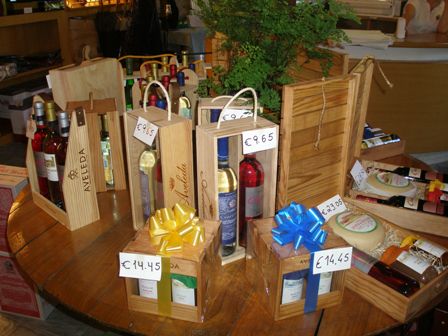
The cellar door and gift shop offers not only wine and cheese but various kinds of local produce from the Minho and Douro wine regions.

A newly planted vineyard can be seen from the tasting terrace.

Vinho verde is being offered in various variations, but together with the self-produced cheese and some bread. The wine is fruity and fresh, young and bubbly, ideal for hot summer days. Alcohol is about 9-10%.

This is the light vinho verde (branded as Casal Garcia) mainly produced for the US market (even lower in alcohol, about 8%) where Quinta da Aveleda sells millions bottles. I forgot the exact figure, but the number is mind blowing for a small vintner like me who produces just a couple of thousand bottles a year. I found the winery tour interesting (tough I prefer visiting smaller establishments), the staff was friendly and accommodating. Take your time, and explore the gardens.

Address: