The Australian Wine Industry: oh boy!

January 7, 2010

The new year has started slow for me as a wine blogger. I have a couple of pieces in the making, for instance on my winery tour in Thailand where we visited three wineries and tasted their produce. But reading through the mail on the internet does not lend itself to optimism if you are an Australian vintner like me.

Here are some of the facts, suggestions and ideas for 2010 and beyond:

– rip out 35,000 ha of vineyards to restore a balance between demand and supply

– overproduction of 20-40 million cases of wine equivalent to 300,00 to 500,000 tonnes of fruit, ergo the need to rip out between 20,00 and 40,000 ha

– “clean skin” bottled wine available for A$ 1.99 or “two buck chuck”

– wine surplus being sold for 50 cent a litre

– grape prices of around A$ 150-200 per tonne of fruit

– in only seven years, I guess from 1995 to 2002, Australians planted 75,000 ha which was meant to be planted over a 25 year period

– estimated financial losses in the Australian wine industry of about A$ 124 million in 2009

-medium-sized producers such as De Bortoli Wines (our neighbour in the Yarra Valley) posted a loss of A$ 1.6 million in 2008-2009

– vineyards are unsellable, Cockatoo Ridge Wine, for instance, could not sell its Monash Winery (valued at $14.3 million) in Riverland

– more than 300 grape-grower contracts cancelled in the Murray

– Murray Valley Winegrowers removed about 2,000 ha of vineyards.

I could continue this list of bad news (for instance mentioning the strong Australian dollar) but do not want to depress you further. However, there is good news too. Consumers can finally enjoy good quality wines at much more affordable prices. I can feel this even in my Bangkok supermarket where Australian wines sell cheaper than last year.

I personally think that Australian wine prices were too high in the past. In my native Germany, many family wineries survived on much lower producer prices for many years. In my hometonw Trier you can get an excellent Riesling wine bought from the producer directly for about 5-8 EURO/bottle (A$ 8-12). These are Riesling wines from ultra steep cliffs, and everything is done by hand. On an aggregate, of course, German farmers and vintners are supported by various government subsidy schemes which we (alas) do not have in Australia.

Peolpe who say, that “the Australian wine industry did not know where to stop” are of course mistaken in their analysis. In a market economy the “overshooting” is punished by declning prices and unsold produce which in turn will lead to the reduction in production capacity. But since wine is an agricultural good which relies on a three to four year growing period before you can have additional grapes, the delay in decision-making can be costly.

The “irrational excuberance” was in fact the result of rational decision-making. Investors wanted to make a profit. That some of it was tax-fuelled is proof of irrational government interference by providing wrong incentives (tax credits). The second group party blamed for the glut is “lifestyle winemakers and vintners” to which I also belong. I still hope that my long-term view will “save” me and that I can indulge in grape growing and wine making after my retirement for a couple of more years. Since there is no succession plan, our enterprise might be short lived but such is life.

Cheers folk, after such heavy stuff I need a drink. Maybe, as Jancis Robinson suggest in her latest column, a German Riesling. How about a Forster Ungeheuer from the Pfalz or a Van Volxem Riesling from the Saar?
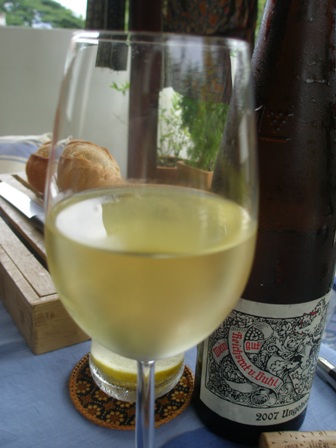
2007 Forster Ungeheuer, Grosses Gewaechs


Let there be wine in 2010

December 31, 2009

Pokal of German Riesling

Another year is coming to an end. And what a year this was. We were almost wiped out by the wild fires in February. We had no vintage and no income from the grapes but bought a new traktor. We had sufficient rains but grape prices in Australia promise to be the lowest in recent history which does not bode well for Two Hills our little boutique vineyard in Gelburn, Victoria. So what will 2010 bring for us small vintners?

Many grape growers have pulled out their vines. Thousands of hectares of vines are no more. This is most likely not enough to save the price slide. Many more of us will have to give up and/or supplement their incomes with off-farm work.

There are quite a few “lifestyle” people among us. They will have to decide if the price of “their hobby” is still affordable for another year. Then there are the pure investors, some of them lured into grape growing out of taxation reaons. They will be the first to abondon the industry for greener pastures or just walk away from their losses.

Some of us are the ever optimists banking on the future such as myself. “It will all come good”, one day or not at all, but we hang in there for the love and the passion and the satisfaction growing a good product which will reward our efforts. “Bring it on”, one more time, and let the wheel of life run another circle.

This is my last post for 2009. I will end my three years of wine and food blogging with a total of 401 blog entries. Uff, I made it. This means that every 2.6 days I prepared a new piece during the last 36 months. I am chuffed but not sure if I can keep this up. I have still not found an answer to the question: Shall I continue or do something else? Would that mean to stop drinking wine and eating good food?

I will keep on contemplating about this conundrum.

Another year in Bangkok is coming to an end. The last 16 months since our arrival were quite busy, full of change and excitement. We have not seen much of Thailand as yet but there is, god willing, still some time for that.

Tonight, the four of us will join the Bangkok St. Patricks Society’s New Years Eve party on a boat on the Chao Phraya river. I guess we will have a couple of drinks, maybe dance, and we will celebrate the end of another year on this plante and welcome 2010.

I will let you know how it went. But let me say: Happy New year to all of you. God bless you.


What a vintner needs

December 29, 2009

A cup of tea, a digital camera, a hat, a note book, a pen, a tape measure (?), glasses (old vintners do), some coins and a knife.

Anything missing?


Tractor delivered

December 14, 2009

I know that many of the visitors of my blog are not interested in my “farm affairs” (statistics and comments point to that sad conclusion). This might have to do with the fact that most wine consumers are urban people removed from the realities of rural life and work on the land.

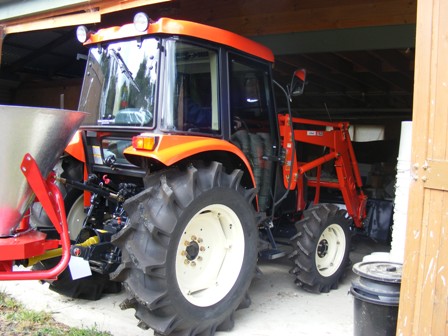
Nonetheless, I am thrilled by the fact that my new tractor was delivered last Friday. Michael, my brother in law, and Steve Sadlier, who manages our vineyard were there when Gordon rocked up with the trailer and dropped off our brand new Daedong tractor, received the good and stored them in the shed. We are ecstatic about this. I cannot wait to try the new Daedong out next time I am visiting. Michael took a couple of pictures which I show below.

Loading the machine off the trailer

Brand new Daedong tractor

Instructing the new user, Steve and Gordon

Get the machine into the shed

Dob well done, Michael and Steve


Bordeaux wines: Château La Gravière and pasta for dinner

December 13, 2009

The amatriciana pasta

There are just too many châteaux out there. I confess that I do not know much about the wines from Bordeaux. This wine region produces between 700 and 900 million bottles of wine every year. It is divided into 57 appellations. About 10,000 producers call themselves ‘châteaux’, the number of grape growers is about 13,000.

Fortunately, Haut-Médoc, just north of the city of Bordeaux, at the left of the river Gironde covering about 4,600 ha of vines, is smaller but still carries lots of different châteaux. The area used to be marshland until Dutch merchants began to drain it in the 17th century. From grazing land to vineyards (reminds me of my own story and Two Hills Vineyard in Glenburn which is largely grazing land, but in the hills, no marshes to be seen), what a great success story.

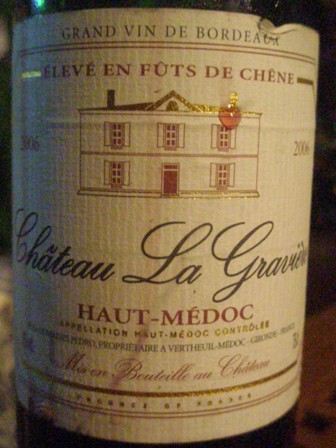
2006 Château La Gravière

Our friend Emmie had given us this bottle (above), a ‘2006 Château La Gravière’ from Haut-Médoc, after her return from Europe. The Château La Gravière is actually situated on the right bank of the river, in Lalande-de-Pomerol AOC. It’s a small producer with only 2.3 ha under vines whose flagship wines are Château La Gravière, a typical blend of Merlot (80%) and Cabernet Franc (20%) and Moulin de Gravière, its second wine.

The label is owned by the Rougefort Group. Total production from the Lalande-de-Pomerol AOC is about 500 cases per year. The Haut-Médoc wines (left bank of the river) are an addition to the portfolio. The character of the wines is quite different from the Lalande-de- Pomerol wines which is partly due to the blending formula, partly due to the different terroir.

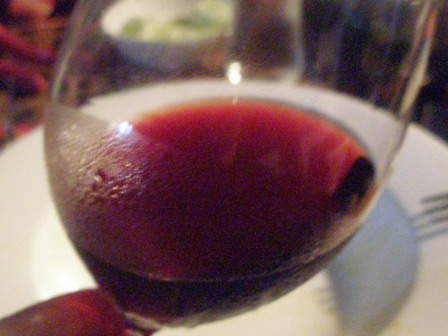
The colour of the wine

The wine was very pleasant, full of vanilla and berry flavours. We just loved it. It could cope well with the strong flavours of the amatriciana pasta and the bacon in it. My prejudices against Bordeaux wines (which are partly the results of my ignorance) were utterly refuted.


Dreams of Two Hills Vineyard

November 28, 2009

Brownies Landing at Two Hills Vineyard in Glenburn

While the north American continent celebrates Thanksgiving and the Muslim world Eid ul Adha, I am homesick for Australia and our small farm-cum-vineyard in Glenburn, Victoria.

There, we had lots of rain, the vines are doing well, the grass is lush and green and our two dams are full of sweet water.


First Fire Warning in Victoria

November 18, 2009

Goodness me, the first fire warning is out for this fire season. After last year’s February 9th desaster, new categories were created: “extreme”, “severe” and “very high” are the three new categories.

North Central, the region were Glenburn and our vineyard (Two Hills Vineyard) are located is marked as “severe”, whereas North east and Mallee are classified as “extreme”. Being far away from home does not help in such a situation. I will check the weather radar on my PC on a daily basis.

With the high temperature (38-39 degrees celsius) of the last days, I guess the land has dried out again. I was so happy with the rains we got in September and October which filled our two dams to the brim.


Climate change and grape varieties

November 2, 2009

RieslingSchoden

Riesling grapes in Schoden, Saar, shortly before vintage 2009

Uff, I am reading in todays “Your Daily Wine News” newsletter that some of Australia’s top wine experts think that over the next 20 years climate change will be responsible for the decline of Shiraz and Chardonnay and the rise of varieties such as Vermentino, Arneis, Nebbiolo, Pinot Grigio and Viognier (some call them “alternative varieties”).

This is bad news for me and my own small vineyard. At Two Hills Vineyard we have concentrated on some of the traditional French varieties: Sauvignon Blanc, Pinot Noir, Merlot and Chardonnay (first vintage in 2011 or 2012). Our fruit ripens usually well (if we do not suffer severe frosts) and shows a superior quality. But will that persist under the conditions of climate change?

I still remember vividly how I pulled out the 2 1/2 acres of Cabernet. it was hard work, wrapping a chain around every single vine and lifting the hydraulic of the tractor. I should have left them in, I guess. If temperatures rise in Glenburn, the drought persits, and/or we’ll have less percipitation in the future, Cabernet could have been the ideal variety for our spot. I ripped the vines out because the grapes would not fully ripen. At the moment we have sufficient water, our two dams are overflowing after years of drought but that might change quickly again.

Another issue is age, my age. At 55 I might still have a chance to enjoy some of the coming Chardonnay vintages but replanting would “cost” me many years of waiting. I could contemplate to plant on our second hill where we still have another 5-6 acres of space. Well, let us see what is going to come.

At least there is no politician who tells me what to do and chances are small that an elector such as Clemens Wenzeslaus of Saxonia, who changed the Mosel by instructing vintners to ripp out their red varieties and replant with Riesling, would appear on the Australian scene. However, danger is looming from the anti-alcohol lobby in Canberra which is working day and night to convince law-makers that the purchase of alcoholic beaverages needs to be made more costly for the consumer and profitable for the taxmen.


Restaurant review: Libertine, Melbourne

August 30, 2009

Libertine00

The town

When on vacation on the farm (Two Hills Vineyard), we hardly visit the big town, i.e. Melbourne, just about an hour and a half south of Glenburn. This time the girls needed new passports and therefore also new visa, and Margit also needed to get one. Therefore we had to collect the items but planned to combine it with meeting old friends over a pleasurable lunch in town. The Thai consulate people are the friendliest on earth and were very helpful. We were in a joyous mood. The girls took zillions of pictures from the car: when country folks visit town!

Libertine0

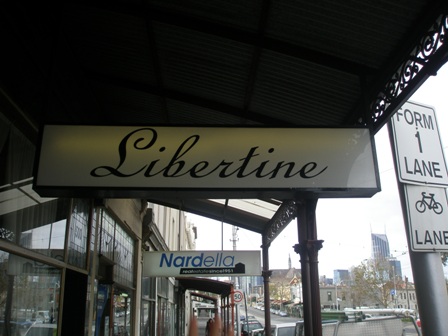
After our business was completed we made our way to North Melbourne. Libertine, the French restaurant, where I had indulged in wonderful French cuisine earlier this year, was our object of desire. It is easy to find. Just drive along Victoria Street until you reach the house number 500. If you get to Errol Street you have just passed it. Find a parking and walk.

Libertine2

The diners (Helen, Tony, Lucy, Charlotte, me, Margit and Joe)

We arrived ahead of time and took a stroll through the neighbourhood with its many restaurants and small local shops. Margit insisted on buying some cigars for me. Good ones are hard to find in the country side.

Our friends – Tony, Helen and Joe – had already assembled when we finally made it to Libertine. What a great reunion over an excellent meal and some good wine awaited us here.

I like the Libertine menu since it allows you to combine your preferences. It was a bit hard for the girls, though. We usually have Italian and Asian food at home, and therefore most of the dishes on offer were rather very unusual; “raffine” as the French might say, more elaborate might describe it as well.

Libertine had joined the recent campaign for the promotion of Victorian agricultural product: “Put Victoria on your table”. All the ingredients for the various dishes cam from the state of Victoria. As a person believing in free trade and global markets, this type of promotion is not my favourite one.

Libertine1

I find that Libertine’s two- and three course-meals are moderately priced. If you dine out in the Yarra Valley, for instance, you have to fork out much more for a comparable meal than here in the middle of town.

Libertinewine

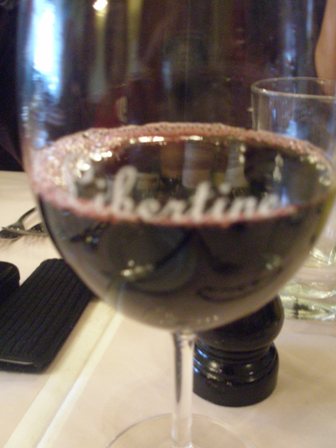
The great surprise was that there was no French wine coming with the meal (all ingredients Victorian of course so how could there be French wine?). Instead, the wines came from the Yarra Valley. We were delighted to see two Yering Farm Wines, the ‘2008 Run Rabbit Run Sauvignon Blanc’ and the ‘2004 Foxtrot Cabernet’ made by Alan Johns, who coincidentally also makes our Two Hills wines. Both wines were a good choice for this kind of cuisine. The SB was fruity and crisp, the Cabernet round and well balanced.

Libertine3

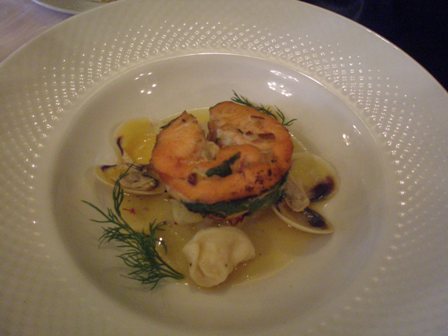
Some of us had the Port Arlington mussels…

Libertine5

…followed by the “Marmite Dieppoise” with Port Phillip Bay scallops.

Libertine6

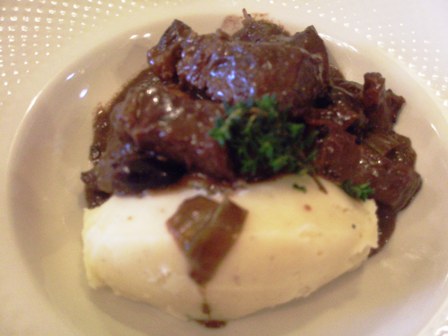
Others choose the beef which came from Gippsland (apologies for the bad photo above).

Libertine7

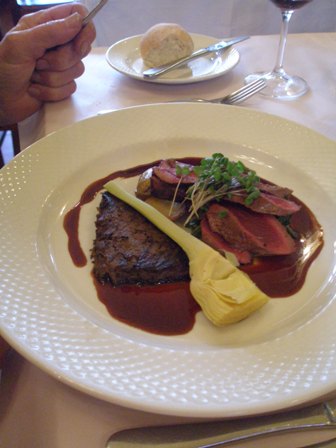
Joe went a la carte and ordered the hare. Libertine is famous for the quality of its game.

Libertine8

The girls ordered a la carte as well and went for assorted fish.

Libertine4

For the ones of us who did not have to drive, the Yering Farm Wines, were like a dessert. But we had some sweets afterwards just that I did not take any photos. The time was running faster than usual (that’s how it is with good friends and good food). We enjoyed the atmosphere, the warm hospitality and the friendly staff at Libertine as long as we could but finally had to part company and say good bye to our friends.

Until we meet again, maybe at Libertine (very likely indeed). In a rather joyous mood we returned to the vineyard in Glenburn.

The casual visitor to Melbourne, however, should not waste time searching for a good place to eat excellent food. Just go to Libertine, and you’ll be right mate.

Address:
Libertine‎
500 Victoria St, North Melbourne VIC 3051, Australia‎ – (03) 9329 5228‎
Rated 4.1 out of 5.0 16 reviews


A new tractor for Two Hills Vineyard

August 26, 2009

During our family vacation, we were also looking for a new tractor. Our old FIAT tractor had broken down some time ago. We were searching the internet for a while for a used tractor but we were either too late or the right machine did not come up.

Therefore, we looked for new equipment. First we had our eyes on a Kubota from Japan but then fellow vintners suggested to have a look at a Korean brand: Daedong. I had never heard of Daedong before. At Rees Miller Estate we had the opportunity to inspect a one-year old 55 hp Daedong cabin tractor with a frontloader.

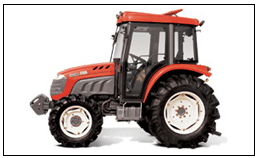
We asked for a couple of quotation, and to cut a long story short, decided to go with the Korean Daedong. The photos below show the vineyard tractor with 55 hp plus frontloader.

Daedong2

Daedong1

Until it is beeing delivered, we have to sort out the finances but I am confident that we will get our Daedong tractor so that I can work with it during our next visit.