Winery Review: Vereinigte Hospitien, Trier, Mosel

June 2, 2010

vereinigtehospitien1

The St Jacob of United Hospices wine label

I grew up just next to the convent of St. Irminen at Irminenfreihof No. 5 in Trier, Mosel. The convent belongs to Vereinigte Hopitien, a foundation which also ownes a well known winery with the same name. Their English name is “United Hopices Wine Cellars“. The patron saint of United Hospices is St Jacob, an image of which is also used on the wineries labels.

As a kid I played in the cellars and warehouses of the convent. I also remember them sending their vats and barrels for controlling purposes to the Eichamt, the local Weights and Measures Office, which my father was heading. We played around the barrels and I vividly remember the smell emitted by the oak and the moist wood.
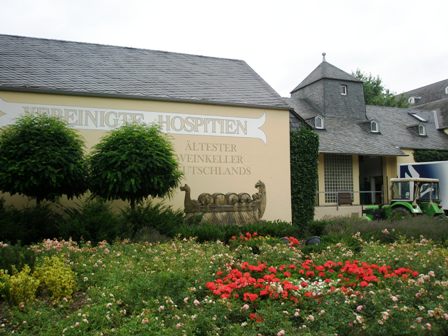
vereinigtehospitien3

The winery

United Hospices owns vineyards along the Mosel (locations: Piesporter Goldtroepfchen and Triere Augenscheiner) and the Saar (locations in Wiltingen, for instance Hoelle, Scharzhofberg and Kupp, Kanzem and Serrig). Most of the vineyard originally belonged to monastries and convents. Today about 25 ha are under vines, 90% of which are planted with Riesling grapes (my favourite grape variety), the rest consists of Pinot Gris, Blanc and Noir.

As many of the wineries in Trier, also United Hospices has a large traditional wine cellar (some parts of it dating from the 3. century) which you should have a look at. Wine tasting in ths historic atmoshere are unforgettable events. United Hospices top wines are the dry and sweet (Trockenbeerenauslese) Scharzhofberger Riesling wines from the Saar some of which sell for up to 100 Euro/bottle. The ordinary Riesling wines cost about 6.20 Euro/1 l. bottle.

I hope you are going to visit Trier this summer and drop in for a wine tasting. Cheers

vereinigtehospitien4

The main hospice building along the Mosel
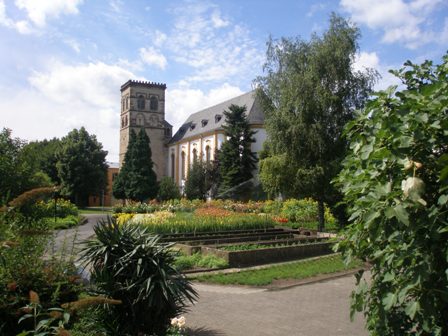
vereinigtehospitien2

Church St Irminen

Address:
Vereinigte Hospitien
Krahnenufer 19
54290 Trier
Tel.: +49-651/945-1210 o. 0651/945-1211
Fax: +49-651/945-2060
Opening hours: Mo. – Thu. 08-12:30 and 13:30 to 17h; Friday closing at 16h, Saturday 10-14h


Australia: WFA Vintage Report 2010

May 17, 2010

Two Hills Vineyard Merlot grapes 2010

The new figures are out. Today the Daily Wine News presented the Winemakers Federation of Australia (WFA) vintage report 2010. About 360 wineries participated in the survey, representing about 89% of total production.

The basic findings are well known to grape growers, vintners and wine makers. 2010 was a dreadful year especially for grape growers. The 2010 vintage of about 1.53 million tonnes (did they count my grapes as well?) was lower than 2009 (-12%) and 2008 (-5%).

The decline in white wine grapes was sharper (-14%) than the red ones (-8%), but I sold my white though almost nobody bought my Merlot and the Pinot Noir). My own experiences do not conform to the trend, I guess. Especially regarding my Pinot I must have missed something (+26% increase to 35,ooo tonnes). Or was it the other way round: because of the increased intake I could not sell my Pinot Noir?

Well the real reason is that my buyer walked out on me after a perfectly beautiful fruit which my buyer wanted to have some more days of sun was subsequently hit by rain and with it the destruction rain might bring at this time of the year.

Australia’s Sauvignon Blanc crush increased by 15%. OK, I sold all of mine. SB is still Australia’s third most important white variety after Chardonnay and Semillon.

Good that I ripped out my Cabernet (total production 213,000 tonnes), it further decreased in intake (by 14%) as did Merlot (total tonnage 109,000 tonnes), The big winner seems to be Shiraz which we unfortunately do not produce at Two Hills Vineyard. I love Australian Shiraz wines.

What does the enthusiastic Riesling drinker from the Mosel think of the Australia’s Riesling vintage: incredible, there is a 11% decrease in the crush of Riesling. Can you believe this? My most favoured wine available in much less quantity? I hope the quality shows just the opposite trend.


Crazy bridges – how to destroy the Mosel

May 15, 2010

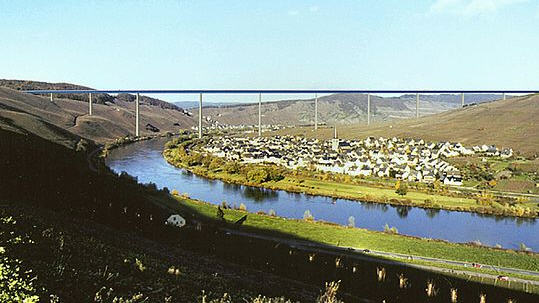
Planned bridge near Uerzig, Mosel

Two days ago the deadline for the petition ended. I confess that I did not make it in time. But I have joined the facebook group called “Stop the new B 50 and save the Mosel vineyards from devastating damage” opposing the building of this bridge.

The planned bridge is massive. It is about 160 meters high and 1.7 km long. It will probably cost about 270 million EURO which is equivalent to about US $ 400 million. On the facebook site above you can find more photos and animations showing you what the bridge will do to the Mosel valley.

The issue made it even into the New York Times which carried an article about it contrasting pro and contra views. Because the cost and benefits of such a massive undertaking are not clear cut. If you asked me to which camp I would belong, well, I asked myself two simple question: 1. would I give up my vineyard land for the venture? and 2. Would I like to look at this bridge from my window when I wake up in the morning?

My recent Australian experience with the North-South pipeline suggests that there is very little hope that such mega projects can be stopped by citizens protest. The Plug the Pipe campaign could not stop the project but it surely raised the political costs to Victorian the labour government. And election time is near.

Topher analyses the political economy of the North-South Pipeline. Unfortunately, there are no elections in my home state of Rheinland-Pfalz this year. So we are less lucky than the Victorians. The only thing which might save us is the empty state coffers.


Restaurant review: Gasthaus Bidinger, Schoden

May 5, 2010

Bidinger00

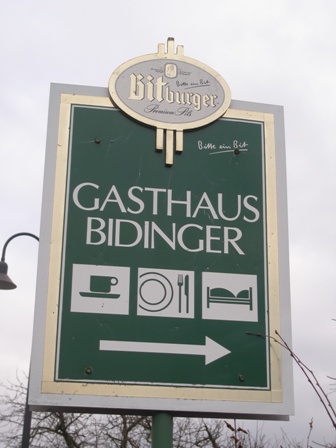
Show me the way

It’s a public holiday in Thailand today (coronation day), and this might be the reason why I am in a reminiscing mood, the dominant “mood of old people”. But Gasthaus Bidinger (Gasthaus/Gasthof = inn) in the hamlet of Schoden, Saar would be a nice place to visit today. Lunch at Bidinger is one of my favourites when with my mother in Trier, Mosel. The food is traditional German country tucker, solid and substantial, and very enjoyable.

Bidinger0

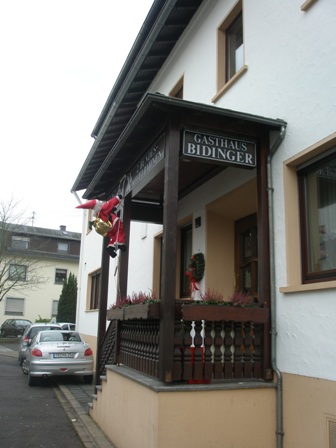
Gasthaus Bidinger, front entrance

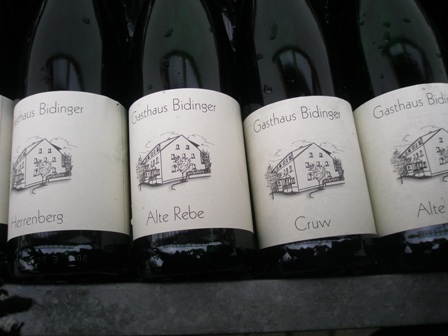
Apart from rustique rural food, Gashof Bidinger offers also a nice selection of traditional drinks, for instance Bitburger Pils beer and the local apple-pear cider, called “Viez”. Viez is usually a quite sour, low alcohol drink widely consumed by the local peasantry. Mixed together with some sparkling water it is very refreshing in summer. Moreover, Bidinger also bottles his own local wines. The Saar produces some of the best Riesling wines in Germany, and is one of my favourite wine regions.

Bidinger2

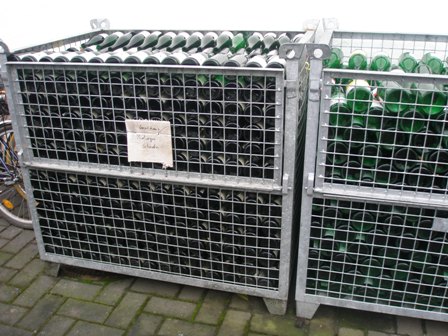
Many empty bottles

Bidinger3

“Moselaner” apple cider, locally called: Viez

Bidinger1

Wines from the Saar

I would love to be at the Saar today. If you have the chance to visit, do so. It’s a jewel, hidden away somewhat but still easily accessible. A visit to the Saar can be combined with a trip to see Trier, the oldest German city and Luxembourg, just next door.

Address:
Gasthaus Bidinger,
Klosterstr. 30,
54441 Schoden
Tel: +49-(0)-6581/99260
Fax: 06581/99261
e-mail: Gasthaus-Bidinger@t-online.de
www.gasthaus-bidinger.de


Sunday walk in the vineyard – a wish

February 21, 2010

“Bildstock” near Nittel, Upper Mosel

Today, I would love to walk through a vineyard with my mother, preferably along the Mosel or the Saar. It is her 80th birthday today. I salute you mum and wish you many more years on this earth.

We could have lunch in one of the many country inns and enjoy a local Riesling wine.

But instead I am far away from the action, in Bangkok, in the tropics. This is one of the downsides if one works in far away places. As consolation I will open a bottle of Saar Riesling later with lunch.


The Old Man with the Beard

February 9, 2010

Famous last words

As a native of Trier, I treasure the most famous son of our city, Karl Marx, though he left rather early and spent most of his time in exile in London. He used to love wine, especially Riesling from the Ruwer where the Marx family used to own a vineyard and of course my beloved Mosel.

I like the poster above (this is why I took a shot through the window to get a glimpse of it), but unfortunately these were not his last words. he did not say: “Sorry folks, it was just an idea.” Only later generations could come to that conclusion. As family gathered around the dying Marx awaiting his final utterance. It is reported that he barked at them and said: “Go on, get out! Last words are for fools.”


Burns Supper 2010 in Bangkok

January 25, 2010

Water taxi on San Saep Khlong

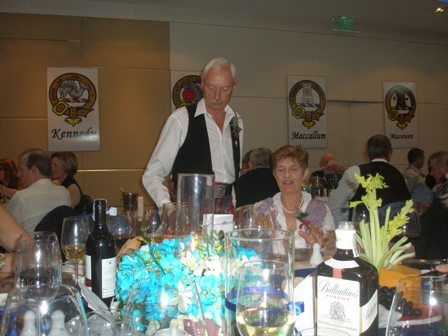
We took the water taxi on the San Saep Khlong at the end of Thonglor in order to join the 255 million people worldwide who were celebrating the life of the great bard of the Scots, Robert Burns. In fact his birthday is today on 25th January.

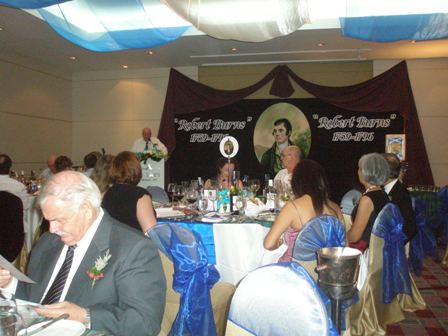
We felt great knowing that we would be among his followers again, drinking, eating the haggis, and listening to the various addresses and speeches, and at the end singing together ‘Auld lang syne’. The Bangkok St. Andrew Society Burns Supper is a wonderful event. We had been there last year, therefore, the 2010 celebration was ‘a must not miss’ on our social schedule for the year.

Crossing the road near Amari Watergate Hotel

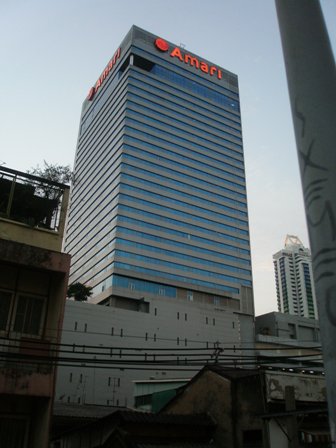
Amari Watergate Hotel, Bangkok

About 90 to 100 faithful, Scots and their friends from all walks of life, had gathered at the Amari Watergate Hotel. We arrived an hour early (we had missed an e-mail) but spend the time enjoying a glass of white wine and talking to some of the other members of the Society.

The welcome by the Chieftain

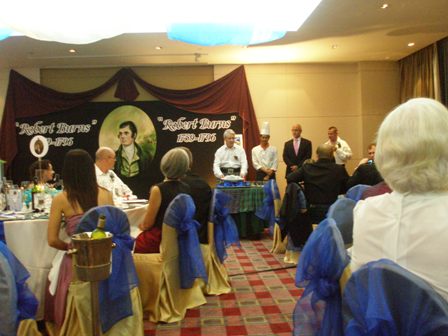
After the Chieftains’ welcome and the toast to the King of Thailand, the Selkirk Grace, a prayer was said by Caroline Elliot. After that the haggis was piped in by Mike Brooks and toasted by us, the guests. The address to the haggis was delivered by Chieftain Willie Christie.

The address to the haggis

We enjoyed the haggis, neeps and latties, and had a jolly good time meeting old friends and making news ones. The highlights were ‘The Toast to the Lassies’ delivered by our good old friend Rab Thomas and the reply, ‘The Lassies response’ by Kirsty Hastie Smith. Both excellent speeches which delighted the audience.

Rab Thomas and Basjia

All kind of entertainment followed, songs and poems performed by Dan Fagan, Kirsty Hastie Smith and Mike Brooks. I do not remember all the details any more, because the bottle of Ballantine’s Whisky on our table found its way into my glass. I only took a photo of the Scottish cheeses but the food was delicious overall and I liked the sea-bass entree, the broth and the haggis as well as the dessert.

The cheese platter

Way after the official end of the event, we somehow made our way home successfully, utterly satisfied, we had had good food, plenty of drink and great company. As every year my pledge is to read some more of Robert Burns’ poems. Also German Celts from the Mosel can enjoy and appreciate Scotland’s favorite son, the Ploughman Poet, the Bard of Ayrshire.

If you have the chance to somehow somewhere be invited to a Burns Supper, accept the kind offer and engulf in Scottish tradition.

PS: My first Burns Supper was in the early 1990ies in the Palace Hotel in Beijing. During my recent visit, I passed by reminiscing about golden days gone bye. The hotel is renamed now but the large flower pot near the entrance which was generously nourished by my old friend, the late David McGrath, when we took our bodies home at 4 in the freezing winter’s morning, was still there.


Wine from Slovenia

December 15, 2009

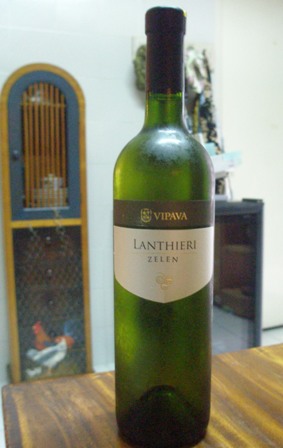
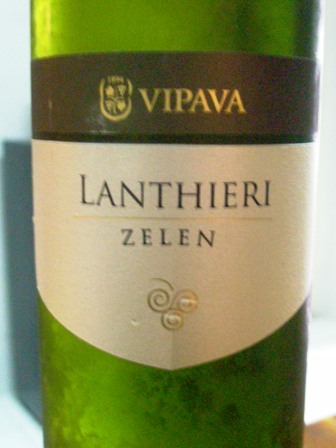
The 2008 Lanthieri Zelen

It’s already some time ago that our firneds Lucia and Giuseppe brought us the above bottle of Slovenian wine. They said, “put it back fro a special occasion”, which we did. But this splendid Sunday warranted a special treat.

To say it from the outset, the ‘2008 Lanthieri Zelen’ by Agroind Vipava 1894, a wine co-operative in the Vipava valley, is a wonderful wine. It was our first wine from Slovenia ever, a complete novelty to us.

Zelen is an autochthonous grape variety from the Upper Vipava Valley in Slovenia. The Lanthieri brand is reminiscent of the Lanthieri family, noblemen in the region, valley and town of Vipava, also called the Slovene Venice.

The Vipava wine road is going through the valley where viticulture is the main rural business. About 3,000 acres are under vines. The region is home to some very old, indigenous varieties which cannot be found elsewhere, for instance Zelen, Pinela, Klarnica and Pikolit.

The history of wine-making in the Vipava valley is interesting. It reminds me a bit of our own history in my home town Trier. Also in the Vipava valley, the Celts and Illyrian tribes cultivated grapes long before the Romans arrived. This is also true for my own tribe, the Treverer, in the Mosel river valley.

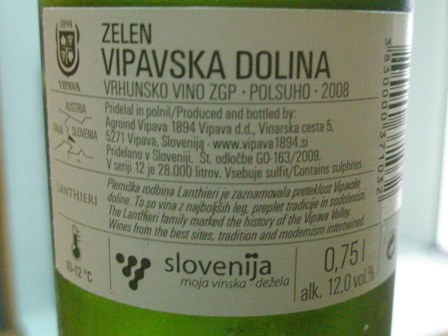
The back label in Slovenian

The wine has a light-yellow colour and seems to be an aromatic type of wine. Floral notes of mediterranean herbs such as lavender and rosemary can be detected. Very dominant, however, is the dried-apricot taste, very lovely and very unusual, I found. The wine has structure and is well balanced, fresh and zippy.

Spicy clam pasta

We enjoyed it with a spicy, clam pasta. The wine was “strong” enough to not “go down” with the red peppers, but, instead, held itself very well. I am sure we will not find any wine from Slovenia in Bangkok wine shops. I guess we have to visit Slovenia and detect its treasures during our next trip to Europe.

Thank you Lucia and Giuseppe for giving us this wonderful gift. We apprecite your generosity and we know how heavy wine bottles are.

I think Slovenia might have the potential to become the “wine Mekka” of tomorrow.


The best 10 German dry Riesling wines

November 25, 2009

It was a bit disappointing for a native from the Mosel River to read through the list of best dry Riesling wines of Gault Millau’s newly released wine guide 2010.

Among the best German dry Riesling wines of 2007 and 2008 there was not a single one from the Mosel, Saar or Ruwer.

I know that my home region is more famous for its semi-dry and sweet Rieslings but…

The good news it that a wine from the Nahe where my materal grandfather had introduced me to dry wines many decades ago was ranked the second highest.

Moreover, the vintner of the year is also from the Nahe. Tim Fröhlich (35) was awarded this prestigious title. The family estate Schäfer-Fröhlich is one of the best wineries in the Nahe Region and produces outstanding dry and sweet wines.

The winner for best dry Riesling (with 96 points) was a wine from the Pfalz, a ‘Forster Kirchenstück GC’ by Dr. Bürklin-Wolf (70 €). Emrich-Schoenleber received 95 point for a ‘Halenberg Grosses Gewächs’ (29 €). Among the top ten five Riesling wines came from Pfalz, two from Rheingau and Rheinhessen each and one wine from the Nahe.

That the Franconian wines were missing from the list was a further disappointment. Also in Franconia the 2007 and 2008 vintages were outstanding (as is the 2009).

Two other wines received 95 points, a ‘Abtserde Grosses Gewächs by Keller Estate, Rheinhessen and a ‘Forster Pechstein GC’ also by Dr. Bürklin-Wolf, Pfalz (35 €). 94 points were awarded to three wines: a ‘Deidesheimer Hohenmorgen GC’ by Dr. Bürklin-Wolf (35 €), a Rüdesheimer Berg Schlossberg by Georg Breuer, Rheingau (40 €) and a ‘G-Max’, also by Keller Estate, Rheinhessen (I found a price of 160 € from an internet sales website). From some chat on the internet I got the impression that you won’t see a bottle on any shelf. This wine is “rationed” and reserved for special customers. Keller estate was “the producer of the year 2006” of Gault Millau.

Two wines were given 93 points: ‘Kastanienbusch Grosses Gewächs’ by Rebholz Estate, Pfalz (32 €), and ‘Rüdesheimer Berg Rottland Alte Reben Goldkapsel’ by Josef Leitz, Rheingau (65 €). Wine number 10 received 92 points and it was a ‘Birkweiler Kastanienbusch Schiefer’ by Siener Estate, Pfalz (16.50 €). This is the only wine in my price-range.

Needless to say that all the wine gurus of the world have written about these wines and these producers, John Gilman, Jancis Robinson, Eric Assimov to name only a few. Some of the wine reviews you can find on the internet, some of them are linked by the specific estate named above. It seems there is lots of research to be done.

Go wine enthusiast. You can, of course, also buy the wine guide, Gault Millau.


Climate change and grape varieties

November 2, 2009

RieslingSchoden

Riesling grapes in Schoden, Saar, shortly before vintage 2009

Uff, I am reading in todays “Your Daily Wine News” newsletter that some of Australia’s top wine experts think that over the next 20 years climate change will be responsible for the decline of Shiraz and Chardonnay and the rise of varieties such as Vermentino, Arneis, Nebbiolo, Pinot Grigio and Viognier (some call them “alternative varieties”).

This is bad news for me and my own small vineyard. At Two Hills Vineyard we have concentrated on some of the traditional French varieties: Sauvignon Blanc, Pinot Noir, Merlot and Chardonnay (first vintage in 2011 or 2012). Our fruit ripens usually well (if we do not suffer severe frosts) and shows a superior quality. But will that persist under the conditions of climate change?

I still remember vividly how I pulled out the 2 1/2 acres of Cabernet. it was hard work, wrapping a chain around every single vine and lifting the hydraulic of the tractor. I should have left them in, I guess. If temperatures rise in Glenburn, the drought persits, and/or we’ll have less percipitation in the future, Cabernet could have been the ideal variety for our spot. I ripped the vines out because the grapes would not fully ripen. At the moment we have sufficient water, our two dams are overflowing after years of drought but that might change quickly again.

Another issue is age, my age. At 55 I might still have a chance to enjoy some of the coming Chardonnay vintages but replanting would “cost” me many years of waiting. I could contemplate to plant on our second hill where we still have another 5-6 acres of space. Well, let us see what is going to come.

At least there is no politician who tells me what to do and chances are small that an elector such as Clemens Wenzeslaus of Saxonia, who changed the Mosel by instructing vintners to ripp out their red varieties and replant with Riesling, would appear on the Australian scene. However, danger is looming from the anti-alcohol lobby in Canberra which is working day and night to convince law-makers that the purchase of alcoholic beaverages needs to be made more costly for the consumer and profitable for the taxmen.