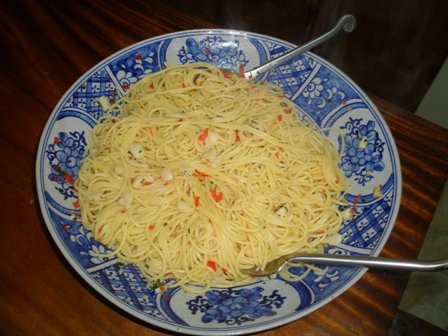
Vietnamese delight – lazy Saturday

April 25, 2010

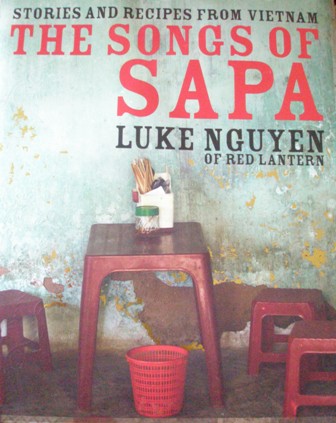
Bubbly to start a wonderful weekend. In the background Luke Nguyen’s beautiful cookery book about Vietnam

Finally, we had some rain on Saturday morning which might be an indication that a season’s change is in the making. Anyway, it was cooler than normal which needed to be celebrated with a Prosecco. That’s how it started. In the background there was music from the Skyehooks, a Melbourne cult band from the 1970ies. All four of us we were very relaxed, did’nt have to be anywhere, did’nt have to go anywhere, in short quality time.

The cooking started with us making our first fish sauce. We followed Luke Nguyen’s recipe. I will not provie it here but instead encourage you to buy the book yourself. It is called: “The Songs of Sapa” and is the most fascinating cookery book I have seen in a long time.

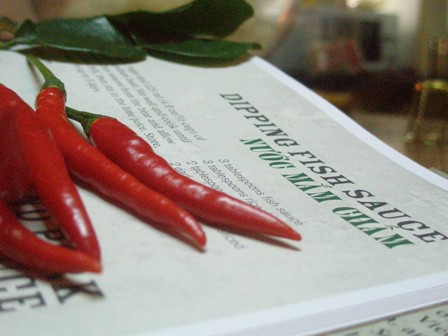
The fish sauce recipe of Luke Nguyen

This is what it looks like: The home made fish sauce

After that the fish cakes were made, also a recipe from the above book by Luke who has become a kind of celebrity chef in Sydney. Together with his sister Pauline and Mark Jensen he has his own restaurant called Red Lantern.

Fish cakes sizzling in the pan…..

…….and on the plate

Rice vermicelli

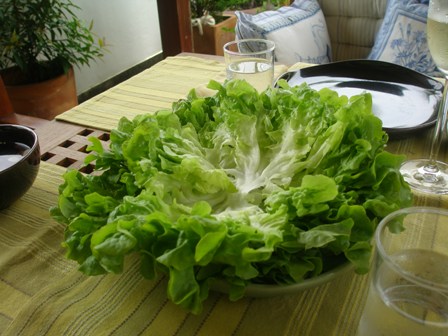
Fresh salad leaves

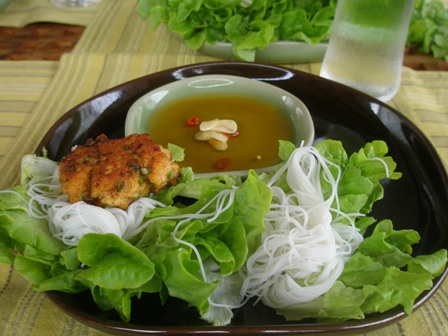
Voila: this is what it looks like on a plate

You do not need cutlery or chop sticks, no, just use your hand. get some vermicelli on the salad leave, take some fish cake and dipp it in the fish sauce: hmm. You will not believe me but this is the most delicious “finger food”. What we forgot in all our enthusiasm was the plate of mint leaves. We will try this next time.

My go at it

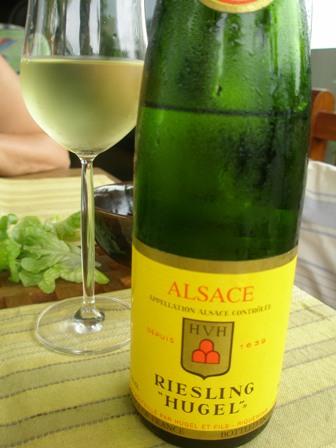
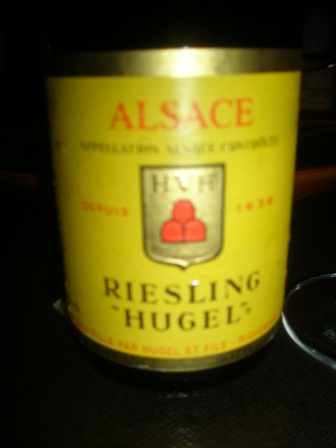
The last question: what about the wine? Well, I hose my favourite Riesling from Alsace, a simple ‘2007 Hugel Riesling’, a wine with zest and character, young and vibrant, a citrus bomb for the taste buds.

Hugel, one of my favourite Riesling wines from Alsace

If you have the chance to get your hands on Luke’s book, please do so. It is worth it. The recipes he has collected are wonderful. Vietnames cusine is light but at the same time filling. After this wonderful lunch we were not hungry until late in the evening.

And this is what the cookery book looks like:


Sweet breakfast

January 31, 2010

Yummy waffles with strawberries

Our daughters Lucy and Charlotte surprised us today with waffles for breakfast. They had to try out the new waffle machine which we acquired yesterday. The sweet waffles cried out for a wine. Well, why not, I thought, starting this Sunday in style.

2008 Hardy’s Riesling Gewuerztraminer’, medium dry

We had this bottle of ‘2008 Hardy’s Riesling Gewuerztraminer’ (11.5% vol. alcohol.), an unusual blend for my taste buds, left over from last night. With the sweet breakfast it went much better than with the spicy bean soup. The strong lemon aroma of the wine is quite nice but its also oily like petrol (or good Alsatian and Australian Riesling). However, medium dry is “too sweet” for me somehow.

Great colour in the glass

I asked myself why one would blend these two varieties which stand on their own perfectly well? I rather enjoy them as single varieties, I must say. I only know of Australian blends of these two grape varieties.
If the purpose of a blend made of different grape varieties is to add more complexity to the flavour and texture of a wine, I am not sure if the Hardy winemakers succeeded.

But as Shakespeare has Hamlet say:

“There are more things in heaven and earth, Horatio, than are dreamt of in your philosophy”.
(Hamlet Act 1, Scene 5, 159–167)


Hosting the vintner – with Timo Mayer at Patara in Bangkok

November 3, 2009

I admit, we take all our friends traveling through Bangkok to our favorite Thai restaurant if time permits. Patara is Thailand’s best restaurant and was awarded the corresponding prize for this achievement in 2009. We just love to dine there.

When Timo Mayer and his two daughters came through Bangkok we were pleased to have them for a couple of days and show them around. The Mayers’ came from Germany where Timo was helping with some wine-making in his native village near Stuttgart. He was also selling some of his Australian wine in various places (London for instance).

He was loaded with different bottles of very unique wines some of which we tasted together at various occasions. But one evening was reserved for fine Thai cuisine. Patara sent his tucktuck taxi service to pick us up from our home in Thonglor.

patara6

The colorful entrees

We decided that we would order the food and Timo would choose the wine. As always we started with the three colorful delicacies shown above. Somehow I had problems taking clear and crisps shots of the food that evening. But you can look up earlier posts in this blog where you can find some more photos of the various Patara signature dishes.

Hugel2

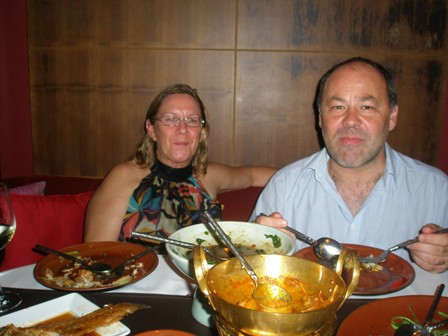
Happy diners

Timo selected the ‘2007 “Hugel” Riesling’ the classic wine from Hugel & Fils from Alsace. Jean Hugel, the senior vintner and wine-maker of this pioneer family of wine-making in Alsace was a legend and had passed away only in June this year.

I had never tasted their wines before and was very excited about the choice. Hugel and Fils maintain not only a very informative website but also an entertaining blog. I had visited Riquewihr, the picturesque Alsatian village where the winery is located many years ago (actually decades ago).

As a high-school student I had visited Alsace and its villages with my school and tasted my first Gewuerztraminer ever. A couple of years later I had seen a play at my “alma mater”: the Bonn University music and arts festival telling the story of the Alsace in three languages. After that my fascination with Alsace was complete. I had the chance to visit several times but mainly the north of the region. Our favorite destination was a restaurant, Au Cheval Blanc near Wissembourg but this is another story.

Hugel1

The ‘2007 Hugel Riesling’

The ‘2007 “Hugel” Riesling’ is a very fine wine, young and vibrant. 2007 was a good vintage because the grapes had the opportunity to ripen for the longest time ever and therefore the grapes were very healthy. As a consequence the wines show great elegance and balance. The wine is fruity with mineral notes, a typical Alsatian Riesling with the characteristic petrol note. I love Riesling with Thai food.

Hugel3

After we “demolished” the food

Our evening was great fun. The culinary delights of Thailand are just “breathtaking” for the palate. I can only highly recommend the restaurant. I love the atmosphere and the professional and friendly service.

We talked a lot about Timo’s German visit, his impressions, the adventures and, of course, wine. But when friends from afar visit, time flies. That’s how it was. Hours shrink to seconds and in a blimp of the eye it’s gone.

Address:
Patara Fine Thai Cuisine
375 Soi Thonglor 19 Sukhumvit 55, Klongtonnua Vadhana, Bangkok 10110
Tel. +66-2185 2960-1 Fax. +66-2185 2962
www.patarathailand.com


A pesto pasta with Alsatian Riesling

October 25, 2009

My homecoming was celebrated with a dinner featuring one of my favorite pasta dishes: a pasta al pesto. But it did not stop there. The basilico for the pesto sauce was grown on our terrace. Freshly harvested the leaves were processed with pine nuts and the best olive oil we could get hold of in Bangkok. The pictures below shows the different stages of the pesto-making process.

Basilico1

Basilico leaves

Basilico2

Healthy leaves of home grown Basilico

Basilico3

Pesto in the making

Basilico4

The fresh pesto sauce

I tell you this pasta was worth killing for. What ‘profumo’, goodness me, it filled our kitchen, the living room and transcended to the terrace where it filled my nostrils long before the dish arrived. We treasured every bite.

If you think that in the 1760s French cultural supremacy was so dominant that Italian cooking was considered totally inferior even by Italians. Local cooking had to have the coda, “”perfected in Paris” to be taken seriously. Today, every second top restaurant in Bangkok and indeed in all cosmopolitan world cities is Italian. That’s just amazing!

Basilico5

Linguine with pesto

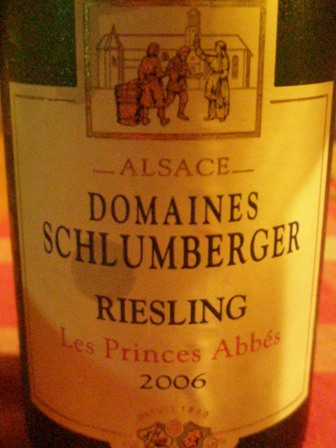
We celebrated the reunion with a French Riesling from Alsace, a ‘2006 Les Princes Abbes, Domaines Schlumberger, Riesling’. The price was a bit on the high end for us. TBH 1,600, about 32 Euro (or US $ 48), from our local super market is quite some money. That it sells for about US $ 20 in California somehow consoled me. We thought that life is just too short to waste it with drinking cheap wine and the occasion warranted something special, and special this Alsatian Riesling was.

Schlumberger1

This wine is just a wonderful specimen of Alsatian Riesling and it went very well with the pesto pasta. The fresh and fruity wine with aromas of citrus, lime and lemon and some floral notes, opened our taste buds wide. The wine has character and shows its typical Alsatian traits with some refined and not overpowering petrol notes. Alcohol is 12%, and just right. The finish is pleasantly vibrant but not overly long.

Schlumberger2


Family meals and the emptying of my wine “cellar”

July 4, 2008

Our last 60 days in Jakarta have started. Soon we will be moving to Bangkok. We try to enjoy every day. Apart from sorting out things, we are spending our time at home with family meals and drinks.

A delicious seafood pasta

I do not have a large supply of fine wines left but some of the bottles I have kept for special occasions. So what did we drink over the last couple of days? Here is a quick run-down:

‘2002 Léon Baur Gewürztraminer Grand Cru Pfersigberg’, alc. 13.5 % Vol.
We drank it before lunch as an aperitif. This is an aromatic wine, very generous in its flavours. It comes from a limestone “terroir” and is the gem of the Léon Baur collection. Low yields make great wines. It’s rather high in alcohol and has 15.2 g/l in sugar. A very enjoyable Gewürztraminer typical for this grape variety (www.leon-baur.com)

‘2003 Wiltinger Gottesfuss, Riesling Kabinett Feinherb, Reichsgraf von Kesselstatt’ , alc. 11 % Vol.
As you know, I love wine from the Saar River, and Wiltingen is one of the major location to produce first class Riesling wines. “Feinherb” is the German word for semi-dry. “Gottesfuss” is one of the best locations in Wiltingen, a very steep, stony slate ground which produces a fine, acidic, and balanced wine. Normally I prefer dry Rieslings but with a spicy Asian meal, the semi-dry version does very well. (www.kesselstatt.com)


‘2005 Hollick Coonawarra Reserve Chardonnay’,
alc. 13.5% Vol.
We had it with a seafood pasta. What a delicious Chardy this was. Although cellaring for up to 7 years is recommended, the bottle did not last that long. It displayed aromas of white peach, had crisp acidity and balanced creamy overtones. Though the wine was matured in French oak for 10 month, it was not “over-wooded”. Beautiful (www.hollick.com).

‘1999 Mildara Coonawarra Cabernet Sauvignon’, alc. 13.5% Vol.
The Mildara brand belongs to the Fosters Group (www.fosters.com). Liz and Walter brought it with them and we had it with all kinds of cheeses, salamis, coleslaw, salads and all kinds of “nibblies”. Despite its age, it displayed all the freshness of a typical Coonawarra wine. The colour was a deep purple. The intense aromas ranged from cassis, to dark berries and plum with hints of mint and herbs. The 18 months in oak have given the wine great depth and bony tannins, mellowed by age. The wine had an excellent structure. It was well aged.

‘2004 Knappstein Clare Valley Enterprise Vineyard Cabernet Sauvignon’, alc. 14.5% Vol.
The bottle retailed for US$ 26.50 at the Jakarta duty free store in Jalan Fatmawati. I had it reserved for a special evening. the wines is Clare Valley Cabernet Sauvignon at its best. Wonderful creamy, cassis, blackberry and mulberry flavours. A big Australian wine, full and complex but heavy which lingers on long after you swallowed the last drop. The fruit is grown on the “terra rossa” soils. Low yields guarantee the quality of the fruit. 2005 was an excellent year with a long ripening season. We had it after a meal just for enjoyment. This is a great wine indeed. (www.knappsteinwines.com.au)

The farewell dinner with our Australian friends (Brett, Janie, John and Dhanya) last night was a delight. We drank some very good wines. I only mention them in passing. Hope you don’t mind. We started with a pre-dinner drink, a ‘2006 Vasse Felix, classic dry white’ from Margaret River, Western Australia. The entreés we washed down with a ‘2007 Yarra Burn Sauvignon Blanc Semillon’ from the Yarra Valley, Victoria. We switched to red before the main course (a pasta bolognese), first to a ‘2004 Cape Mentelle Cabernet Merlot’ and then a ‘2003 Vasse Felix, classic dry red’. Three Margaret River wines stood against the cool climate SB form the Yarra Valley. It was a wonderful evening. No sadness was to find only the joy of being together and having a good time. I love this Australian attitude to life.


Restaurants in Jakarta: Champa – Wine and Spirits Circle Dinner

June 11, 2008

Saturday night marked a rare occasion, because the Jakarta Wine and Spirits Circle had not organised a function for a while. Therefore, the invitation for a dinner cum wine tasting came just at the right time. We are members of the Circle since many years and cultivate some very fond memories of past wine tastings.

The event took place at the Champa restaurant, which provides Vietnamese and Indochinese food. The Champa opened its doors to the public in 2002 and possesses a warm and cosy atmosphere. I had already been to this restaurant with friends and business associates a couple of times and always liked the food.

The tables were a bit crowded by the glasses
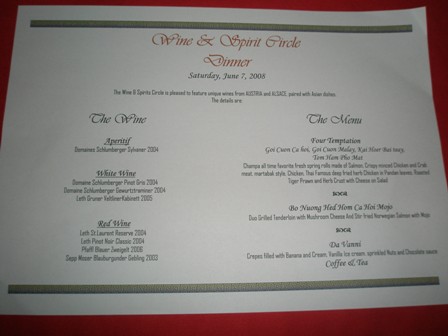
The menue showed exciting features
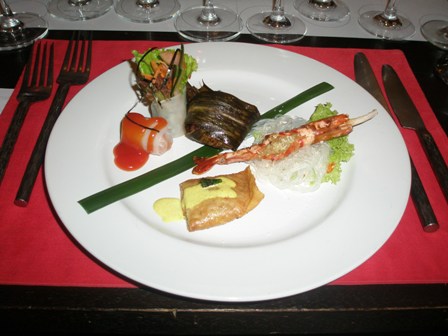
‘Four temptations’, the entree ‘Goi Cuon Ca hoi, Goi Cuon Malay, kai Hoer Bai teay, Tom Ham Pho Mat’, freele translated, it reads as follows:

– Champa fresh spring rolls made of salmon
– Crispy minced chicken and crab meat martabak style
– Thai famous deep fried herb chicken in Pandean leaves
– Roasted Tiger Prawn and herb crust with cheese on salad

The main dish named ‘Bo Nuong Hed Hom ca Hoi Mojo’ consisted of grilled tender loin with mushroom cheese and stir fried Norwegian salmon with Mojo.

The dessert, called ‘Da Vanni’, was a crepes filed with Banana and cream, vanilla ice cream, sprinkled with nuts and chocolate.

How about the wine you might ask. Well, Alsatian and Austrian wines were on the agenda. we started with an aperitif, a ‘2004 Domaines Schlumberger Sylvaner’. Woh, an Alsation Sylvaner, Sylvaner being the grape of Franconia and its famous Bocksbeutel wines. It felt fresh and fizzy, a nice aperitif, I must say.

We faced seven glasses on our table, it felt a bit crowded in the limited space available. Three were for whites and four for red wines.

White wines

– 2004 Domaines Schlumberger Pinot Gris
– 2004 Domaines Schlumberger Gewuerztraminer
– 2005 Leth Gruener Veltliner Kabinett

Red wines

– 2004 Leth St. Laurent Reserve
– 2004 Leth Linot Noir Classic
– 2006 Pfaffl Blauer Zweigelt
– 2003 Sepp Moser Blauburgunder Gebling

Let me say it from the outset: this was not an evening for scribbling down tasting notes. I was in a much too good a mood for that. I also do not know much about Alsatian and Austrian wines. But the evening confirmed one thing: one has to drink and taste a lot in oder to understand the intricacy of the various grape varieties and the wines. I promised myself to drink more wine from the two regions.

Domaines Schlumberger is a wine estate in Alsace. It was established in 1810 (these Europeans have awfully long traditions in wine making) and has 140 ha under vines, half of this area classified as “grand crus”. Schlumberger only vinifies his own grapes. Today, the sixth and the seventh generation of Schlumbergers run the estate. Much of the vineyards is organically farmed (60 ha organic and 30 ha biodynamic).

The Domaines Schlumberger Gewuerztraminer was semi-dry I would say but showed some very fine aromas and great balance. Also the Pinot Gris must have had some high residual sugar because I perceived it as almost sweet. Both wines went well with the Asian food. However, I liked the Sylvaner best. Unfortunately, I did not check the bottles to identify from which “terroir” the Schlumberger wines came from (there are 4 grand crus: Kitterle, Kessler, Saering and Spiegel) and the wine list is silent about their provenience. Maybe we drank only the “normal” wines (Les Princes Abbes) and not the ‘grand crus’.

The Sepp Moser Estate (www.sepp-moser.at) in Rohrendorf in the wine region of the Kremstal produces mainly white wines. The location Gebling has been used for vine cultivation since 1284 and is a steep south facing terraced vineyard. The Pinot Noir displayed the typical characteristics of the variety and the ‘terroir’ (hot days, coll nights during vintage time).

From the Pfaffl Wine Estate, located near Vienna in a region called “Weinviertel”, a Blauer Zweigelt was included in the tasting. Zweigelt is a red grape variety developed in Austria in 1922 and, of course, it bears the name of the developer (Fritz Zweigelt who should later became director of the Institute for Viticulture and Pomology at Klosterburg). Zweigelt is today the most widely grown red grape variety in Austria. Interesting is that the grape is also cultivated in the Niagara wine region of Ontario/Canada. The Pfaffl family cultivates about 30 ha of vineyards and goes back generations.

The Leth Estate is located in the village of Fels at the river of Wagram, Lower Austria and has about 40 ha under vines. The wine-plus website (www.wein-plus.com) awarded the winery three stars. The estate has practiced organic viticulture for decades and produces mainly white wines (70%). We were lucky to taste two reds from Franz Leth’s cellar.

In fact after all the tasting I settled in the end for the ‘2004 Leth St. Laurent Reserve’, which I liked best. It is a full bodied red with a fruity flavour and a mellow finish. The grape variety originates from France and belongs to the same family as Pinot Noir. St. Laurent (also called Pinot St. Laurent) is an aromatic dark red grape with aromas of forest berries and black cherries. Today it is mainly planted in Austria and the Czech Republic (and a small area in Palatinate and Rheinhessen in Germany).

When we left, and we were among the last guests, there was nothing left of this wine and many others. My resolution for the evening was to try more wines from these two wine regions.

Address:
The Champa
Jl. Wuaya 1/50
Kebayoran Baru
Jakarta 12170
Te.:+61-(021)-727-88668