Up North

April 8, 2007

I travelled north, from Jakarta to Taoyuan, Taiwan where I am going to teach for a week at the International Center for Land Policy Studies and Training (ICLPST). The flight was very comfortable in the business class of China Airlines. The menu I chose was all seafood. Boiled baby prawns with tomato and lettuce leaves as entrée and fish and prawn satay in ginger light soya sauce with Shanghai noodles as main course. On top of the wine list I found to my surprise a German Riesling from the Mosel-Saar-Ruwer, my home region in Germany where also Trier, my hometown, is located (www.trier.de). Home sweet home, and out of this melancholy, I asked for it.
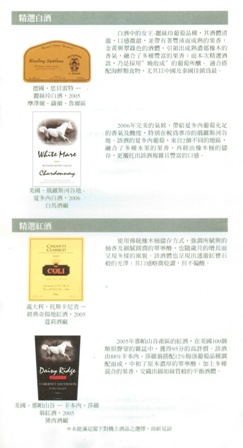
menu-taiwan-small.jpg

It said: 2005 Spaetlese, but I could not resist! The description claimed the wine is “rich, buttery layered with flavours of orange zest, Asian pears and golden delicious apples, with a subtle, smoky back note”. I could not taste any of this. For me it was “sugary” and the steward was so kind to let me have the second white wine on the menue: a Chardonnay from the US. 2006 White Mare Russian River Valley (Sonoma County), depicting a white horse on the label, not my type of label but what could I do. I did not know the winery. There was also a red (Cabernet Sauvignon), 2005 Daisy Ridge with the same white horse label.

The second red wine was from Italy, a Chianti Classico 2005 from Coli in Tuscany. After a couple of glasses of the Chardonnay, which I quite liked, I moved on to the Italian wine and stayed with it for the rest of the flight. By the way, the service was great at this flight, so many nice stewards and stewardesses, unbelievable. I can only recommend China Airlines. The wine list, though, could be changed. OK, I did not try the champagne, a Drappier Brut which got 89 point from the wine spectator. There are much better Rieslings from the Mosel or the Saar to choose from. I would also replace one of the US wines with an Australian Shiraz maybe or a Merlot.

I watched a movie, read in my Tim Winton book (The Turning) and arrived in Taoyuan in no time, well rested, fed and happy.

temple-small.jpg


Old Friends and Good Wine

April 6, 2007

According to Plato “only philosophers have what it takes to venture outside of the cave into the sunlight”. And what do they do there (apart from eating as we know from my last blog entry)?

They drink good wine of course!

When our friend Alan Wall came over from Canberra they other day, he brought with him, as usual, some bottles of good wine. Alan is one of these people who has forgotten more about wine then many of us will ever learn. He has a fine collection of about 3,000 bottles which are stored in his insulated garage.

We started with a single vineyard wine, a Mount Pleasant 2000 Lovedale, Hunter Valley Semillion. The bottle was decorated with five trophies of gold and top gold medal signs. What a wine this was. It displayed honeyed toast and hay aromas but it also showed some lemon and grapefruit character as many young wines do. It could have easily be cellared for much longer but when old friends meet, good wine has to flow. Of course we had food with it, a delicious seafood pasta.

The Hunter Valley, one of the oldest wine regions in Australia, is famous for its Semillions and its Shiraz. Whoever plans to visit Sydney should also include into their program a trip to the Hunter Valley just a 2 hours drive north of cosmopolitan Sydney.

The main dish was grilled beef (on my Weber) and with it we drank a Coonawarra Rymill Shiraz of 1996, a very well aged and harmonious wine of great depth and with a long finish. What a delight this was with it’s spicy peppery character and the blackcurrant flavours.

After the desert we continued with a wine from Sonoma County, a Chateau St. Jean Merlot of 2004 which displayed all the good Merlot charactereristics which we are looking for, deep cherry and plum aromas, with good texture, some weight in the mid-pallate and a long finish.

Of course the company was what really counted. Drinking wine we discussed about electoral systems, political party and democracy development and the future of the young Indonesian democracy. Life is just too short to drink bad wine.

sa500267forbloga.jpg

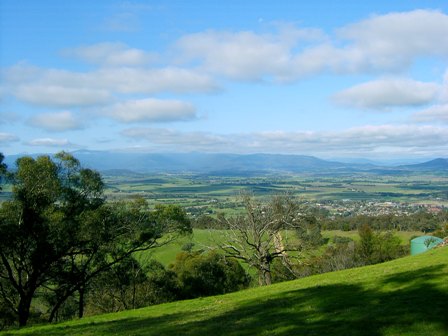
The Yarra Valley in Victoria


A philosopher’s lunch

March 30, 2007

What a beautiful lunch we had the other day. I have to give away the secret of the most delicious dishes we enjoyed last Sunday. In fact it is not a secret at all because the recipe is from a very well known and very beautiful cookbook, the Philosopher’s Kitchen by Francine Segan.

This cookbook’s subtitle reads, “Recipes from Ancient Greece and Rome for the Modern Cook”. Nothing sounds better to the ear of a Celtic Treverer who had enjoyed Roman cuisine for a couple of centuries. We had a fish dish and afterwards a salad, that’s all, but what most delectable food this was. I would have loved to have Sucellus, Epicurus and Lucretius over for lunch that day. Only on the wine side I would have made concessions to modernity. A Sauvignon Blanc from the new world vineyards I find much more appealing than a wine of Roman times which would have needed mixing with water and honey to be drinkable at all.

Wine god

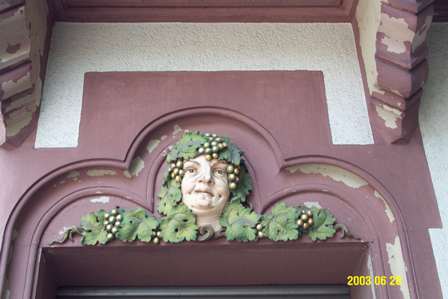
On a portal in Trier: Bacchus and vine leafs

And here is the recipe: red snapper in parchment. The ingredients are as follows:

– juice of freshly pressed lemons
– 2 garlic gloves, minced
– ¼ cup of extra virgin olive oil
– 4 bay leaves crushed
– 1 ½ teaspoons whole pink peppercorns
– 2 table spoons of capers, rinsed
– 15 oil-cured black olives, pitted and halved
– 2 red snapper fillets, without skin
– Salt and freshly milled pepper
– Lemon wedges

Mix and combine the lemon juice, garlic, bay leaves, peppercorns, capers and olives in a large bowl and soak the red snapper(in Bahasa Indonesia: Kakap Merah) in this marinade for about two hours in a cool spot. Then put the fish into the oven (up to about 200°). We put it into aluminium foil and topped it with the marinade; then closed the foil and baked it for about 10 to 13 minutes. We served the fish on a plate. We had just plain baguette with it but you can add all kinds of things, eat it with rice, potatoes, and with various vegetables. It was such a wonderful dish, mouth watering. The capers in the marinade give it a spicy edge, and this complements the white flesh of the fish. The olives and the capers take you to the Mediterranean. I could see the ocean, the sand, the beach…and taste the salt, the smells of the water….

After the main course we had a warm spinach salad. The recipe is also in the above cookbook and is called, “Baby Greens with Caper Vinaigrette”. The caper vinaigrette is similar to the marinade, just that no olives and no garlic is added. It goes as follows:

– 2 tablespoons of freshly squeezed lemon juice
– 2 tablespoons wine vinegar
– ¾ cup of extra virgin olive oil
– 3 tablespoons of capers
– Salt and freshly milled pepper
– 3 cups of assorted green vegetables

As I said, we used spinach (Bahasa Indonesia: Bayam Hijau) which we blanched before adding the vinaigrette and the warm salad did in fact complement the first dish and harmoniously end this philosopher’s meal. I highly recommend the cookbook. It makes a wonderful gift. If you love the classics and you want to delve in the past of these two great Mediterranean cultures, you should get it (www.atrandom.com).

You will have noticed that I did not yet mention any wine so far. Well, the wine I chose was a disappointment. I though a Sauvignon Blanc would go well with it, and this is certainly so. I chose a 2006 Sauvignon Blanc from Giessen of Marlborough, New Zealand, of which I had fond memories. But what a surprise. It was stale, oily and did not display any of the varietals’ characteristics of a cool climate Sauvignon Blanc. With sadness and melancholy I thought of times gone by and our own 2002 Two Hills Vineyard Sauvignon Blanc and it’s brilliant taste. Unfortunately, we were down on white wine and we just ended the meal with a port and an Italian coffee. I might have to consider buying a special wine fridge so that this cannot happen again.


What we were drinking: South Australia

March 23, 2007

David, the son of our mutual friend John, from Sydney brought two wonderful bottles of wine over the other day. We had them with a beautiful meal for Saturday lunch. With the spicy clam pasta we enjoyed a bottle of 2006 Sauvignon Blanc from Shaw and Smith from the Adelaide Hills (www.shawandsmith.com), a cool climate region in South Australia where my wife comes from. Grapes where planted there as early as 1839 and today there are about 60 wine labels with over 3,000 ha of vineyards planted. This young Sauvignon Blanc is a wine to my taste: fruity (with passionfruit and guava flavours), grassy-herbaceous, flinty and well rounded with a long finish. The wine is unwooded and James Halliday gave it 94 points. Very enjoyable in a tropical climate such as Jakarta.

McLaren vale1

McLaren Vale with vineyards, sea view in the distance

The second bottle we drank with the main dish, a vegetable stew, came from Mitolo Wines (www.mitolowines.com.au), a family owned winery situated in the most southern tip of the McLaren Vale region. I will write more about McLaren Vale in one of the next entries, because we visited the region in 2005 and had a wonderful time visiting some of its vineyards. We drank a 2004 Jester Shriaz. The wine had a deep purple colour. The nose showed intense blackberry, plum and chocolate aromas of rich black fruit. The wine has a good structure, is well rounded and has a long finish. Of course it should have been cellared for 4-5 more years but we could not wait. Both wines made our day which we spent sitting on the terrace and discussing the pleasures of life in general and life in Indonesia in particular. Come and visit us one day.

McLaren Vale 2

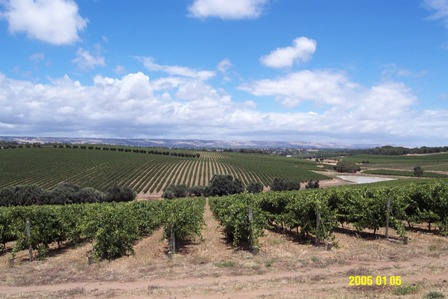
Vineyard view in McLaren Vale


Hail St.Patrick’s in Jakarta

March 19, 2007

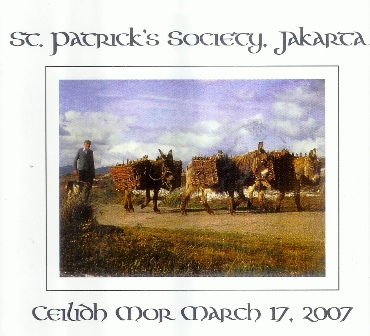
St. Patrick’s Ball invitation

Oh boy, what a splendid celebration this was, the annual St. Patrick’s Ball in Jakarta (www.stpatricksjakarta.org). My friend Uli from Germany came with me to enjoy the fun. We sat with some of my Australian friends on table No. 39, four couples and we two Germans, almost as last year just that my wife fell sick and I was, so to speak, with a male companion only. For Uli it was the first St. Patrick’s Ball ever. But being a country boy himself, he adjusted quickly and felt at home in no time. I met quite a few friends and acquaintances and we all had a good time.

The dancers were spectacular, the speeches boring, the food very good, the people in a jolly good mood, all dressed up and in their best outfits, a pleasure for the eyes and senses. There was white wine from Spain, and red wine from Western Australia.

Gun cuireadh do
Chupa thairis le
Slainte agus sonas

May your cup
Overflow with
Health and Happiness

I was sure that I would remember the brands until the next day. But something must have gone wrong. I danced at my hearts content until about three thirty in the morning with some charming and beautiful lassies from all over the world. When I hit the hay at home, I had already forgotten all about the wine, but boy, we had a jolly good time….

st-patricks-societyw.JPG

The German “contingent”, two old friends!


Wine made in India

March 16, 2007

When I openend my morning newspaper today – for insiders it’s the International Herald Tribune, (IHT) delivered at about 6-6:30 h every morning to my home in Jakarta so that I can read it while having breakfast and after my children have left for school – I was quite surprised to find on page 2 an article with the headline: “Days of wine and roses, sobered by high tariffs” desribing the situation of the infant wine industry and increasing wine consumption in India.

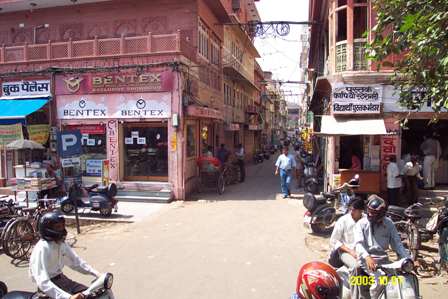
Jaipur

Jaipur street in 2003

It reminded me of our two years in New Delhi, almost 10 years ago. It was hard to get access to wine, any wine. We needed a personal reference from a friend so that a wine dealer would accept us as his new clients. This took quite some time. Only white and/or red where the choices available to us. The stuff was delivered after nightfall. A van drove into our driveway with turned off headlights. Then the bottles were delivered in secret, tucked into inconspicuous boxes. When we openend them the very first time, we found to our surprise the cheapest of French white wines, which might have costs a dollar or two in France but for which we had to surrender about 15 US$ of our hard earned money to our mysterious benefactor. I remember how happy we were. Over time and with the approprite consumption level, the quality of the wine and the choices available to us would improve. However, we never quite made it to get our true choice of wine delivered. But better ordininary wine with a delicious meal than no wine at all, became our daily and pragmatic attitude.

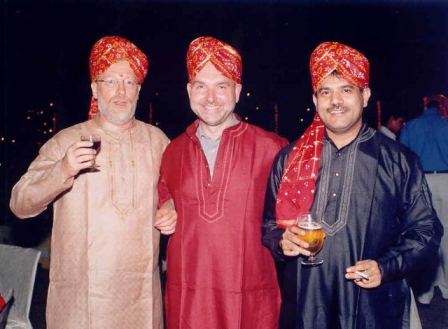
Ten years later, not much seems to have changed in New Delhi. The article in the IHT calls our mysterious benefactor a “bootlegger” which he certainly might have been. And despite a surge in domestic demand, wine cunsumption seems to be still hampered by a series of religious, cultural and bureaucratic hindrances. When I attended an international seminar in Jaipur in 2003 we had some very delicious Indian reds. Unfortunately, I did not take a photo of the bottle at the time but the three “dancing derwishes” are proof that we had great fun at the event. If you want to learn more about wines made in India please visit www.sommelierindia.com.

Derwishes

With my friends

In the long run, I feel, prospects for Australian wine in India should be good. My two daughters, if they should take over the family vineyard after I have “transcended” my earthly existance, might be the beneficiaries of this. 30% growth of wine sales as we can observe today will have subsided but the total bottles sold will go into the millions. When I think of the values, I become dizzy: total wine exports value of the US to India stands at only 1 Million US$ today. With an ever increasing number of consumers and average income increasing even faster, a small family vineyard as Two Hills should have a chance to sell to a few boutique wine shops in Mumbai, Delhi, Kolkata and Chennai. How I love the future.

Jaipur 2


A most marvelous fish dish

March 4, 2007

I have been away for a while. Let me tell you about a very memorable dinner I had with my friends Joyce and Rainer and a couple of other friends in Bangkok the other day. It started as a kind of late Chinese New Year celebration. We jointly tossed a special Singapore salad with the most astonishing ingredients of which I cannot give you a run down. Eating this dish together brings you luck of course. We had it as a kind of entree.

The main dish, however, is what I would like to introduce to you today:

Baked Sea bass with Basil-Feta Crust

This is a most amazing creation. I always thought that fish and cheese do not go well together. Wrong. They can build a terrific partnership and create an explosion of your senses in your mouth. The recipe goes as follows (4 serves):

Crust ingredients
– 3 garlic gloves
– feta cheese (one block)
– bread crumbs
– basil leaves
– black pepper, salt
– 4 table spoons of best extra virgin olive oil

Fish
– 4 pieces of Sea bass fillet, but any other “white” fish will do

How to do it
– Grind peeled garlic cloves and basil leaves together into a coarse consistency, mix the olive
oil into it
– put ground basil mixture into mixing bowl together with bread crumbs and Feta cheese. Mix
well together. Add pepper and two more tablespoons of olive oil.
– was sea bass fillet and sprinkle with pepper and salt. Place on oven-proof dish.
– put basil-feta mixture on fish covering the surface.
– bake for 30 minutes in 180 c oven
– serve with vegetables as desired.

We drank a Sicilian white wine with the fish. I would have loved to have a Two Hills Sauvignon Blanc instead; the wine we had at Rainer and Joyce’s wedding some years ago for instance. Of course also a Sauvignon Blanc from another cool climate wine region would do. But Sauvignon Blanc definately be my preferred choice with this dish.


2004 Two Hills Merlot and its DIAM cork

February 20, 2007

Many of our customers might have wondered why we changed from a natural cork as used for the 2001 vintage to one which looks like a compound, glued together closure. Well, let me share with you some of the information which brought us to this change.

Wine industry experts estimated that each year about 200 million bottles of wine worldwide are having a moldy smell coming from defective cork contaminated with Trichloroanisole (TCA). The financial losses to the industry are enormous. If one assumes than on average about 9% of the bottles are contaminated, then any method able to reduce these losses is highly welcome especially by small producers or boutique vineyards such as Two Hills. A French closure company, Sabaté of Oeneo, has developed a new closure, the DIAM cork, which guarantees a 100% cork taint free closure of wine bottles. These corks also offer near perfect seals and no random cork oxidation or leaks.

How is the DIAM cork made?
The procedure is similar to the technique used to produce decaffeinated coffee. The cork is reduced to cork flour, and then washed with carbon dioxide where the TCA is removed. After that the flour is reconstituted and held together by the same polymer that contact lenses are made from. Independent research, for instance by the Australian Wine Research Institute (AWRI; www.awri.com.au), has confirmed that DIAM corks are exceptional in preserving freshness by avoiding oxidation. In 2004 Oeneo Closures has won an international award, the Gold Medal Trophy of Vinitech in Bordeaux, for technical innovation.

We at Two Hills Vineyard had basically three options: (1). buy more expensive conventional cork, (2) put the wine under screw caps and (3) experiment with DIAM cork. I could not bring myself to put red wine under a screw cap. I might be called a romantic by I enjoy opening a bottle with a traditional opener. For white wines, I hold a different view. I am willing to sacrifice the same romantic notion for a guaranteed cork free taste of the wine. I am not so sure about Riesling though, especially those Riesling wines which benefit from aging. In such a case I would be willing to invest in more expensive conventional corks, I guess. This is of course not logical but rather arbitrary, I know. Alas we do not have Riesling grapes at Two Hills so that I do not have to make this decision. But for aromatic wines such as Sauvignon Blanc of which I am especially fond off, I readily accept the screw cap.

In the end we decided to give DIAM a chance. I hope that our customers will be satisfied with this explanation and continue to enjoy the exceptional quality of our wines. For those of you who want to know more about closures, please visit www.winestate.com.au or put DIAM in your search engine.

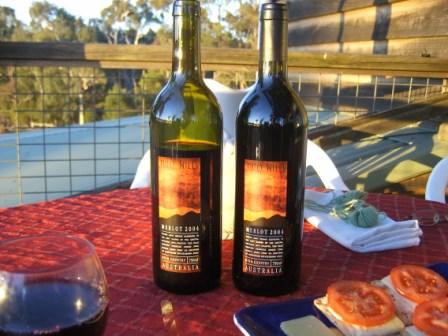
2004 Two Hills Merlot

2004 Two Hills Merlot bottles shortly before consumption on our terrace in Glenburn


Upper Goulburn Food, Wine + Cultural Group

February 19, 2007

Apart from the Upper Goulburn Winegrowers Association (UGWA), there is also a group promoting food, wine and culture, named Upper Goulburn Food, Wine and Culture Group. The group began working in 2000 driven by enthusiatic producers in Murrindindi and has expanded ever since now including people from Mansfield, Marrysville, Kinglake, Strath Creek and Merrijig among others.

UGE

Around vintage time the group is involved in quite a few promotional wine and food activities. Whoever plans to visit Victoria in the coming weeks should take note of the following events:

♦25th February – Troutarama – Wine and Food Festival – Gallipoli Park Marysville
♦03rd March – High Country in The High Rise – Federation Sq, Melbourne
♦10th March – Mansfield Bush Market
♦16th March – Upper Goulburn Marysville’s Longest Lunch – Marylands, Marysville
♦18th March – Yea Autumn Festival
♦24th March – Merrijig Hall Bushfire recovery celebration – UG Wine Tastings
♦28th April – Upper Goulburn Vintage Celebrations – Delatite Winery, Mansfield

These are only some of highlights. If your are interested in more details, please contact the website of the group (www.uge.asn.au).


Murrindindi

February 15, 2007

What is “Murrindindi”, you might ask? This is a location in central Victoria along the Murrindindi River. It is also the name of the shire where Two Hills Vineyard is located (www.murrindindi.vic.gov.au).

According to Wikipedia the Woiwurrung people lived in these parts of the Upper Goulburn when the first white settlers arrived in 1837. In the Woiwurrung language Murrindindi means “living in the mountains” and indeed this part of the Upper Goulburn Wine Region (www.uppergoulburnwine.org.au) is quite hilly and mountainous. It was all covered by forests.

There has never been a Murrindindi town. The first settlers (squatters as they are called in Australia) cleared the forests and farming and timber became the main industries in this region. A short lived gold rush began in 1868.

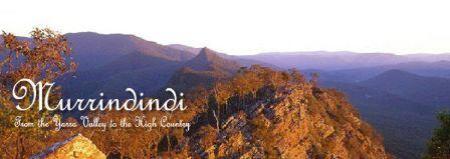
Murrindindi

Mountain view in Murrindindi

Although most of the area was deforested by the early 20th century, systematic protection and re-planting of trees has occurred and today the eastern part of the Melba Highway from Glenburn to Yea is in some parts quite densely forested again with Mountain Ash and other gum varieties.

Tourism is on the rise (www.murrindinditourism.com.au). Accommodation is easily available. There are good opportunities for trail riding, fishing, trail biking, and bush walking, specially along the Wilhelmina Falls and along the Murrindindi River.

Also the wine industry has made Murrindindi its home. Since the late 1980ies and the early 1990ies some vineyards were established in the Murrindindi area. In comparison with my native Mosel River, this might seem a rather short history of wine production. Indeed, vintners and winemaker here are true pioneers. There are fours vineyards in the vicinity:

▪ Penbro Estate
▪ Murrindindi Vineyards
▪ Yea Valley Vineyards and
▪ Two Hills Vineyard

All are members of the Upper Goulburn Wine Growers Association but only Penbro Estate has a website (www.penbroestate.com.au). There cellar door used to be the Glenburn Pub in Glenburn. Murrindindi Vineyard’s cellar door is at Marmelades Café in Yea, a small country town about 25 km to the north along the Melba Highway.

Whereas the Celtic Treverer had hundreds of years of site and varietals’ selection opportunities, so that today a rich and extensive knowledge base exists in the Mosel wine industry with well established vineyards and wineries.

The vintners in Murrindindi had only a couple of years of trial and error and are still searching.

We at Two Hills had to pull all our Cabernet grapes out because they would not ripen in the cool and harsh climate with its short autumns. They were replaced with Pinot Noir.

Last year was our first but promising Pinot vintage. The variety seems to be better suited to our conditions then the long ripening Cabernet. We plan to extend our vineyard and plant 0.4 ha of Chardonnay this year.

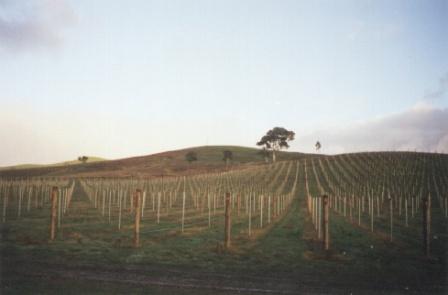
Vineyard in Murrindindi

Vineyard in Murrindindi