Wines from Thailand

December 9, 2008

thaiwine02

Isn’t it amazing, that tropical countries such as Indonesia (on Bali, for instance Hatten Wines) and Thailand are also producing grapes and grape wines?

Especially Thailand has a nascent wine industry of reasonable size, well protected from too much international competition by high import duties. Does that work, was my question. As a passionate free trader, I doubted it from the outset.

khaoyai2

A promising product: Wine from Thailand

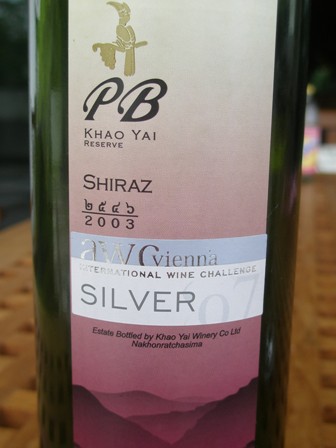
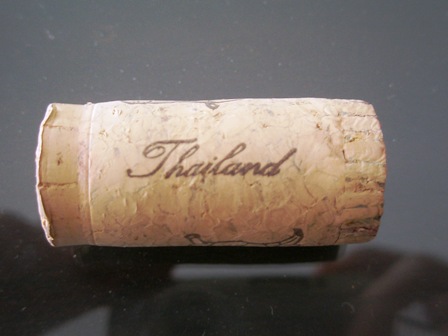
Recently, I tasted my first Thai wines. While travelling in the Khao Yai area, I acquired a bottle of ‘2003 Khao Yai Reserve Shiraz’ in a small local shop. The sticker on the front label announces the award of a silver medal by the International Wine Challenge of AWC in Vienna which sounded very impressive.

The Khao Yai winery is located in the PB valley of the cooler highlands about a two hours drive north of Bangkok.

I was really excited while taking the bottle home and looking forward to the tasting experience. The price of 590 Thai Bath was not exactly cheap (13 EURO or 16.5 US$). The tasting, however, was very disappointing. The wine had a beautiful colour and even some “nose” (spicy), but that was is. It was a rather “thin” reddish liquid. The bottle must have gone off, that’s my hope. The judges in Vienna would not have awarded the silver medal if the wine was no good. Unfortunately, this bottle was.

khaoyai1

The front label with the Silver

khaoyai3

The back label promises an exciting product

thaiwine1

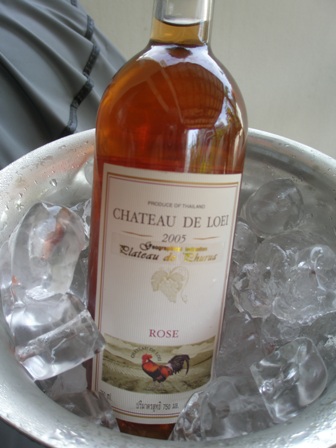
The Rose from Chateau de Loei

The second wine, I have tasted is a ‘2005 Chateau de Loei Rose’. I liked the label with the colourful rooster. Chateau de Loei has some retail outlets in Bangkok. I bought it in our local super market (the Villa Market in Thonglor). It was also in the 500 Bath price range. There were more expensive wines from the same company at offer but I hesitated to buy the 1,300 Bath bottle. That turned out to be a big error.

Again I was heading for disappointment. This rose wine was an awful industrial liquid. Not worth mentioning anything about it. I though it would suit the food and the situation of my barbecue (on my weber) on our wonderful terrace.

Well, what’s the conclusion my old mate? I guess I have to try some more Thai wines. Next time starting at the top price end, even if it hurts my purse, might please my palate more than my first approach.

sunday-bkk1

Cheers everybody!


Portugal – Along the Douro river

November 8, 2008

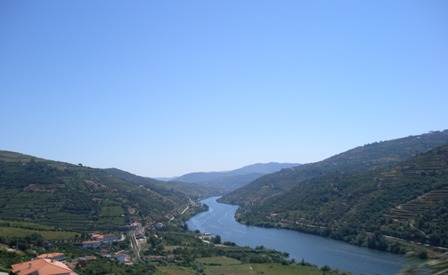
One of our day trips from Quinta de Gatao, near Penafiel, was a day trip to see the famous Douro river valley. It was a Sunday morning when we set out, the sky was high and very blue, in short, a terrific day.

We took the rural roads not the highway and descended to the Douro river through a narrow valley on a winding road. It was a wonderful drive. I love driving through almost any rural landscape, then my heart opens up and I feel free. There is so much to see for an agricultural engineer like me: the forests and trees, the fields and the crops, animals, houses, agricultural machinery, irrigation and rivers and of course the peasants.

It was mesmerizing when very of a sudden the river cam into sight for the first time. Majestic it was, large and blue, and of course a cruise ship could be seen slowly making its way down to the city of Porto.

douro-new1

A terrific landscape is the trademark of the region.

Vineyards are all over the place, to be found on narrow terraces, usually just a few rows. Farm houses are also scattered among them. Here and there an olive orchard can be spotted.

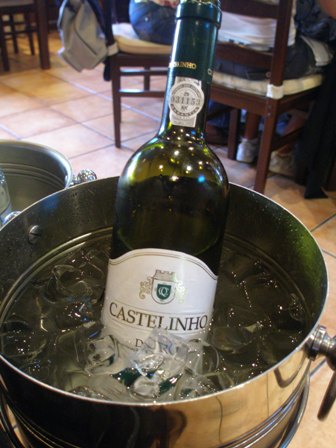
Around midday we decided to visit Peso da Régua, a small town and the centre of Port in the upper Douro valley. Our guide book pointed us to Quinta do Castelinho, a winery cum restaurant where we planned to have Sunday lunch.

Since we do not speak Portuguese it was not easy to find the place. Though it was listed in our travel guide, the description how to get there was rather nebulous. After a very friendly man showed us the way, we made a stupid wrong turn and ended up on the freeway into the opposite direction. The rest was easy, we “chucked a u-ie” (no idea what the orthography says about this expression), as we say in Australia, and soon drove right into the yard of the Quinta do Castelinho Winery.

It was a beautiful Sunday lunch; we ordered a kind of continental cuisine. The waiter was very friendly, the service terrific. We had a bottle of their white, still wines which matched the food perfectly. The wine was fresh, clean and crisp, not complicated but a straight forward, excellent table wine.

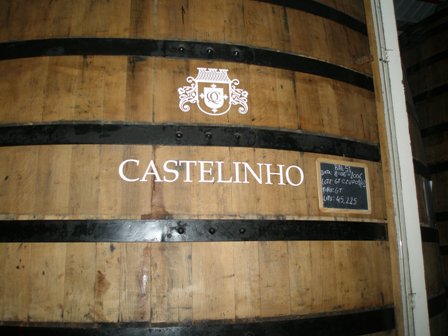
After lunch we were shown the winery. We watched a introductory film and wandered through the large storage facilities with huge tanks and barrels. The gift shop offered all kinds of local produce and other very attractive items.

castelinho12

With our guide We walked through alleys of huge metal bins.

The wooden storage bins were also enormous.

castelinho13

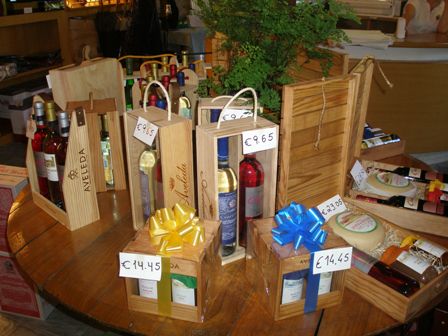
Some of the items on offer in the gift shop.

Only much later did we learn that Quinta do Castelinho is one of the largest producers of fortified wines in the Douro. The winery is owned by Saraiva family and managed by Manuel António Crúzio Saraiva, the son of the founder who had started the business in the 1960’s. Many of the vineyards are classified as “A”-grade, the best for the production of excellent fruit for fortified wines. This part of the Douro valley is the first ever demarcated wine region in the world. The Marquês de Pombal, prime minister of Portugal, ordered in 1757 that the borders of the valley be marked with solid granite markers. This demarcation coincided with the efforts of navigating the Douro river so that the wines could be shipped down to the port city of Porto.

We tasted also the above two fortified wines.

The Quinta do Castelinho Porto LBV 1997, Castelinho Vinhos (Portugal), left in the picture. The grapes used are: Touriga Nacional, Tinta Roriz, Tinta Barroca, Touriga Francesa

The wine has a dark, ruby red colour. The nose reveals intense and persistent aromas of black cherry, cherry jam, strawberry jam, blueberry and blackberry, some people detect the aroma of violets.
The wine is round in the mouth, well balanced and displays a beautiful finish. We have still one bottle here in Bangkok and treasure it which means that we treat it like medicine until we find a new source of supply.

The wine on the right hand side in the picture above is the Quinta do Castelinho Porto Tawny 10 Years, Castelinho Vinhos (Portugal). The grapes used are the same as the first wine.

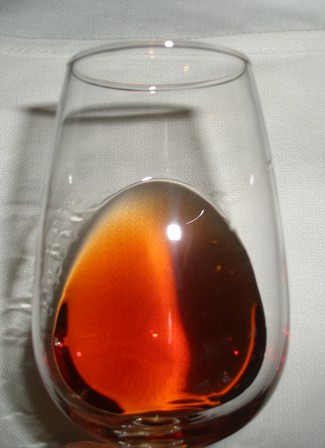
The wine shows a deep orangey colour. The nose is rich and intense with aromas of black cherry jam, cherry jam, almond, licorice, cocoa, leather, dried fig and some vanilla. Also this wine is elegant and complex with soft tannins. The finish is also long. It was difficult to decide which one we preferred. Therefore we bought bottles of both of them.

castelinho11

What a beautiful colour

And of course, we tasted some of their famous port wines. We bought a couple of bottle of different port wines as well as some bottles of the white wine we had for lunch which had appealed to us so much.

Because I was the driver, I had to limit my tastings but we left the Quinta do Castelinho wholly satisfied, very cheerful, well fed and with a lot of bottles in our possession.

Address:
Quinta do Castelinho Winery
Castelinho Vinhos S.A.
5054-909 Peso da Regua
Portugal

Tel: +351 254 320 100
FAX:+351 254 320 109
E-mail: castelinho@castelinho-vinhos.pt

Jewels of the Upper Goulburn Wine Region Part I.

October 31, 2008

Today, I want to start a new series and introduce to you some wine and grape producers from our wine growers association, the Upper Goulburn Winegrowers Association. I plan to feature three to four wineries and vineyards at the time. The selection is random. I will start with the wineries with open cellar doors. Of the 30 odd members of our association, about 9 belong to this category. Another 12 are vineyards which also produce some wine under their labels but conduct wine tastings only by appointment. All the others are fruit producers only and do not sell wines commercially.

The first cohort of wineries to be presented consists of Kinloch Wines, Rees Miller Estate and, a small boutique winery, called Rocky Passes Estate. I want to be honest with you. I have tasted wines made by Malcolm Kinloch (Kinloch Wines) and David Miller (Rees Miller Estate) but not the ones made by Victor Oles (Rocky Passes Estate). I have visited the two former wineries (and I know Malcolm and David) but not the latter.

But this is no impediment to write about all three of them. Anyway, we are going to visit Australia for Christmas and we might take this opportunity to get to know the Rocky Passes people.

I am starting with Kinloch Wines. Malcolm and Susan Kinloch have established a wonderful wine business. The vineyard is located in the Booroolite Valley, about 15 minutes by car from Mansfield (almost next to another famous winery of our region: Delatite Winery).

This year at the Federation Sq Showcase Series the Kinlochs were rewarded two gold medals, one for their “2004 Mary Friend Cabernets-Merlot Blend” and another for their “2006 Don Kinloch Sparkling white”. Moreover, the “Mary Friend” red was judged the Overall Best Red Blend in its class at the Award presentation for the Victorian Wine Awards.

2008 was a most unusual year in the Upper Goulburn. Kinloch Wines harvested a record 34 tons of fruit of outstanding quality. From the 2008 vintage three wines have been released so far (cellar door prices in brackets):
-Unwooded Chardonnay (A$ 18)
-Sauvignon Blanc, and (A$ 22)
-a first rosè (A$ 18) made from Pinot Meunier grapes.

I have tasted earlier vintages of the two white wines and they are delicious. When we visited Kinloch Wines in winter, one could see Mount Buller in a not so distant distance, all in white with a beautiful snow cap.

How to find them:
Kinloch Wines
In the Booroolite Valley, the cellar door is warm and friendly and offers gourmet luncheon platters on weekends and public holidays.
Address: 221 Wairere Rd, Boorolite – 15 minutes from Mansfield
Open: 10.00 am to 4.00 pm daily
Tel: 5777 3447
Email: info@kinlochwines.com.au
Web: www.kinlochwines.com.au
Contact: Susan and Malcolm Kinloch

Rees Miller Estate is the next winery in my cohort. Located near Yea – about 15 minutes drive on the highway to Alexandra/Mansfield – Sylke Rees and David Miller own and operate a fully certified biodynamic vineyard and winery. Today about 7 ha are under vines, the farm has a total of about 64 ha. Sylke and David are both very much committed to the protection of the environment, and the organic production of food. They intend to produce pure products for consumption in a way that supports the land and its people.

We got to know Sylke and David when our wine stall was just adjacent to theirs at the 2007 Alexandra Food and Wine Expo. David conducted a very interesting wine tasting, actually my first wine tasting at such an event, and Sylke sold the wines. When we visited their cellar door some time later, they were both on Christmas holidays. To my great surprise Rees Miller wines were available at our duty free wine store in Jakarta, and we did not have to suffer any shortages of their beautiful reds.

How to find them:
Rees Miller Estate
Fully certified biodynamic vineyard situated on the Goulburn Valley Highway, just east of Yea.
Address: 5355 Goulburn Valley Highway, Yea
Open: 10.00 am to 4.00 pm daily
Tel: 5797 2101
Email: info@reesmiller.com
Web: www.reesmiller.com
Contact: David Miller or Sylke Rees

The last vineyard in this first cohort of Upper Goulburn wineries with cellar doors is Rocky Passes Estate, a small boutique vineyard of about 6 acres (5 acres Shiraz and 1 acre Viognier) located in Whiteheads Creek, near Seymour. I only know their one-page website and their listing in our membership directory. Rocky Passes Estate is another vineyard dedicated to organic grape growing and wine making (there are quite a few in our region). Cropping levels are kept low (about 2 tonnes per acre). The cellar door was opened in 2006. The wines can be ordered by mail, phone or e-mail.

How to find them:
Rocky Passes Estate
Situated at the southern end of the Strathbogie Ranges, the wines are made using organic practices and biodynamic preparations.
Address: 1590 Highlands Rd,
Whiteheads Creek, Seymour
Open: Sundays 11.00 am to 4.00pm or by appointment
Tel: 5796 9366
Email: rockypasses@activ8.net.au
Web: www.rockypassesestate.com.au
Contact: Victor Oles or Candy Westney

I hope I could stimulate your curiosity. The Upper Goulburn Wine Region is a rural place with real people who love what they are doing, have passion for their wines and commitment to the environment.


Jewels of the Upper Goulburn Wine Region Part I

October 25, 2008

Today, I want to start a new series and introduce to you some wine and grape producers from our wine growers association, the Upper Goulburn Winegrowers Association. I plan to feature three to four wineries and vineyards at the time. The selection is random. I will start with the wineries with open cellar doors. Of the 30 odd members of our association, about 9 belong to this category. Another 12 are vineyards which also produce some wine under their labels but conduct wine tastings only by appointment. All the others are fruit producers only and do not sell wines commercially.

The first cohort of wineries to be presented consists of Kinloch Wines, Rees Miller Estate and, a small boutique winery, called Rocky Passes Estate. I want to be honest with you. I have tasted wines made by Malcolm Kinloch (Kinloch Wines) and David Miller (Rees Miller Estate) but not the ones made by Victor Oles (Rocky Passes Estate). I have visited the two former wineries (and I know Malcolm and David) but not the latter.

But this is no impediment to write about all three of them. Anyway, we are going to visit Australia for Christmas and we might take this opportunity to get to know the Rocky Passes people.

I am starting with Kinloch Wines. Malcolm and Susan Kinloch have established a wonderful wine business. The vineyard is located in the Booroolite Valley, about 15 minutes by car from Mansfield (almost next to another famous winery of our region: Delatite Winery).

This year at the Federation Sq Showcase Series the Kinlochs were rewarded two gold medals, one for their “2004 Mary Friend Cabernets-Merlot Blend” and another for their “2006 Don Kinloch Sparkling white”. Moreover, the “Mary Friend” red was judged the Overall Best Red Blend in its class at the Award presentation for the Victorian Wine Awards.

2008 was a most unusual year in the Upper Goulburn. Kinloch Wines harvested a record 34 tons of fruit of outstanding quality. From the 2008 vintage three wines have been released so far (cellar door prices in brackets):
-Unwooded Chardonnay (A$ 18)
-Sauvignon Blanc, and (A$ 22)
-a first rosè (A$ 18) made from Pinot Meunier grapes.

I have tasted earlier vintages of the two white wines and they are delicious. When we visited Kinloch Wines in winter, one could see Mount Buller in a not so distant distance, all in white with a beautiful snow cap.

How to find them:
Kinloch Wines
In the Booroolite Valley, the cellar door is warm and friendly and offers gourmet luncheon platters on weekends and public holidays.
Address: 221 Wairere Rd, Boorolite – 15 minutes from Mansfield
Open: 10.00 am to 4.00 pm daily
Tel: 5777 3447
Email: info@kinlochwines.com.au
Web: www.kinlochwines.com.au
Contact: Susan and Malcolm Kinloch

Rees Miller Estate is the next winery in my cohort. Located near Yea – about 15 minutes drive on the highway to Alexandra/Mansfield – Sylke Rees and David Miller own and operate a fully certified biodynamic vineyard and winery. Today about 7 ha are under vines, the farm has a total of about 64 ha. Sylke and David are both very much committed to the protection of the environment, and the organic production of food. They intend to produce pure products for consumption in a way that supports the land and its people.

We got to know Sylke and David when our wine stall was just adjacent to theirs at the 2007 Alexandra Food and Wine Expo. David conducted a very interesting wine tasting, actually my first wine tasting at such an event, and Sylke sold the wines. When we visited their cellar door some time later, they were both on Christmas holidays. To my great surprise Rees Miller wines were available at our duty free wine store in Jakarta, and we did not have to suffer any shortages of their beautiful reds.

How to find them:
Rees Miller Estate
Fully certified biodynamic vineyard situated on the Goulburn Valley Highway, just east of Yea.
Address: 5355 Goulburn Valley Highway, Yea
Open: 10.00 am to 4.00 pm daily
Tel: 5797 2101
Email: info@reesmiller.com
Web: www.reesmiller.com
Contact: David Miller or Sylke Rees

The last vineyard in this first cohort of Upper Goulburn wineries with cellar doors is Rocky Passes Estate, a small boutique vineyard of about 6 acres (5 acres Shiraz and 1 acre Viognier) located in Whiteheads Creek, near Seymour. I only know their one-page website and their listing in our membership directory. Rocky Passes Estate is another vineyard dedicated to organic grape growing and wine making (there are quite a few in our region). Cropping levels are kept low (about 2 tonnes per acre). The cellar door was opened in 2006. The wines can be ordered by mail, phone or e-mail.

How to find them:
Rocky Passes Estate
Situated at the southern end of the Strathbogie Ranges, the wines are made using organic practices and biodynamic preparations.
Address: 1590 Highlands Rd,
Whiteheads Creek, Seymour
Open: Sundays 11.00 am to 4.00pm or by appointment
Tel: 5796 9366
Email: rockypasses@activ8.net.au
Web: www.rockypassesestate.com.au
Contact: Victor Oles or Candy Westney

I hope I could stimulate your curiosity. The Upper Goulburn Wine Region is a rural place with real people who love what they are doing, have passion for their wines and commitment to the environment.


Portugal – Quinta da Aveleda

October 18, 2008

The first bottle of vinho verde I bought in my life came from a small local supermarket in S. Martinho de Recesinhos near Penafiel about 40 km east of Porto. We had just put up at Quinta de Gatao and went to shop for some groceries. I browsed the shelves of the wine section and bought a selection of local wines from EURO 1.50 to 5.50. And the bottle in the picture above was one of them. Quinta da Aveleda said the label. It did not mean anything to me.

I also bought cheese produced by Quinta da Aveleda (picture above). There were two varieties of it on offer. Only much later would we learn that Quinta da Aveleda is a rather big wine and cheese producing enterprise nearby in Penafiel (in fact one of the biggest in Portugal). By the way both cheeses, the soft and the hard one, are delicious and we should eat many more of them during our week long stay.

One afternoon, we went to visit the place and check it out. We came just at the right time for the last guided tour. We were shown the bottling plant, and a kind of museum before settling for the tasting which was held on a large veranda on the backside of one of the buildings. We did not visit the enormous park and the gardens.

The family enterprise has a long history going back to 1671. But it can be assumed that the place is much older. In the Celtic tradition of Lusitania, the women who predicted the future, were sacrificed and called “Velledas”. That’s most probably were the name comes from. The place and the family business has a long and winding history and experienced all the ups and downs typical for the wine industry, from phylloxera to international wine awards, from expansion to contraction everything can be found.

The cellar door and gift shop offers not only wine and cheese but various kinds of local produce from the Minho and Douro wine regions.

A newly planted vineyard can be seen from the tasting terrace.

Vinho verde is being offered in various variations, but together with the self-produced cheese and some bread. The wine is fruity and fresh, young and bubbly, ideal for hot summer days. Alcohol is about 9-10%.

This is the light vinho verde (branded as Casal Garcia) mainly produced for the US market (even lower in alcohol, about 8%) where Quinta da Aveleda sells millions bottles. I forgot the exact figure, but the number is mind blowing for a small vintner like me who produces just a couple of thousand bottles a year. I found the winery tour interesting (tough I prefer visiting smaller establishments), the staff was friendly and accommodating. Take your time, and explore the gardens.

Address:


Dorfprozelten – at the fringes of the Franconian wine region

October 13, 2008

The first part of our family reunion last July brought us to the village where my mother grew up: Dorfprozelten, a small hamlet at the banks of the Main river in Lower Franconia as the region is called. The village is situated between the small towns of Miltenberg and Wertheim.
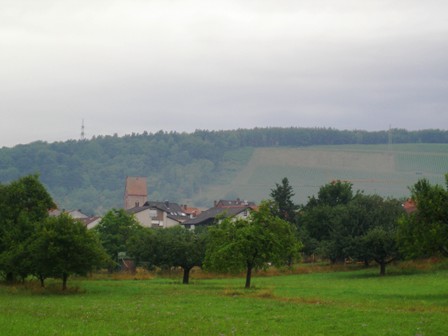
Dorfprozelten in the morning (photo taken from the meadows at the river banks). In the back one can see the location ‘Predigtstuhl’ where vines are cultivated.
I spent most of my childhood summer vacations in Dorfprozelten, lodged at my maternal great-grandmothers house in the middle of the village. Since my family could hardly afford to go on holidays as we do today, we spent our time with relatives and explored the beautiful surroundings between Spessart and Odenwald, two hilly, forested regions sanwiching the Main river.

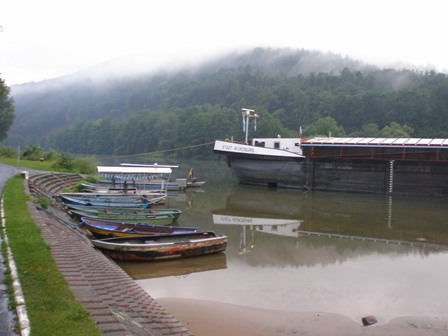
Many of the village inhabitants were fishermen; many others were barge owners transporting goods from port to port in the inland river and canal systems which link many German lands with its neighbours. My uncle owned and operated a 1,000 tonne ship (river barge) together with two of his sons. My father often joined them during his holidays as a kind of occasional sailor.

In July this year, we arrived on a Friday two days before the fishermen would celebrate their annual local fishing festival. We should miss it all together since we stayed only for one day and one night. But on a rainy Saturday morning walk, I took the picture of this poster stuck to a tree near the river.

The billboard introduced the various fish varieties which call the river Main their home. Their numbers are on the increase ever since river pollution was reduced by the introduction of waste water treatment plants in the 1970s and 1980.

When on holidays we swam in the river as little kids until it was forbidden because of the rising pollution. My father used to swim out into the stream to greet barges, at times go on board and jump back into the rapid river waters. He was a very good swimmer. Today, swimming is again allowed because of the improved water quality.

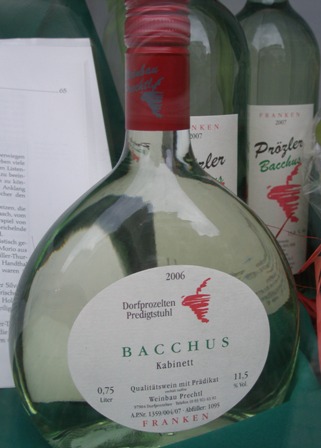
The wine produced in Dorfprozelten does not come from “premier cru” terroir but rather belongs to the “Landwein” category (table wine or ‘vin de pays’). Among others Bacchus vines are cultivated. I am personally not a lover of Bacchus grapes and wines, but I drink “local” as much as I can.

Franconian wines are often filled in traditional bottles, called “Bocksbeutel” with a rounded, big belly shape. Sylvaner is the dominant grape variety, much liked by the locals and of outstanding quality only in this part of Germany. Apart from Riesling, Sylvaner is my most preferred variety of the German white wines.

We stayed in a typical country inn, named “Gasthaus Krone”.

Country inns in Germany offer home style cooking and local German cuisine which is not easy to find these days. Most Germans eat home style dishes at home and when they go out, they are looking for some more exotic cuisines. Moreover, these days many Germans try to avoid the restaurant business because of the long working hours. Therefore, today many country inns are operated by non-Germans offering everything from Turkish, Chinese, Thai, Italian Greek and other foods. But not so in Dorfprozelten.

The rooms were furnished in a typical Southern German country style. They were clean and spacious. Ideal for two families with children. The breakfast was a delight, offering many local cheeses, eggs cold cuts, sausages, and other meats.

The menu was a typical ‘country inn’s menu with a lot of local dishes. I loved the richly decorated hard cover in thick leather.

The wine list, here the section with local white wines only, was dominated by local wines from Franconia. Unfortunately, we could not taste them all. I guess we have to come back for some more sampling.

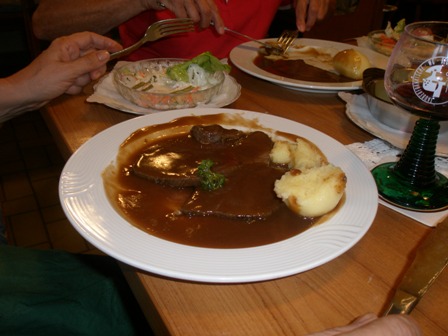
Sauerbraten with Knoedel, a hearty German country meal.

If you plan to visit Lower Franconia, I recommend you stay in this village of my ancestors for a night or two. It’s worth it, I promise.


Henry of Pelham Family Estate Winery

October 8, 2008

In December 2007 I wrote about the Niagara Wine region in Ontario, Canada. Lorie from “Lorie loves wines” named some of her favourite wineries in this region (thanks Lorie). One of them was Henry of Pelham Family Estate Winery.

According to Lorie, Henry of Pelham make the best hybrid wines, Baco Noir in Niagara. They also make a great Gewurztraminer. Daniel Speck, one of the proprietors of Henry of Pelham Family Estate, wrote to us and introduced some of his wines.

When I surfed on youtube the other day, I found a video clip about the winery. In fact it seems that many wineries in the Niagara wine region put videos about their vineyards and wineries on to the net. Without having been to the place, I can now check it out (which I did) and when I will visit Ontario next time, I might go and taste their wines. Have a look. You will find many more video clips about Henry of Pelham on the net.


Trier, Mosel: Wine Auction 2008

October 4, 2008

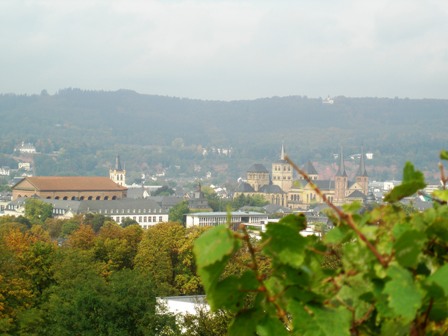
The wine city of Trier (from the Petrisberg side)

According to the website www.riesling.de the annual wine auction of the “grosser Ring” (freely translated as ‘big ring’) a subdivision of the regional section of the Association of German Prädikat Wine Estates (that is how on the website of the association, the German title: “Verband der Deutschen Prädikatsweingüter” is translated) was a full success. The association has about 200 members German wide. About 13,000 bottles of wine were auctioned off. The sale brought in an amount of € 1.3 million.

The top prices were earned by wines from Weingut Egon Müller (Saar), Weingut Joh. Jos. Prüm, and Weingut Dr. Loosen, all top producers of the Mosel wine region.

The most expensive wine of the auction was a single bottle of a ‘1959 Wehlener Sonnenuhr Riesling Trockenbeerenauslese’ by Weingut Joh. Jos. Prüm which was sold for € 5.097.96. Wow, isn’t that amazing.

But also prices for recent vintages were quite high. A ‘2007 Scharzhofberger Auslese Goldkapsel’ by Weingut Egon Müller sold for € 582.62 , a ‘2007 Graacher Himmelreich Auslese Lange Goldkapsel’ by Weingut Jo. Jos. Prüm for € 485.52 and a ‘2007 Erdener Prälat Auslese Lange Goldkapsel’ by Weingut Dr. Loosen for € 449.11

Wine bar Kesselstadt in Trier just opposite the church of Liebfrauen

The auction lasted for more than 5 hours much longer than a marathon run. The general trend as far as bottle size is concerned seems to be heading towards magnum bottles. For wines filled in such size bottles premiums were paid.

The tasting prior to the auction revealed the very high quality standard of the 2007 vintage Rieling wines. On www.riesling.de you can find the detallied rating of the individual wines and the prices paid for the various lots sold.

Even for ordinary mortals like me, the auction is good news. The superior quality of the 2007 Mosel Riesling vintage will also apply for more everyday wines which I can afford. Next time in Trier I will indulge myself again. Why don’t you come with me.


Grape grower of the year in McLaren Vale

October 3, 2008

The Daily Wine News, an e-newsletter from the Australian Wine Industry Portal of Winetitles, carried the other day a summary of the McLaren Vale Annual Wine Industry Awards. One of the award winners (in the category ‘Grape grower of the Year Award’) was a vintner names Joch Bosworth of Edgehill Vineyards.

I went straight on to google the man and found a very interesting website (www.edgehill-vineyards.com.au). Joch’s wine label – the Battle of Bosworth -is named after a famous battle in England in 1485. The Bosworth family has grown grapes in the McLaren Vale region since the 1840’s. The Edgehill vineyard is located in Willunga, and was established by Peter and Anthea Bosworth, the parents of Joch, in the early 1970’s.

Needless to say that Edgehill Vineyard was converted to organic viticultural practices (in 1995) and today is a certified A-grade organic farm (certified by ACO www.australianorganic.com.au). It has some 50 acres under vines, planted to Shiraz (some more than 20 years old), Cabernet Sauvignon, Chardonnay, Viognier, Sauvignon Blanc and Mourvèdre.

What I find remarkable too is the fact that the rows between the vines are left to a “vicious” weed, the Soursob, the picture of it featuring on the wine label. The Soursob produces a very pretty yellow flower. The life cycle of the Soursob complements the cycle of the grape vines in so far as it dies off in spring and flowers and uses water in winter when the vines are dormant. Would love to know wht his neighbours say to that system.

I present you a video which is posted on Joch’s website. I do this for two reasons:

1. It is interesting to watch and informative
2. It shows the relaxed atmosphere and vine growers culture of my adopted home Australia which I treasure so much.

Enjoy watching it.

I have visited the McLaren Vale wine region only once and enjoyed the triop tremendously, but next time I will look out for Edgehill Vineyards in Willunga.

Address:
Battle of Bosworth Wines
PO Box 11 McLaren Vale
South Australia 5171
(Ganney Road, Willunga, SA)
Tel.: +61-885562441
http://www.edgehill-vineyards.com.au


Wine and Food Expo 2008 – UGWA

August 9, 2008

Our Upper Goulburn Winegrowers Association is holding their annual wine and food expo2008. Please come and visit if you are around.

WINE & FOOD EXPO
UPPER GOULBURN, VICTORIA
MARYLANDS COUNTRY HOUSE, MARYSVILLE

SATURDAY 9TH AUGUST 2008
EXPO from 11.00 AM TO 5.00 PM – COST $15 per head includes wine taster
ROVING Food & Wine Experience – Marysville & District – Saturday and Sunday

The Upper Goulburn Winegrowers’ Association invites you to their annual Expo. Come and meet the faces behind the Upper Goulburn Wine Region – talk to the vignerons, taste their wine, sample local food products – trout, cheese, olives, bread, jams and preserves.

Participate in the free tutored wine tasting sessions presented by Rob Hicks, enjoy the “catch a trout cook a trout” cooking demonstration, and take advantage of the Expo Voucher for your roving experience around Marysville. Don’t forget to take home some fantastic Expo specials.

UPPER GOULBURN WINE REGION
Alexandra Buxton Eildon Glenburn Jamieson Mansfield Merton Tallarook Yea
www.uppergoulburnwine.org.au

Susan Kinloch – Event Coordinator – 5777 3447 or 0418 595 878
Sponsorship Information – contact Alex Gillon on 9596-3043 or 0419 363 794

Wine labels from the region

Barwite Buller View Buxton Ridge Delatite Growlers Gully Kinloch
Larnoo Mt Samaria Murrindindi Nillahcootie Penbro Rees Miller
Rocky Passes Scrubby Creek Snobs Creek St Winifred’s Tallarook
Traawool Two Hills

Have good fun with great Australian wines.
Yours from Portugal
Rainer