“Second-Christmas-Day” Party

December 27, 2009

The 26 December is called the “2nd Christmas day” in my native Germany. Since my father’s birthday fell on the 25 and was not celebrated because of Christmas, the 2nd Christmas day was usually the day his friends came to visit and congratulate him for his birthday.

Well, in this quasi tradition, we invited friends and acquaintances to our humble home for a Christmas barbecue, merging German and Australian customs of our family. I was very busy grilling pork and chicken, therefore no photos of the results of my labour at my “Weber grill”. Moreover, I grilled some veggies for the vegetarians among us (I was commended for the quality and the good taste). Margit had made various potato and bean salads; we had greens and white bread.

There are also no photos of the wines we consumed. Just two of the desserts. But a heck of a party it was. The 9 adults and the 9 children had a good time, as the two photos below show.

The “long” table

From 4 to 58 years old, 18 people around the table

The desserts:

Le Notre, the best dessert maker in town

The home made Pawlowa, Australian delight

Matthias and Beatrice had provided most of the wine (and the Le Notre dessert). We drank some beautiful drops. Here are the highlights:

‘2005 Rocky Passes Syrah’ (our last bottle) was perfect for the event: a Christmas party Australian style. It’s a beautiful example of cool climate Shiraz from our Upper Goulburn Wine Region. Vitto Oles makes great wines. James Halliday gave the 2005 Syrah 94 points.

‘2007 Altenkirch dry Riesling’, Lorch, Rheingau/Germany. Friedrich Altenkirch is a very well known vintner. Some of his wines were just rewarded silver and bronze medals at the International Wine Challenge and the 2009 Decanter World Wine Awards. The 2007 Riesling is young and fizzy, a solid German wine. The wine-maker, Tomoko Kuriyama, comes from Japan not a common trait of German wineries.

‘2005 Château La Raze Beauvallet, Cru Bourgeois’ from Medoc, Bordeaux, France. The château (45 ha) is owned by the Sourice family and has retained the original ‘cru Bourgeois’ classification from the 1930s because of the wine quality. The wine style is fruity and soft, easy to drink.

Needless to say, we had some bubbly as well, mostly from Taltarni, Australia. We will do this again.


Anniversary of Thai-German relations celebrated in style with German wine

December 3, 2009

The other day Lufthansa celebrated it’s 50 years of scheduled flight services to Bangkok, Thailand. I was invited to a function at the Mandarin Oriental Hotel which provided not only a splendid backdrop to the event but also supplied the guests with very jummy culinary delights.

Also the wines, a red and a white, both from Germany, were first class. Lufthansa served a 2008 Spätburgunder from Meyer-Näkel, Ahr and a 2008 Riesling from Hermann Dönnhoff, Nahe. What a treat. I could not believe my luck.

When I was a student of agriculture at Bonn University, one of my fellow students, came from the nahe wine region. She had a sticker on her car reading: “Nahewein ein Edelstein”, freely translated as “Wine from the Nahe a gemstone” (unfortunately this does not rhyme as the German slogan). Both wines were gemstones, indeed.

In the end the Riesling somehow blended better with the food, a mix of Thai, German, and other cuisines served in small portions in a snack-type fashion. The anniversary was celebrated in style with beautiful visualizations (among them old photos from good old Bangkok), street food, a twist dancing group, sepia photo taking, a choir and other singers. I wish Lufthansa many more successful years with their venture in Thailand.

PS: I did not bring a camera and therefore do not possess any photos. I also somehow forgot to study the labels of the bottles carefully. That’s a cumbersome affair for me if waiters are serving.


The best 10 German dry Riesling wines

November 25, 2009

It was a bit disappointing for a native from the Mosel River to read through the list of best dry Riesling wines of Gault Millau’s newly released wine guide 2010.

Among the best German dry Riesling wines of 2007 and 2008 there was not a single one from the Mosel, Saar or Ruwer.

I know that my home region is more famous for its semi-dry and sweet Rieslings but…

The good news it that a wine from the Nahe where my materal grandfather had introduced me to dry wines many decades ago was ranked the second highest.

Moreover, the vintner of the year is also from the Nahe. Tim Fröhlich (35) was awarded this prestigious title. The family estate Schäfer-Fröhlich is one of the best wineries in the Nahe Region and produces outstanding dry and sweet wines.

The winner for best dry Riesling (with 96 points) was a wine from the Pfalz, a ‘Forster Kirchenstück GC’ by Dr. Bürklin-Wolf (70 €). Emrich-Schoenleber received 95 point for a ‘Halenberg Grosses Gewächs’ (29 €). Among the top ten five Riesling wines came from Pfalz, two from Rheingau and Rheinhessen each and one wine from the Nahe.

That the Franconian wines were missing from the list was a further disappointment. Also in Franconia the 2007 and 2008 vintages were outstanding (as is the 2009).

Two other wines received 95 points, a ‘Abtserde Grosses Gewächs by Keller Estate, Rheinhessen and a ‘Forster Pechstein GC’ also by Dr. Bürklin-Wolf, Pfalz (35 €). 94 points were awarded to three wines: a ‘Deidesheimer Hohenmorgen GC’ by Dr. Bürklin-Wolf (35 €), a Rüdesheimer Berg Schlossberg by Georg Breuer, Rheingau (40 €) and a ‘G-Max’, also by Keller Estate, Rheinhessen (I found a price of 160 € from an internet sales website). From some chat on the internet I got the impression that you won’t see a bottle on any shelf. This wine is “rationed” and reserved for special customers. Keller estate was “the producer of the year 2006” of Gault Millau.

Two wines were given 93 points: ‘Kastanienbusch Grosses Gewächs’ by Rebholz Estate, Pfalz (32 €), and ‘Rüdesheimer Berg Rottland Alte Reben Goldkapsel’ by Josef Leitz, Rheingau (65 €). Wine number 10 received 92 points and it was a ‘Birkweiler Kastanienbusch Schiefer’ by Siener Estate, Pfalz (16.50 €). This is the only wine in my price-range.

Needless to say that all the wine gurus of the world have written about these wines and these producers, John Gilman, Jancis Robinson, Eric Assimov to name only a few. Some of the wine reviews you can find on the internet, some of them are linked by the specific estate named above. It seems there is lots of research to be done.

Go wine enthusiast. You can, of course, also buy the wine guide, Gault Millau.


Hosting the vintner – with Timo Mayer at Patara in Bangkok

November 3, 2009

I admit, we take all our friends traveling through Bangkok to our favorite Thai restaurant if time permits. Patara is Thailand’s best restaurant and was awarded the corresponding prize for this achievement in 2009. We just love to dine there.

When Timo Mayer and his two daughters came through Bangkok we were pleased to have them for a couple of days and show them around. The Mayers’ came from Germany where Timo was helping with some wine-making in his native village near Stuttgart. He was also selling some of his Australian wine in various places (London for instance).

He was loaded with different bottles of very unique wines some of which we tasted together at various occasions. But one evening was reserved for fine Thai cuisine. Patara sent his tucktuck taxi service to pick us up from our home in Thonglor.

patara6

The colorful entrees

We decided that we would order the food and Timo would choose the wine. As always we started with the three colorful delicacies shown above. Somehow I had problems taking clear and crisps shots of the food that evening. But you can look up earlier posts in this blog where you can find some more photos of the various Patara signature dishes.

Hugel2

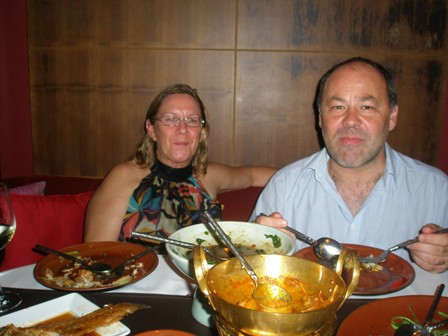
Happy diners

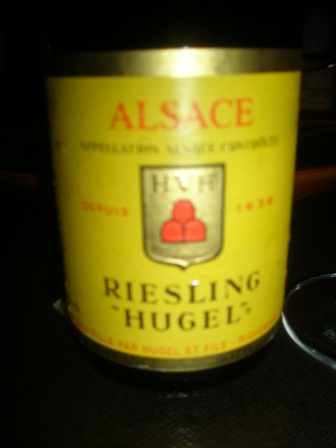
Timo selected the ‘2007 “Hugel” Riesling’ the classic wine from Hugel & Fils from Alsace. Jean Hugel, the senior vintner and wine-maker of this pioneer family of wine-making in Alsace was a legend and had passed away only in June this year.

I had never tasted their wines before and was very excited about the choice. Hugel and Fils maintain not only a very informative website but also an entertaining blog. I had visited Riquewihr, the picturesque Alsatian village where the winery is located many years ago (actually decades ago).

As a high-school student I had visited Alsace and its villages with my school and tasted my first Gewuerztraminer ever. A couple of years later I had seen a play at my “alma mater”: the Bonn University music and arts festival telling the story of the Alsace in three languages. After that my fascination with Alsace was complete. I had the chance to visit several times but mainly the north of the region. Our favorite destination was a restaurant, Au Cheval Blanc near Wissembourg but this is another story.

Hugel1

The ‘2007 Hugel Riesling’

The ‘2007 “Hugel” Riesling’ is a very fine wine, young and vibrant. 2007 was a good vintage because the grapes had the opportunity to ripen for the longest time ever and therefore the grapes were very healthy. As a consequence the wines show great elegance and balance. The wine is fruity with mineral notes, a typical Alsatian Riesling with the characteristic petrol note. I love Riesling with Thai food.

Hugel3

After we “demolished” the food

Our evening was great fun. The culinary delights of Thailand are just “breathtaking” for the palate. I can only highly recommend the restaurant. I love the atmosphere and the professional and friendly service.

We talked a lot about Timo’s German visit, his impressions, the adventures and, of course, wine. But when friends from afar visit, time flies. That’s how it was. Hours shrink to seconds and in a blimp of the eye it’s gone.

Address:
Patara Fine Thai Cuisine
375 Soi Thonglor 19 Sukhumvit 55, Klongtonnua Vadhana, Bangkok 10110
Tel. +66-2185 2960-1 Fax. +66-2185 2962
www.patarathailand.com


Climate change and grape varieties

November 2, 2009

RieslingSchoden

Riesling grapes in Schoden, Saar, shortly before vintage 2009

Uff, I am reading in todays “Your Daily Wine News” newsletter that some of Australia’s top wine experts think that over the next 20 years climate change will be responsible for the decline of Shiraz and Chardonnay and the rise of varieties such as Vermentino, Arneis, Nebbiolo, Pinot Grigio and Viognier (some call them “alternative varieties”).

This is bad news for me and my own small vineyard. At Two Hills Vineyard we have concentrated on some of the traditional French varieties: Sauvignon Blanc, Pinot Noir, Merlot and Chardonnay (first vintage in 2011 or 2012). Our fruit ripens usually well (if we do not suffer severe frosts) and shows a superior quality. But will that persist under the conditions of climate change?

I still remember vividly how I pulled out the 2 1/2 acres of Cabernet. it was hard work, wrapping a chain around every single vine and lifting the hydraulic of the tractor. I should have left them in, I guess. If temperatures rise in Glenburn, the drought persits, and/or we’ll have less percipitation in the future, Cabernet could have been the ideal variety for our spot. I ripped the vines out because the grapes would not fully ripen. At the moment we have sufficient water, our two dams are overflowing after years of drought but that might change quickly again.

Another issue is age, my age. At 55 I might still have a chance to enjoy some of the coming Chardonnay vintages but replanting would “cost” me many years of waiting. I could contemplate to plant on our second hill where we still have another 5-6 acres of space. Well, let us see what is going to come.

At least there is no politician who tells me what to do and chances are small that an elector such as Clemens Wenzeslaus of Saxonia, who changed the Mosel by instructing vintners to ripp out their red varieties and replant with Riesling, would appear on the Australian scene. However, danger is looming from the anti-alcohol lobby in Canberra which is working day and night to convince law-makers that the purchase of alcoholic beaverages needs to be made more costly for the consumer and profitable for the taxmen.


A pesto pasta with Alsatian Riesling

October 25, 2009

My homecoming was celebrated with a dinner featuring one of my favorite pasta dishes: a pasta al pesto. But it did not stop there. The basilico for the pesto sauce was grown on our terrace. Freshly harvested the leaves were processed with pine nuts and the best olive oil we could get hold of in Bangkok. The pictures below shows the different stages of the pesto-making process.

Basilico1

Basilico leaves

Basilico2

Healthy leaves of home grown Basilico

Basilico3

Pesto in the making

Basilico4

The fresh pesto sauce

I tell you this pasta was worth killing for. What ‘profumo’, goodness me, it filled our kitchen, the living room and transcended to the terrace where it filled my nostrils long before the dish arrived. We treasured every bite.

If you think that in the 1760s French cultural supremacy was so dominant that Italian cooking was considered totally inferior even by Italians. Local cooking had to have the coda, “”perfected in Paris” to be taken seriously. Today, every second top restaurant in Bangkok and indeed in all cosmopolitan world cities is Italian. That’s just amazing!

Basilico5

Linguine with pesto

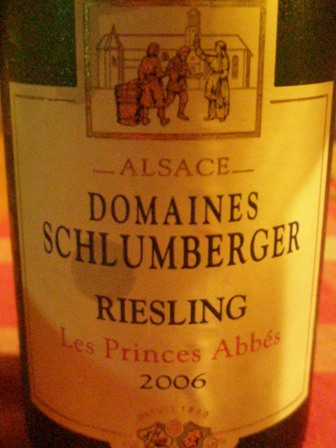
We celebrated the reunion with a French Riesling from Alsace, a ‘2006 Les Princes Abbes, Domaines Schlumberger, Riesling’. The price was a bit on the high end for us. TBH 1,600, about 32 Euro (or US $ 48), from our local super market is quite some money. That it sells for about US $ 20 in California somehow consoled me. We thought that life is just too short to waste it with drinking cheap wine and the occasion warranted something special, and special this Alsatian Riesling was.

Schlumberger1

This wine is just a wonderful specimen of Alsatian Riesling and it went very well with the pesto pasta. The fresh and fruity wine with aromas of citrus, lime and lemon and some floral notes, opened our taste buds wide. The wine has character and shows its typical Alsatian traits with some refined and not overpowering petrol notes. Alcohol is 12%, and just right. The finish is pleasantly vibrant but not overly long.

Schlumberger2


2008 Loch Riesling

October 10, 2009

Loch0

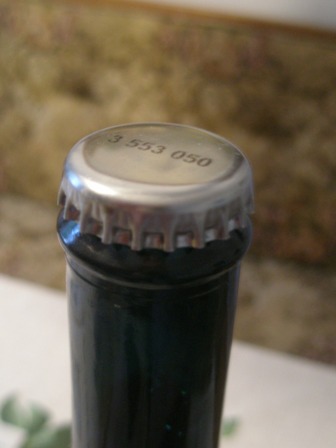
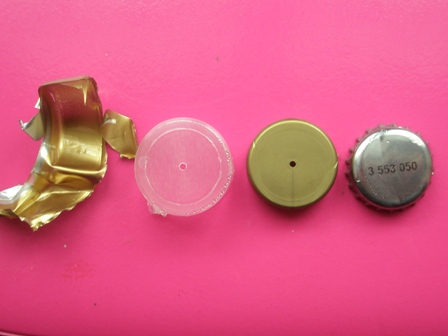
When I opened the first bottle produced by Weinhof Herrenberg, a ‘2008 Loch Riesling’, a was quite surprised when I found a it to be closed with a metal cap.

Loch00

This was the first time in my life that I was confronted with such a kind of enclosure. In the process of getting to the wine unwrapping some of the plastic, I first thought it would be a glass stopper. But then I discovered the metal cap. Whow, all my traditional gear, my corkscrews, were useless and could be pushed aside and I searched for a beer bottle opener.

Loch000

The above picture shows all the elements of the metal cap including the plastic covering it.

The Loch Riesling is a clean wine typical for the Saar. Aromas of tropical fruit, fully ripened, were displayed. The wine was fresh, a little spicy, with good structure and a medium finish. I had it without food, just like that, on a beautiful autumn afternoon. The golden colour of the wine reflecting the golden autumn sun. I recommend you try it.

Address:
Claudia and Manfred Loch
Weinhof Herrenberg
D-54441 Schoden/Saar
Tel.: +49-6581-1258
Fax: +49-6581-995438
info@lochriesling.de
www.lochriesling.de


Weinhof Herrenberg – Loch Riesling, Schoden, Saar

October 8, 2009

My friend Heinz was kind enough to help me out. He dropped by the Weinhof Herrenberg in Schoden, Saar, on his way back from the hunt and bought three bottles of Loch Riesling. I had planned to visit the Loch family winery for some time but never managed to get there. There was always something else when visiting Trier, my hometown nearby, a birthday, a visit, a train to catch etc.

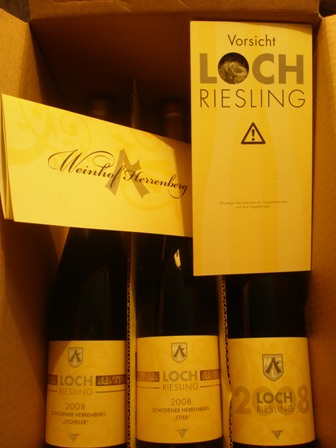
Heinz brought back the box shown below and three different Loch Riesling wines, all of the 2008 vintage. Regular visitors of my blog know that I am a Riesling lover, especially if they were grown along the Saar, my favorite provenance of German Riesling wines.

LochRiesling2

The treasures from Weinhof Herrenberg and the two brochures

The three wines were a ‘2008 LochRiesling’ (8.90 Euro/bottle), a blend of Riesling grapes from various vineyards, a ‘2008 Schodener Herrenberg “Stier”‘ (12.90) and a ‘2008 Schodener Herrenberg “Stoveler”‘ (13.90), both wines from my favorite ‘terroir’, a very steep vineyard called “Herrenberg” bordering a forest and enticing large groups of wild pigs and deer to visit and taste the sweet grapes during vintage time. I had walked the vineyard and heard about the Loch wines but never tried a single drop. It was high time to change that.

LochRiesling3

2008 Loch Riesling wines from Schoden, Saar

I also love the brochure with the “whole” (the “Loch” in German) explaining the philosophy of Claudia and Manfred Loch, the proprietors and vintners of the boutique winery “Weinhof Herrenberg”, which is the basis for their wine-making. In short, the Loch’s aim for authenticity, uniqueness, they reject designer wines but quest for a unique character and truthfulness.

The brochure is a very unusual one, telling people why to keep their hands off LochRiesling wines and what the weaknesses of the wines are: for instance that their wines are unknown, consumer hostile, old fashioned, egoistic, lawless, dangerous and limited (in numbers of bottles!). I like this brochure.

LochRiesling5

The “Loch” brochure with a whole in it

The wine list also includes wines from locations in Ockfen and Wiltingen, two famous Saar wine villages. The “Beerenauslese” wines are not available any longer. The Loch’s also produce a dry, sparkling wine. All wines are reasonably priced.

LochRiesling4

The current wine list

You might wonder what they taste like? Well, I will tell you more about this at a later blog entry. But if you are near Schoden or in the vicinity of the Saar, please visit the Loch family vineyard at Weinhof Herrenberg. If you cannot visit in person, visit the website which is very informative.

Address:
Claudia and Manfred Loch
Weinhof Herrenberg
D-54441 Schoden/Saar
Tel.: +49-6581-1258
Fax: +49-6581-995438
info@lochriesling.de
www.lochriesling.de


Vintage time: Schodener Herrenberg

October 6, 2009

Schoden1

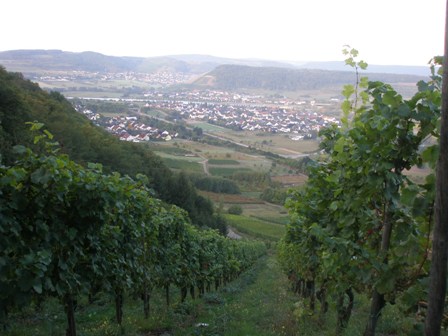
Schodener Herrenberg, in the background the village of Schioden with the Saar

One of my favourite places along the Saar river is Schoden, a small hamlet about 30 minutes southwest of Trier, my hometown. I visit regularly, because my friend Heinz together with some friends has rented the local hunting territory and when I visit Trier, we often go together on the hunt.

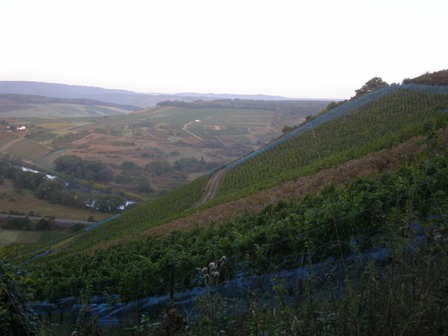
Schoden has also some vineyards and wineries. The location (terroir) “Herrenberg” is one of them. The vineyards are quite steep, which is difficult to depict in a photograph as you can see from the comparison of the two pictures above and below. It is realy a steep site, and the best location for producing Saar Riesling wines of superior quality.

Schoden2

Schodener Herrenberg: vineyards from the South

Schoden3

Schodener Herrenberg: the vineyards from below

Schoden4

A promising vintage?

Schoden5

Beautiful Riesling fruit

The fruit on the vines looked very healthy. In a couple of days or weeks, depending on the weather, the pickers will come to harvest. Needless to say that no machinery can be used, all the work will be done by hand. The vineyards workers will have to navigate the steep hills and balance on the slate pebbels which can be tricky when they are wet.

Needless to say that Schodener Herrenberg produces outstanding Riesling wines. Learn more about these Saar wines on my blog soon. Cheers


Also the foxes like sweet grapes

October 4, 2009

Fuchs00

Ripe Riesling grapes, Herrenberg in Schoden/Saar

Right now it is vintage time in Germany and along the Mosel and the Saar one can admire ripening grapes. What a beautiful picture.

The weather was warm and dry when I accompanied my friend Heinz on a morning hunt in Schoden, Saar. We sat on a raised hide from about 5:30 until 8 in the morning. We watched two red deer does with their young ones making their way through the meadow. Later we went through the hunting territory and checked out a couple of places.

Fuchs1

I found the above turd of a red fox. Obviously the beast loves what humans love: the juicy fresh and sweet grapes. Also other wild animals love to nibble from the vines, especially red deer and wild pigs. They can be a quite a nuisance.

Autumn is just such a beautiful time in Germany. I will share more with you soon. Watch my blog entries.