“Ze Lawen – Zur Lauben – At the arbour” – Trier at its best

April 18, 2008

In the dialect of Trier “Ze Lawen” translates into high German as “Zu den Lauben” which can be transcribed into “At the arbour” in English.

What is it, you might ask.

Well, it is a part of the city of Trier. In the 18th century it was a small fishing village at the outskirts of the city just beyond the ancient city walls. Later it was transformed into garden arbours used by city folk to spend their Sundays where they relaxed in the shade of their small garden houses.

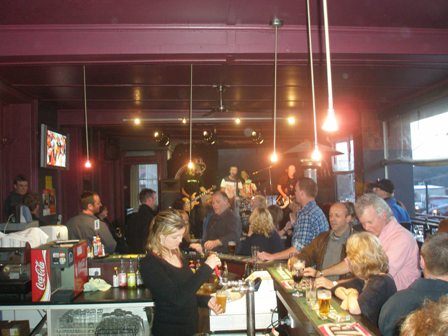
Today, “Ze Lawen”, located directly north of the Kaiser-Wilhelm bridge, consists of a small stretch of beautiful historic buildings along a very picturesque strip of the Mosel river. Over the years many of the fishermen’s houses were turned into small country inns, eateries, bars and restaurants with a great variety of local foods and drinks on offer. Actually if you look for a culinary delight in Trier you have to visit this part of the city. Needless to say that you can enjoy all the many famous Riesling wines produced along the Mosel and the surroundings valleys of Saar and Ruwer.

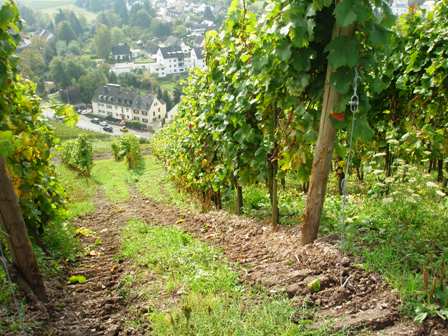
I will take you on a quick walk around this part of town (only a 200 meters stretch). Below, thats what it may look like in summer, in the background the Mosel and the red sandstone cliffs.

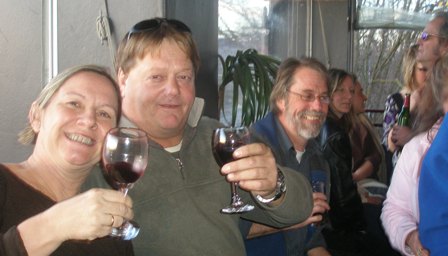
With friends eating out in “Ze Lawen”

During my recent visit to Trier I took some more photos. One can, for instance, find some stone mason work depicting scenes from Roman times, usually the delivery of rental payments as below.

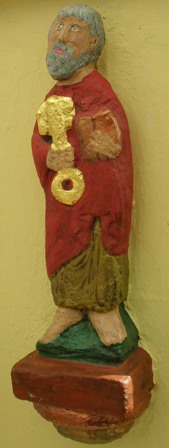
The patron saint of Trier is St. Peter. He is usually depicted holding the city keys and the bible as below.
Now we enter from the north. The first “Wirtshaus” cum restaurant is the “Schwarzbierhaus” to the left. Further on is another well known restaurant: “Pfeffermuehle”.

Other must visit places are “En de Lauben”, “Alt Zalawen”, “Mosellied” and “Bagatelle” (bistro/cafe), a restaurant where we had the most amazing food and wine degustation last year (a summary you will find in this blog).

The entry to the “Schwarzbierhaus”

The old lintels of the door frames shown belwo, usually also in stone, demonstrate that it was fishermen who once lived in these old houses. The most popular motives are fish or gear from fishing boats.

I hope this enticed you to put the city on you map. See you again in “Ze Lawen” one of these days. Its always worth a visit.


Being Irish for a day

March 17, 2008

I love the Irish and of course Ireland.

webstpats08.jpg

When Noreen Seward, the president of the St. Patrick Society in Jakarta (www.stpatricksjakarta.org), opened the annual St. Pat’s Ball last Saturday and invited the odd 500 invitees to all be Irish for the event, Margit and I joined in wholeheartedly, as always, I might add.

What a night this was. The food at the Jakarta Ritz-Carlton Hotel was extraordinarily good. It consisted of the following dishes:

– Donegal Tuna Tartar with Fried Capers, Sticky Rice and Avocado Coulis
– Orange Campari Sorbet
– Duet of Irish Tenderloin with Mustard Seed Crust and Stuffed Chicken Breast ‘Pratai Calisle’ and Root Vegetables
– Apple tart with Vanilla Custard
– Coffee, Tea or Irish Coffee
– Petit Fours

The wines, a white and a red, were provided by Vin + Wine Boutique and were solid French wines from Bordeaux. After midnight a potato and leek soup was provided.

The entertainment was Irish dances and later an Indonesian pop band played contemporary tunes and brought everybody in the room to their toes.

Six well distinguished Irish dancers of a group called ‘Celtic Rythm’ performed spectacular Irish dancing. They came all the way from Dublin (thanks to the support of Etihad Airways, the National Airline of the United Arab Emirates). The four women (Linda Masterson, Louise Corrigan, Anne Collins and Laura Harrington) and two men (Christopher Mckenna and Kevin Curran) did a great job in enthusing the crowd.

Moreover, two groups of young dancers, all trained by Alison Forrow, also showed their skills. It was lovely to see those 8-9 year olds dance the traditional dances. They were so serious and diligent. What a delight.

We made it home in the wee hours of Sunday morning, enchanted, exhausted but utterly happy. Cheers to St. Patrick.


Shakespeare in the Vines – Sevenhill Cellars

February 22, 2008

Ever since my friend Neville Rowe became general manager of Sevenhill Cellars in the Clare Valley I have followed this interesting enterprise though the internet.

The Clare Valley is one of Australia’s oldest and most famous wine regions, about 120 km north of Adelaide, South Australia. Sevenhill Cellars is located south of the small country town of Clare which gave the valley its name (along the B 82).

The vineyards and the cellar are owned by the Jesuits (Society of Jesus) (www.sevenhillcellars.com.au) who migrated to Australia (from Austria) in 1848 so seek a more peaceful life. In 1851 they established Sevenhill Cellars. It is the oldest winery in the Clare Valley and the largest producer of sacramental wine in Australia. Watch out for the ‘St. Aloysius Riesling 2005’ , their flagship wine (ranked 34th in the “Top 100 Rieslings” of the 2005 Sydney Royal Wine Show) but also try some of their fortified wines – Liqueur Tokay, Verdelho and Frontignac or the ‘Jesuit Fine Old Tawny’. Hope this is enticing enough for Riesling lovers to check it out.

Originally the place was called “Open ranges” but the Jesuit settlers called it “Sevenhill” reminiscent of the seven hills of Rome. The intention was to make the place a centre of Catholicism in this part of Australia and to produce sacramental wines. Today, they also produce table wines for the laicist consumers.

shakeaspeare1.jpg

Every year a Shakespeare play is put on at Sevenhill, called “Shakespeare in the Vines”. If you are around today, you are lucky because the romantic comedy “Twelfth Night” is shown on Friday 22 and Saturday 23, February. The ticket costs 35 A$ only. I am sure you will have a stunning night and the opportunity to choose from a variety of excellent wines.

The play is divided into five acts. It is actually quite complicated for me to give you a short account. I would like to refer you to http://absoluteshakespeare.com where you can read details about the story line and the characters.

I only want to mention that one of the most beautiful songs Shakespeare ever wrote can be found in this play. It goes as follows:

Come away, come away, death,
And in sad cypress let me be laid;
Fly away, fly away, breath;
I am slain by a fair cruel maid.
My shroud of white, stuck all with yew,
O prepare it;
My part of death no one so true
Did share it.
Not a flower, not a flower sweet,
On my black coffin let there be strown;
Not a friend, not a friend greet
My poor corpse, where my bones shall be thrown:
A thousand thousand sighs to save,
Lay me, O, where
Sad true lover never find my grave,
To weep there!”

Thumbs up for Sevenhill Cellars

neville2.jpg

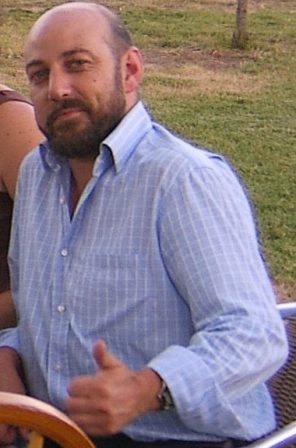
Neville Rowe, general manager, Sevenhill Cellars

Address:
Sevenhill Cellars
Box 13 Sevenhill SA 5453
Ph.: (08) 8843 4222
e-mail: info@sevenhillcellars.com.au


Hail to the Poet of the Scots

February 8, 2008

Another year has passed and again we celebrated the life and the work of the great Scots poet. Last Saturday about 100 Scots and their friends got together for a memorable Robert Burns supper. As always its great to celebrate with my fellow Celts though I hardly understand their language. Our Chieftain, Mrs Alexandra Faulds, presided over the ceremony when she gave the address to the haggis.

haggis.jpg

The Haggis, neeps and tatties

The Supper

“Ye Pow’rs wha mak mankind your care,
and dish them out their bill o’fare,
auld Scotland wants nae skinkink ware,
that jaups in luggies: but, if ye wish gratefu’ prayer,
gie her a haggies!”

Thats what Robert Burns wrote.

I do not want to repeat the whole program here, please allow me to draw attention to some selected highlight. As last year, Christ Tait had come as a Robert Burns impersonator and he did a great job. The highlight for me was Julie Mobbs and her presentation of songs of Burns. She has a great voice and sang like an angel. Even for non-Scots the address to a toothache though difficult to understand, was a further delight. Pipe music was provided by the Edinburgh Chevaliers. Interesting speeches entertained the crowd.

robert.jpg

Chris Tait as Robert Burns

We drank wine from Argentina and whiskey from Scotland (which made me forget what wine we drank). I would like to end with another quote from Robert Burns:

“Whatever mitigates the woes, or increases the
happiness of others, this is my criterion of goodness;
and whatever injures society at large, or an individual in it,
this is my measure of iniquity.”

Hail the great Poet of the Scots and to another successful, prosperous and happy year.

Congratulations to the Java St Andrew Society, its chieftain and its members for organizing this wonderful evening.

Postscript: When we get home after a Robert Burns Supper, we usually put on the music of Eddie Reader who “Sings the songs of Robert Burns” which is a great collection of marvelous music. I can only recommend it.


The other Trier

December 9, 2007

ohneb.jpg

Its hard to believe but its true as well, my otherwsie beautiful hometown Trier has some rather ugly parts as well which I do not want to hide from you. Through my many walks through town I detected some of these eyesores and thanks to digital cameras one can document progress (or the lack of it) as well.

First of all it seems to me that the ‘fathers of the city’, as the council members are usually called, and/or the administration in general do not possess an eye for green, particularly trees. Though I must admit that recently the administration of the new major has started to plant at last some allee trees along some of the wide roads entering the city. But in the centre of town, where my mother lives and where I grew up, trees have become less and less in numbers.

Especially along the roads surrounding the pedestrian zone it seems that everything has been done to accomodate the traffic and the many cars. This means trees have been felled where they were ‘in the way, dangerous or a nuisance’ to car drivers. Consequently many of these roads are bare of any natural shade. When its windy, these streets turn into wind channels and for pedestrians it is very unpleasant to walk these city streets.

ohnebaum.jpg

The above two photos are from the newly refurbished square near the Archbishops Museum. The square looks bare and empty. The few trees planted will of course grow and occupy more space. But this minimalist type of greening is not what I think would be appropriate.

Other cities I lived in, for instance Bonn, the town of my alma mater, is much more progressive when it comes to greening the city. There is hardly any street without shade trees. Old trees are regularly replanted and pruned. Poeple there seem not to be scared by the many leaves the trees drop in autumn.

One of the really bad eyesores of Trier is a place very close to my home where I grew up at Irminenfreihof 5 in Britannia. It is the St. Paul’s Square in front of St. Paul’s church were we used to attend mass and met our mates afterwards.

paulusplatz.jpg

St. Paul’s Square (the church is to the right, to the left are the various vocational schools)

The square is neither used as a parking lot nor for anything else. The trees which once stood there have been cut down but not replaced. We can safely assume that there is a plan in place for the future beautification of the square. Most likely the money is not there yet to put this plan into practice.

I find the state of affairs of this square very sad. I also believe that not much funds would be needed to get it into shape if modesty would prevail. I would love the city administration to do something useful with the place, maybe establish a small park where the students of the nearby vocational schools could hang out after classes?


Trier: “You’re so beautiful”

November 29, 2007

With some imagination (and abstractions and maybe omissions) James Blunts song could be easily interpreted as a hymn to a town. Of course I then think of my hometown Trier.

p9020034w.jpg

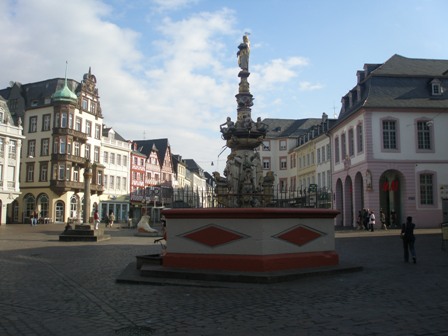
St. Peter Fountain

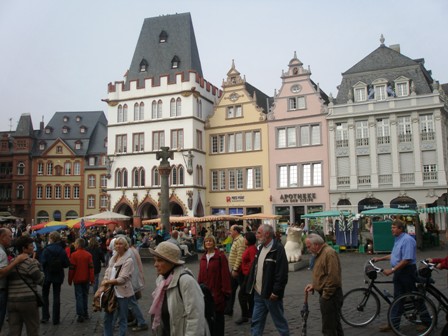
I enjoyed the time I could spend in its confines during my two month stay in Germany tremendously and I tried to be there as often as possible. “Augusta Treverorum”, a more than 2,000 year old jewel of the wine cities in Europe, is increasingly attractive to me, the older I get. The main market square (Hauptmarkt) is what I would like to introduce to you today. Its a splendid location. Some call it one of Germany’s most beautiful town squares. It is located at the centre of the city only a few blocks south from the Porta Nigra on Simeonstrasse, the pedestrian shopping street. The city received the market rights in 958 AD from Archbishop Heinrich I and a market cross on a granite pedestal from Roman times was erected to this effect. In about 3 m height an inscription says “Henricus archiepiscopus Treverensis me erexit”, which loosely translates as something like ‘Archbishop Heinrich erected me’.

Another jewel on the square is the St Peter Market Fountain. It was created in the 1595 and shows St. Peter with the key of the city on top and it incorporates statues that symbolize justice, fortitude, temperance, and prudence. The surrounding houses date from different architectural periods among them renaissance, baroque, classicism and late historicism. The old main police station and the former Domhotel are built in a neo-renaissance style. The gate to the market church St. Gangolf shows baroque features.
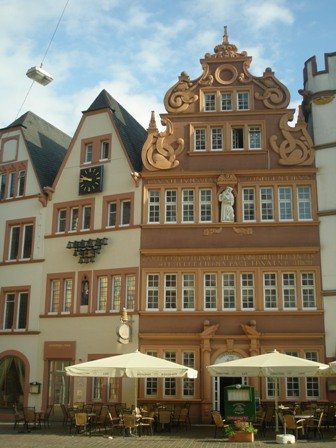
Another architectural marvel is the old citizens house, called ‘Steipe’ dating back to 1430 and the ‘Red House’.

pa020062w.jpg

Main market square (Hauptmarkt) with market cross and ‘Steipe’ building and droves of tourists

Frequently, I visit the many wine bars and country inns. But I also take long strolls to look around town. My curiosity is endless. Moreover, I also admit to following to a certain extent the traits of my childhood and youth. Then all kinds of things come to mind, sounds, smells, faces, moves, music, short encounters, and many more. Human memory is such a fickle thing but stimulated in the right way it sometimes yields interesting results.

p9020033w.jpg

Replica of the buildings of the ‘Steipe’/’Red House’ ensemble in Trier

Hope to see you soon in Trier.


Nantosuelta! – Who’s that?

November 21, 2007

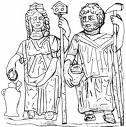
You might have seen my blog entry about the Celtic god of the vintners, Sucellus. Guess what? He’s got a ‘wife’ or should I better say, a companion? A consort seems to be the right word.

I do not know how gods treat their wifes/consorts and how it all works out but according to Gaulish religion, Nantosuelta is the goddess of nature, earth, fire and fertility.

She is usually depicted with holding a pole with a model of a house to indicate a domestic function (sometimes a bee hive). Also in Lusitanian mythology she is the goddess of nature.

Her symbol is the raven which links her to the dead and the underworld. Often she is depicted holding a ‘cornucopia’, a hollow, horn shaped wicker basket (also called ‘horn of plenty’ or ‘horn of Amalthea’) and a symbol of food and abundance. The ‘cornucopia’ is often associated with the harvest season and, suprise surprise, with Thanksgiving.

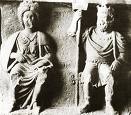
A couple of reliefs and statues have been found near Metz/France and in Alsace. They usually show her with Sucellus. Whereas there are many images of Sucellus found on the internet, there are only very few available for Natosuelta.

180px-nantosuelta-sucellus.jpg

Nantosuelta and Sucellus (source: wikipedia)

imagesnands.jpg

Nantosuelta and Sucellus (Source: http://www.cetnet.org.uk)

imagesnus.jpg

Nantosuelta and Sucellus (Source: http://www.crdp-strasbourg.fr)

concerto-1-nantosuelta.jpg

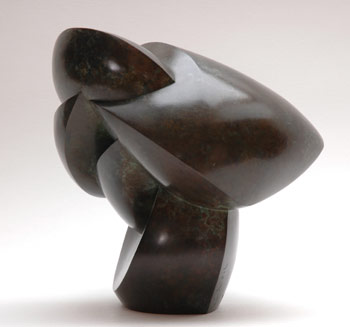
This is the ‘modern’ Nantosuelta in bronze.

Source: “Nantosuelta”, bronze H 40 cm by Claudine Leroy-Weil (born 1950 at Neuilly-sur-Seine), at http://www.galeriedessablons.com


Wine and vineyards in Trier-Olewig

November 19, 2007

pa020110w.jpg

The wine village of Olewig near the city centre of Trier

Olewig is one of four villages within the city boundaries of Trier were vines are grown till today (the others are St. Matthias-Feyen, Krüenz and Pallien) since Roman times. Vines, wine production and wine trade were basic features of city life, its culture and its economy. Many famous poets eulegized the beauty of the town (among them Goethe of course). In the drinking song of Carmina Burana of the 13th century one verse praises the city of Trier and its comforts, the dedication of its citizens to “the vines and the wines” and the culture of enjoying the fruits of the vintners labour.

One of my many walks around the town brought me to Olewig, a village nestled between two steep hills in the South-East of the town. Early in the morning I sat out from the banks of the Mosel river, from my parental home in “Britannia” (Britannien), as our neighbourhood is called. Its the area where the old city harbour had been, roughly between the two cranes to unload barges moored on the river.

pa020090w.jpg

The view of the city from Petrisberg (left: Roman Basilica, Cathedral, and in the background the red sandstone cliffs)

I climbed the gentle slopes of the Petrisberg and turned South where the wine appreciation path (Weinlehrpfad) starts. This walk leads the wine interested rambler along ruins of Roman tombs through vine gardens and vineyards to the village of Olewig. I did not enter the village but instead walked in a long circle through the vineyards and returned to the Petrisberg where one has a wonderful view of the old city. It was vintage time and crews of grape pickers were busy harvesting.

pa020083w.jpg

The start of the path/walk: Between Sucellus (left) and Bacchus (right), the Celtic and Roman gods of wine respectively

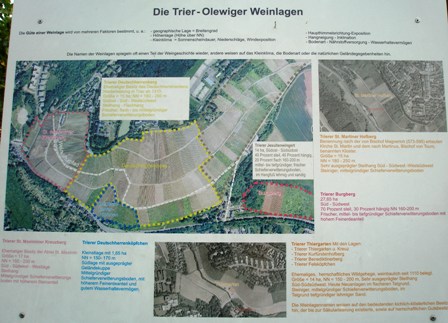
The poster says that the wine appreciation path is about 1500 m long. It leads through the open fields of the Trier wine district and ends in Olewig. Along the way large posters are displayed educating and informing the wanderer of the various historical, cultural and technical aspects related to the vineyards and the production of grapes. One of the signs gives the total area under vines as 373 ha. The number of full-time vintners is about 100 family farms. Main grapes grown are Riesling (86 %), Rivaner (8 %), Pinot Blanc (4 %) and Pinot Noir (2 %).

pa020088w.jpg

The map of the Olewig “Terroir”

The main locations of Trier-Olewig are

– St. Maximiner Kreuzberg
– Deutschherrenberg
– Deutschherrenköpfchen
– Burgberg
– Jesuitenwingert
– Thiergarten unterm Kreuz
– Thiergarten Felsenkoepfchen
– Benediktinerberg
– Kurfürstenhofberg
– St. Martiner Hofberg

pa020102w.jpg

The slopes are steep, only caterpillar tractors are able to scale them (in the background Olewig)


Country Australia – Music for old folks

November 10, 2007

While in Australia in July this year, we went to a couple of live music events in country pubs, which was great fun. We listened to various singers and bands while downing a glass of beer and/or wine. The quality of the music was usually excellent. In the Toolangi Tavern for instance, we were very surprised when on a Wednesday we went for dinner and were netertained by a jazz band. I also loved to listen to the young singers in the St. Andrews pub after the closure of the St. Andrews market, but equally enjoyed the seasoned band named “The Heartstarters” playing on a Sunday afternoon on the balcony of the Grand Hotel in Healesville. Here the grandchildren of the band members danced enthusiatically as did the many old folks present. It’s also a great diversion for working people who have sufficient time to get ready for their Monday jobs, since this is an afternoon affair. I can only recommend these kind of events, especially since nowadays many pubs carry an excellent selection of local Australian wines.

p8080059web.jpg

The jazz band at the Toolangi Tavern

p8040052web.jpg

Life music at the St. Andrews pub

p7220171w.jpg

The ‘Heartstarters’ at the terrace of the Grand Hotel

p7220170web.jpg

Legends in their own lifetime: Margit Adam, Brett Travis, Michael Meinhold enjoying the music at The Grand Hotel in Healesville


Dining with River View

October 9, 2007

It was a Friday evening and I wanted to do something special. Therefore I went to have dinner at the “Station Rolandseck”, a converted train station now housing an art museum and gallery and of course a restaurant. Behind the historic building is a new gallery, the Hans Arp Museum (www.arpmuseum.org), which was recently completed and opened by the German Chancellor, Angela Merkel, on 28th of September.

Hans or Jean Arp was a French-German painter, sculptor and poet (16.09.1886-07.06.1966). He was a co-founder of Dadaism, but was also involved in the surrealist school of art and with a group called ‘abstraction creation’. Arp led a very interesting life and his works are breathtaking. If you are interested please visit the various webpages with reviews of his works. It’s a worthwhile undertaking.

d1000052roland22.JPG

The Hans Arp Museum (right) and Rolandseck Station (left) seen from the ferry

I sat outside on the large balcony of the restaurant with a splendid river view enjoying the autumn sunset. I ordered a delicious mushroom pasta and drank another delicious wine from the Ahr, a 2005 Heimersheim Pinot Noir from the Nelles winery (www.weinhaus-nelles.de). Drinking good wine and smoking a wonderful cigar I sat contemplating the river, the surroundings and its history. If the river could talk we would hear the most magnificent stories, sad as well cheerful ones of ancient times , peopled with quite exotic figures.

I imagined that I sat in this place about 2000 years ago as a Roman centurio looking at the riverbank opposite of Rolandseck where the barbarian Germans would wait and plan to cross the river and besiege our fortifications. I would have certainly drunk something “winy” maybe sweetened with honey or mead.

Travelling forward in time to 200 years ago, I would now have come back as a French soldier, maybe an officer, in the army of Napoleon Bonaparte. I would have found that the wine quality had improved considerably. As a good French nationalist I might have had problems praising the German wine. I would look to the opposite side of the Rhine river, disgusted at the prospects of meeting fierce resistance from German troups who would try to prevent the French and their allies from crossing and moving East.

I also had to confront the prospects of crossing the river later that evening. Now it is the year 2007 and instead of being on horseback I can cross by ferry. This time it is in peaceful circumstances; I just want to reach my lodgings in Bad Honnef to get ready for another day of learning.

d1000254roland1.JPG

The view from the terrace over Rhine and Seven Rock mountains