The Gourmet Garage – Jakarta

February 12, 2008

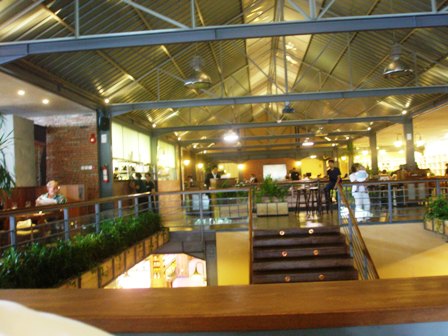
For a change we decided to have lunch at the Gourmet Garage in Kemang, a suburb about 20 minutes from our home in Lebak Bulus. Gourmet Garage is a large barn (or garage) full of different gourmet foods, an oyster bar, a wine cellar, a bakery, a supermarket and various food court type outlets where you can sit down and order food from three menus. It has Japanese, Italian and “continental” types of cuisine. One could call it a successful merger of an Asian food court with a modern Western gourmet supermarket.

gg2.jpg

Inside the Garage, second floor

The Gourmet garage has become a favourite dining location for many in South Jakarta and although we have known about it for a while, we’ve never had lunch there. This Saturday was a perfect day for a visit. Margit did not feel like cooking and the girls came back from a soccer game (they won 5:0) and were hungry like wolves.

We found the parking lot full of cars. Fortunately, the garage is huge and we had no problem finding a table for four upstairs. My women folk went for Japanese food, I chose ‘Aussie Blue’ a hamburger type dish. Margit had a glass of unwooded Chardonnay, I stayed with a draft ‘Bintang’ beer.

gg3.jpg

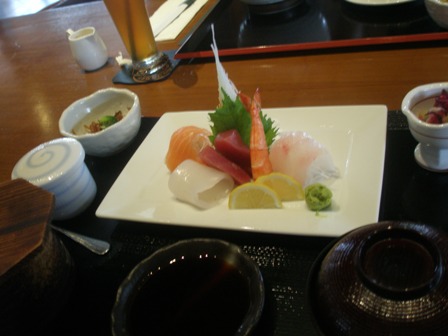
Sashimi set

gg4.jpg

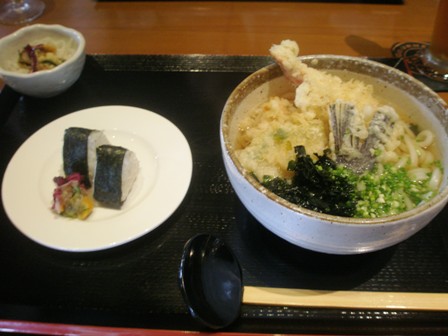
Japanese Tempura and Udon Noodles

gg5.jpg

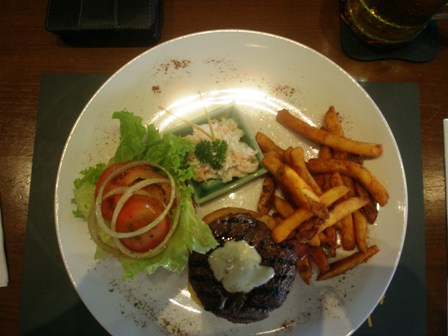
Traditional Burger with Blue Cheese

We gave Gourmet Garage a very good rating. The service was friendly, efficient and fast. The quality of the ingredients was very good, so was the taste of the dishes. We loved the atmosphere and ended our day with a shopping tour in its supermarket.

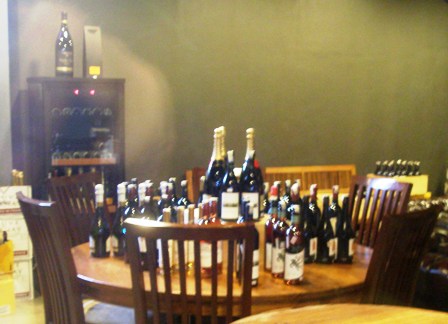
We did not have sufficient time to check out the wine cellar, but it looked promising. The facility seemed to be a work in progress though. As wine drinkers we welcome any new outlet in town giving us more choice when selecting fine wines.

gg7.jpg

The wine cellar in the making

Address:
The Gourmet Garage
Jalan Kemang Raya, No. 66
Jakarta, Indonesia
Ph: +62-21-7197161

Postscript: From the internet I learned that there is also a Gourmet Garage in New York City.


Grape Grazing in the Yarra Valley

February 10, 2008

Yesterday marked the start of the 21st Yarra Valley Grape Grazing Festival. Until 18th February various festival events are going to take place in different locations around the Yarra Valley.

For program details please visit www.grapegrazing.com.au.

Today for instance a Tempranillo and Tapas event is being organised at Sutherland Estate (www.sutherlandestate.com.au). I wrote about this vineyard before, beautifully located. You should taste their Tempranillo wine (released only recently) but also their other reds (Shiraz). On a hot day, the whites and the rose make the right drink.

sutherland.jpg

Spectacular views from Sutherland cellar door

If you are in for live Motown music you have to go to Yering Farm (www.yeringfarmwines.com). Alan Johns and his crew will serve you their hand-crafted and award-winning wines. Try the premium Yering Farm Wines series, especially the award winning 2003 Chardonnay.

yeringfarm.jpg

Charming rustic cellar door at Yering Farm

Today you can participate in a picnic for the palate (On the Palate Summer Festival) at Healesville Racecourse where about 15 wineries show their finest wines and were you can enjoy regional food (www.onthepalate.com.au). The lawns of the local country race track are a fabulous spot for a picnic under old oak trees. You can meet the wine makers there and the chefs of some of the best local restaurants will offer you their food.

If you are in the vicinity check it out. If you plan to visit Victoria in the near and not so near future make it your destination.


Trivento – Wine from Argentina

February 9, 2008

You might remember that the other day in Kuala Lumpur I could not taste the wine on the menu, a ‘2005 Trivento Golden Reserve Malbec’ of the Maredo Restaurant because it was sold out.

Guess what? I found the brand in Vin +, a small wine shop in Kemang, Jakarta. I bought one bottle only to try it out.

trivento-malbec.jpg

The Trivento 2005 Golden Reserve Malbec

You might wonder about the results?

Today I went again and bought a whole case of it. It is a most delicious wine and retails for about 235,000 Indonesian Rupiah which is equivalent to about 17 € or 28 A$.

It is a deep, red, ruby wine with a wonderful nose displaying aromas of mint, cherries and chocolate. The wine was matured in new French oak for a year and was aged for another year in the bottle before its release. Its a pity that Malbec has this short, dry finish but the aromas compensate you for that. However, for non-Malbec lovers there are Syrah and Cabernet Sauvignon wines on offer as well.

Moreover, I also bought from the Trivento product range a ‘2006 Reserve Chardonnay’, a ‘2006 Tribu Torrontes’ and a ‘2005 Reserve Malbec’. More about these wines later.

Trivento Bodegas Y Vinedos (www.banfivintners.com) was founded in 1996 and is located in Mendoza, Argentina. Most of its vineyards are to be found on high altitude in the best zones of Mendoza (up to 1100 meters above sea level). Trivento Vineyards possess a modern winery with a capaity of about 27 million litres of wine. It has all the modern equipment used nowadays to make wine. The winery is surrounded by about 10 ha of vineyards.

Tomas Larrain holding a degree in agricultural economics from the Catholic University of Chile is the general manager and Federico Galdeano, a native of Mendoza with extensive experience in the Napa Valley/California and Tuscany/Italy, is the wine maker.

By the way I now found out that the rumour – that the Argentineans drink their best wines themselves and export only the rest – is false. They do export some of their good wines!


Hail to the Poet of the Scots

February 8, 2008

Another year has passed and again we celebrated the life and the work of the great Scots poet. Last Saturday about 100 Scots and their friends got together for a memorable Robert Burns supper. As always its great to celebrate with my fellow Celts though I hardly understand their language. Our Chieftain, Mrs Alexandra Faulds, presided over the ceremony when she gave the address to the haggis.

haggis.jpg

The Haggis, neeps and tatties

The Supper

“Ye Pow’rs wha mak mankind your care,
and dish them out their bill o’fare,
auld Scotland wants nae skinkink ware,
that jaups in luggies: but, if ye wish gratefu’ prayer,
gie her a haggies!”

Thats what Robert Burns wrote.

I do not want to repeat the whole program here, please allow me to draw attention to some selected highlight. As last year, Christ Tait had come as a Robert Burns impersonator and he did a great job. The highlight for me was Julie Mobbs and her presentation of songs of Burns. She has a great voice and sang like an angel. Even for non-Scots the address to a toothache though difficult to understand, was a further delight. Pipe music was provided by the Edinburgh Chevaliers. Interesting speeches entertained the crowd.

robert.jpg

Chris Tait as Robert Burns

We drank wine from Argentina and whiskey from Scotland (which made me forget what wine we drank). I would like to end with another quote from Robert Burns:

“Whatever mitigates the woes, or increases the
happiness of others, this is my criterion of goodness;
and whatever injures society at large, or an individual in it,
this is my measure of iniquity.”

Hail the great Poet of the Scots and to another successful, prosperous and happy year.

Congratulations to the Java St Andrew Society, its chieftain and its members for organizing this wonderful evening.

Postscript: When we get home after a Robert Burns Supper, we usually put on the music of Eddie Reader who “Sings the songs of Robert Burns” which is a great collection of marvelous music. I can only recommend it.


8. Wine Rally

February 7, 2008

winerally.jpg

Through my various blogger contacts, in this case it was Swetlana Kittke, who writes about food and wine and resides in Berlin (http://myexperience4u.blogspot.com), I was made aware of an interesting undertaking, called the wine rally.

I watched it from the sidelines for a while and finally decided to participate. In Jakarta I am six hours ahead of the European crowd. Except for morning wine drinkers or people who have an early lunch, I should be the first to open a bottle and enjoy it with a meal. However, as I cannot as easily go to a wine shop as my European colleagues, I decided instead to pay a visit to my own wine cellar and select from there the bottle with the most beautiful label for tonights dinner. Of course I excluded my own label of Two Hills Vineyard though I like it also very much.

But let me explain. The rumor is that the recent shipments of wine to Indonesia faced some kind of legal problems (related to licensing). Customs withheld the containers containing the wine and they were left for too long in the open and got too hot. Therefore, almost all wine that you currently can buy at the open market in Jakarta is off. This drop is not even good for cooking wine thats how bad it is. This is the reason why I restricted myself to existing stocks and went to my own ‘cellar’ only. I hope you can forgive me. I also wanted to write in two languages (English and German) but then time ran out. it is now 5 minutes to midnight and I have to load up the piece.

The theme of the 8th wine rally is “the label”, and is based on the question “is it alright to buy a wine just because we like the beauty of the label”? Of course beauty is in the eyes of the beholder but all of us might have bought wine because we liked the label, or at least the design of the label might have played a bigger part in the selection of the wine than other criteria. Thats how I understood the task.

Ok, so here I start.

I selected a bottle from Rees Miller Estate (www.reesmiller.com) in the Upper Goulburn Wine Region (www.uppergoulburnwine.org.au). It has the most beautiful wine label in my collection. It consists of an almost abstract painting of an Australian landscape as you can find in Central Victoria where the vineyard is located. If I am not mistaken the origin of the painting was explained in an earlier version of Rees Miller website. The original is displayed in their cellar door.

Sylke Rees and David Miller are certified biodynamic, organic grape growers and wine makers. Needless to say, their wines are superb! Their family-owned vineyard is located in the Upper Goulburn Wine Region, about three kilometers east of the charming country town of Yea, Victoria (about 1 1/2/ hours northeast of Melbourne).

reesmillerlabel.jpg

reesmillerbottle2.jpg

Rees Miller ‘2004 Cotton’s Pinch Merlot’

We had in fact two bottles with our dinner and made this Wednesday so to speak to a Rees Miller day. Since tomorrow we are celebrating the Chinese spring festival (which is an official holiday in Indonesia) and the advent of the New Year (the year of the rat), one could argue that the last day of the year would deserve a special treat anyway.

Apart from the Rees Miller Estate ‘2004 Cotton’s Pinch Merlot’, we also tasted the ‘2006 Thousand Hills Reserve Shiraz’. I briefly describes the ‘Cooton’s Pinch Merlot’ in an earlier blog entry. Its a well rounded wine, dark red the colour and displays the typical aromas of blackberry and other forest fruit, mulberry and some spicy chocolate. The wine shows well balanced tannins and a good structure, its deep and complex and displays a long finish. Its alcohol is 14.4%.

The 2006 Shiraz has a little less alcohol (14% alc/Vol.) but what a firework of different aromas when you open the bottle. Flavours of licorice, blackberry, mocha, spice and leather hit your tastbuds. The colour is deep red. The wine is smooth and complex. Many wine critiques in Australia laud the distinctly European style which displays great elegance. The long finish is wonderful. I love the wine lingering on and on and on.

The 2004 vintage of this wine is holding position 19 on the list of the best Shiraz wines in the world. The 2006 vintage is not under cork anymore but the bottle comes with a stelvin cap.

The good news for all the Germans is that you can obtain Rees Miller wines from a wine distributer there. Please visit the website of Shiraz und Co (www.shiraz-und-co.de).

Address:
Rees Miller Estate
5355 Goulburn Valley Highway
Yea, Victoria 3717
Tel.: +631 5797 2101
info@reesmiller.com


The North-South Pipeline

February 5, 2008

While having our Christmas vacation in Victoria, the topic which enraged the rural community most was the looming north-south pipeline. The city of Melbourne intends to take millions of cubic meters of water every day from the Goulburn Valley. In return the state government plans to upgrade the Goulburn irrigation system and take about a third of the estimated water savings to quench the thirst of the state capital Melbourne. However, it will take the water right from the start before any water savings are actually being made.

lake_eildon.gif

Where is the water?

Source: http://www.bom.gov.au/climate/environ/images/lake_eildon.gif

So it came as no surprise that the pipeline was at the centre of every talk of every rural gathering, from the ‘latte club’, an informal get-together of farm women every Saturday morning at the roadhouse in Glenburn, to Friday pub nights. All rural folks I met were against the state’s project.

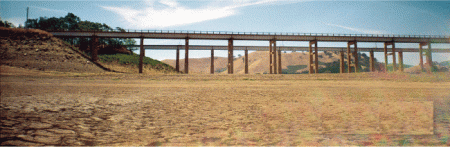
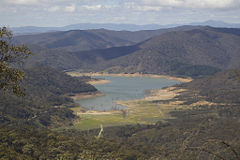
Along the road from Yarra Glen to Yea, posters and billboards have been set up to protest this mega project. It foresees the deviation of ‘rural’ water to urban consumers and the construction of a huge pipeline, pumping stations, holding basins, etc. Landowners along the planned route will not only lose precious land but the pipeline will also cut through paddocks and make access to some parts of rural properties difficult, or impossible. The local people know that there is no water to be taken since the region is already one of the driest and has very limited water resources. There is abundance of supporting evidence, for instance the water level of Lake Eildon is only about 20% of capacity, other lakes and reservoirs show similar low filling levels. The Goulburn Valley is one of the food bowls of Victoria worth more than 9 billion dollars in production and exports.

As someone promoting good democratic governance in “poor” countries overseas, I was appalled by the lack of standard procedures as promulgated by every international and national government code of conduct. No citizens participation worth speaking of had taken place, environmental impacts were not assessed, the population was poorly informed, there was (and still is) no transparency etc. The list of omissions and violations of principles of good governance – for instance as related to public consultations and community involvement – is long. The pipeline project is an example how not to conduct modern governance and I might include it into my teaching materials.

The case shows the general dilemma of rural communities in modern, democratic, urbanized societies. Because of rural-city migration and the resulting distribution of the population (concentration in costal cities), the number of Victorian farmers and other rural voters has declined over the years and with it their importance for the political establishment in political parties, parliament and government. Nobody cares about the plight of rural voters. Urban standards as regards nature conservation, agriculture, livestock breeding, forests and trees are slowly seeping into the regulatory framework of rural dwellers. Urban standards of communication have, alas, not made it to rural life. This change in dominant values is usually to the detriment of the rural populations. Many examples could be cited ranging from the cutting of trees, collection of firewood, harvesting of run off water, and many more.

The case also shows that the rural people have no trust in the state government. Because of the prevailing secrecy and intransigence on the side of the government many farmers expect that, once the pipeline is there, no one can control how much water is actually taken. The fact that the government does not take the current concerns of the rural people seriously further aggravates the suspicion. From Jakarta we cannot do much but hope that the project will be either dropped or significantly altered to meet the needs of the rural populations in Central and North Victoria.

240px-lake_eildon_mp1.jpg

Lake Eildon half empty

Source: http://en.wikipedia.org/wiki/Lake Eildon


News from Glenburn, Victoria

February 4, 2008

I usually do not hide my liking of globalization. While strolling through my hometown Trier in fall last year, I discovered on one of my long walks around town an Australian restaurant. Greetings from ‘down under’ in this 2000-year-old town of Trier. Isn’t it wonderful? Emperor Constantine would have been very pleased.

emu-bar-in-trier.jpg

The Emu restaurant in Trier

I also found a cafe just next to the Karl Marx house (the birthplace of the great philosopher) opposite one of my favourite wine bars, the ‘Das Weinhaus’, where you could enjoy the smoke of a shisha (or water pipe). If Karl would have known, he would have been delighted, I hope.

Michael my brother-in-law, who lives in Healesville, a beautiful little country town in Victoria about 3/4 of an hour northeast of Melbourne, used to buy Bitburger Beer for me. He knows that I love this brew from my home region. During his recent wedding I could enjoy some more of it. Great feeling to be so far from my birthplace, and to be able to drink the same beer thousands of kilometers away, far south on the other side of the earth. Goodness me.

bitburger-ad.jpg

bit-bier.jpg

Country folks need a drink from time to time, and vintners do not always drink wine!

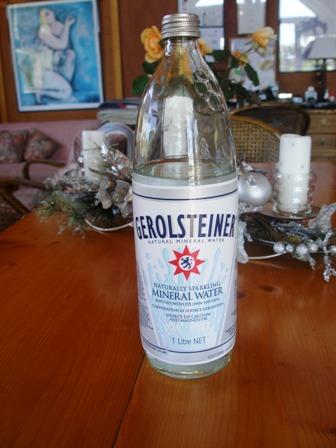
Another product from my home region has found its way to Australia, Gerolsteiner mineral water. The name ‘Gerolsteiner’ was made famous in sport enthusiastic Australia through the sponsorship of the cycling team with the same name. But now you can buy this wonderful drink (good after a hangover or in case of gastroenteritis).

gerolsteiner.jpg

The sparkling water from Germany

Let me follow this up with some ‘news’ or observations of what has changed since we last visited Glenburn and its surroundings.

● The Yarra Glen Grand Hotel had been finally sold by John Lithgow and we found the pub full of people enjoying the new atmosphere created by the new owners.

● The old Henkel Vineyards (descendents of the German sparkling producers) cellar door was sold and is now called Mandala Wines which is owned by the Smedly family (www.mandalawines.com.au). Henkel is erecting its signpost a couple of kilometers further north of the old place near Dixon’s Creek.

mandala.jpg

Mandala Wines, the new cellar door in the making

● The Wine Hub at the Yarra Valley Dairy (www.yvd.com.au) has gone out of business and with it we lost one of our retail outlets.

● Cheese Freaks in Yarra Glen is gone and has become a nice little restaurant.

● David left the local Healesville band the “Heartstarters”.

Giant Steps Winery (www.giants-steps.com.au) in Healesville, owned by Phil Sexton and his family, is in full operation (bar, coffee house, restaurant, bakery, winery, etc.) and has been also adopted by the locals who patronize it in great numbers.

Steve Webber of ‘De Bortoli Wines’ in Dixon’s Creek (www.debortoli.com.au) was awarded the very prestigious “Winemaker of the Year” by the wine magazine ‘Gourmet Traveller’ (www.gourmettravellerwine.com.au). Congratulations!

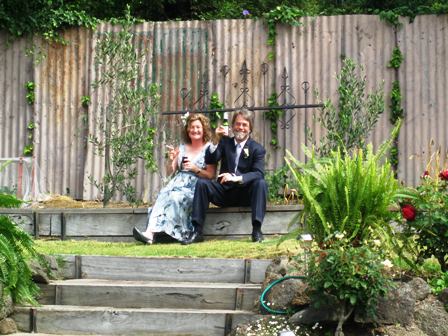
Michael and Helen got married of course. Congratulations again. Cheers.

pc160326.jpg

There are of course more news to report, but the above is what jumped into my eye while touring the beautiful Victorian countryside. Needless to say, we sampled quite a few local wines from the Upper Goulburn and the Yarra Valley.


The other day in KL

February 2, 2008

I just returned from another week in Kuala Lumpur. I had a great time. Several invitations and receptions allowed me to sample great drops – Riesling, Lemberger, Weissburgunder and Schwarzriesling (Pinot Meunier) – from Germany’s North Baden wine region. Unfortunately, the occasion did not permit me to identify the vineyards and wineries.

The last evening I went and explored the area around the Petronas Towers, which always remind me of the cathedral in Chartre, Champagne. In the end I settled for an Argentinean Steakhouse called ‘Maredo’ but not because I fancied any meat but because I thought why not try some Argentinian wine. I have heard people say, the Argentineans drink their good wines themselves and export only the minor qualities. Well, let’s check that out, I thought. The exterior of the place was inviting. I liked the bar and the Latin flair radiating the Latin love of life.
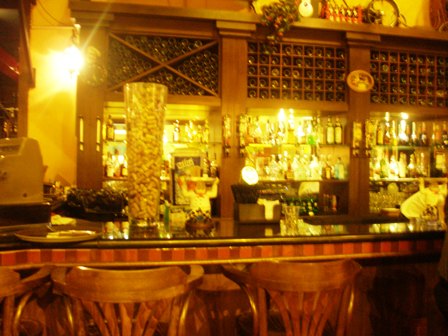
klmaredo5.jpg

The bar

klmaredo3.jpg

The Marredo

klmaredo4.jpg

Of course there was a big tango poster on the wall.

I sat on a high wooden table close to the sidewalk and ordered a cheese platter, which the menue recommended for two persons, thinking that that might be just the right quantity. Having indulged myself on Asian cuisine during the last days, something utterly un-Asian would do. In Chinese ‘cheese’ is called ‘lao nai’, meaning “old milk”, which says everything. The cheese platter consisted of Boursine, Bresse Blue, Camembert, Manchego, Tapanade with some grilled country bread.

The wine list included Australian, Chilean, and Argentinean wines. I went for the latter and intended to try the ‘Trivento Riserva Malbec’ which was described as follows:

“Filling notes of violet and scarlet bring out the sumptuous ruby red. The wine displays its breath of red fruit aromas, rasberries, cherries and plums and a magical dab of strawberry jam. Aromas of pepper, coffee, mint, tobacco and chocolate waft.”

The waitress informed me that this wine (26 Malaysian Ringgit by the glass) was out (because the restaurant intended to change the wine list), therefore I had to settle for the other open Argentinean wine, a ‘Trapiche Astica Merlot Malbec’ of which the menu said the following:

“Delicate aromas of dried fruit, coconut, cinnamon and chocolate, ripe and freshly finishing with soft ripe tannins and aromas of red fruit”.

The 21 Ringgit for the glas indicated already that this was the lesser wine. Since I was by myself I did not want to order a whole bottle. I would have loved to have a laptop with me with an internet connection to search for those two wines.

klmaredo2.jpg

The food arrived and the wine too. I loved the various cheeses, though there was nothing special there. The wine was ok, however, the aromas and the tastes alluded to somehow escaped me. Maybe it was the fact that I sat next to the busy road which somehow numbed my tastebuds. Anyway, it was better than a beer.

Thursday night was very busy in KL. After a clearing shower it was cool and fresh, ideally suited for what Italians call: a ‘passagiata’ and what Germans might call ‘flanieren’, i.e. strolling along the bars and cafes and showing yourself to the interested onlookers. I watched the passersby consisting of all races. There were groups of Chinese youths, Malay women in ‘Tudung’ (Malay version of Muslim headscarves), Arab men in western clothes, Arab women covered from top to toe in black, young skimpish women on high heels and with tattoos, fat western tourists in shorts, men in business suits coming from their offices, and so on. Many people I thought were overweight, but it was delightful to see them passing by, seemingly relaxed and in anticipation of a nice evening. Fully satisfied I walked back to my hotel with the firm motivation to learn more about wines from Argentina.

Postcript
The next day I set out for the airport at 6 in the morning to catch my plane home to Jakarta. When the pilot of the Malaysian Airlines plane informed us that the Sukaro-Hatta airport in Jakarta was closed because of flooding and that we would shortly land in Halim, I was still in high spirits thinking that in all those many years in Jakarta I had never made it to the military airport, which has been so popular with living and deceased generals.

In a heavy tropical rain we touched down at almost 11 in the morning. We were to remain on the plane for almost 6 hours watching the rain outside. When it finally subsided, the plane could not be towed back to the tarmac because of the lack of equipment big enough for this kind of plane. Lighter planes left for their destinations but we remained grounded. The passengers were patient and remained so for the entire duration of our stay. Finally, Indonesian, Malaysian and other passengers with valid visas were given the opportunity to disembark. The others, among them a group of Dutch tourists, had to remain on board because of lack of immigration services on the ground. Halim is only a domestic airport. Our checked-in luggage had to remain on board but we were happy to step down onto the tarmac in the hope of having found an escape route. The pilot had warned us before about the impending lengthy and cumbersome immigration proceedings. The pessimistic forecast did not come true. After an hour of passport and hand luggage checks, we were able to leave the building. Everybody on the ground was pleasant and helpful. I did not wait for taxis to arrive but instead walked to the entrance and flagged down a blue bird taxi which delivered me safely home. I wonder what happened to the rest of the passengers and the plane? Hope they also made it somehow.